
The Vanishing Act 🎟️
now, you see a competitive market... now, you don't


While Ticketmaster clients reaped the rewards of exclusive contracts, these agreements were critical for Ticketmaster to gain bargaining power for establishing their preferred terms and conditions, particularly revenue.
Exclusivity is the lifeblood of Ticketmaster.
Ticketmaster enhanced and expanded their brand by garnering this reputation of favorable exclusive contracts and advanced consumer-friendly ticketing systems. As promoters and venues realized the luxury of Ticketmaster's offers, the demand for Ticketmaster-led exclusive contracts surged.
By 1994, the ticketing kingpin possessed exclusive contracts with 63.2% of American venues. By 2022, Ticketmaster was crowned the sole ticketing provider for 78% of the top-grossing American-based arenas and 82% of top-grossing American-based amphitheaters.
From 2008 to the present day, Ticketmaster has enjoyed at least 80% market share of ticketing space across U.S. venues.

The primary purpose of these exclusive provisions is to block competitors from selling tickets with Ticketmaster clientele. Fewer eligible partnerships and dwindling ticket sales squeeze firms out of the industry.
From 1985 to 1993, Ticketmaster absorbed at least eight ticketing companies, including an $11 million purchase of their biggest rival, Ticketron. The capital gained from exclusive inventory and rival acquisition allowed Ticketmaster to recover their purchasing price of Ticketron within months. Ticketmaster would flaunt their first-ever billion dollar year in total ticket sales in 1992.
With fewer competitive ticketers, promoters and venues were pressured to partner with Ticketmaster. Less competition forces consumers to buy Ticketmaster tickets, intensifying the market power of the ticketing overlord.
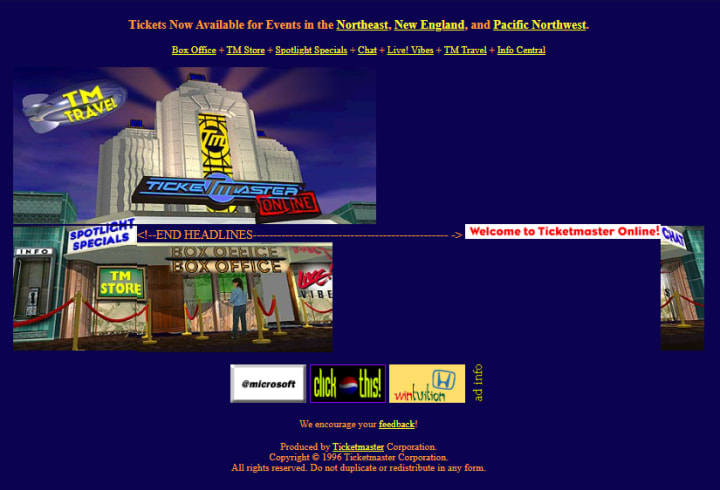
To further accumulate their market power, Ticketmaster announced their merger with Live Nation in 2009. Originally branded as SFX, Live Nation used Ticketmaster tactics of consolidation and acquisition to grow into a radio state conglomerate (later evolving into iHeartMedia).
Using their radio revenue, SFX/Live Nation employed Ticketmaster's strategies of exclusive contracts onto concert promotion. As Ticketmaster overpaid ticketers, SFX/Live Nation overpaid concert promoters to exclusively manage entire tours.
For instance, their $91 million acquisition of Contemporary Productions was worth four times more than the company evaluation. Contemporary Productions would be absurd to deny their offer.
This strategy was employed across the entire sector: artist management, talent agencies, record labels, licensing, merchandising, sponsorship, and venues. Each absorption was yet another trophy in their castle of spoils.
Like Ticketmaster, Live Nation captured exclusive control over the concert industry and weakened competitors. No one could compete with their 80% market share over top concert venues.
Jerry Mickelson, CEO of Jam Productions, described the looming union of these concert business belligerents as "vertical integration on steroids."
Ticketmaster and Live Nation consummated the perfect marriage.

But before any vows were exchanged, the Department of Justice (DOJ) interrupted the wedding.
After reviewing both companies in 2010, the DOJ asserted that the merger would substantially lessen competition in primary ticketing services for major concert venues in violation of anti-trust law.
Thus, the DOJ issued a consent decree that set standards that allowed the union yet disarmed Ticketmaster of some of its market dominance.
- The DOJ separated Ticketmaster and Paciolan, a software company that handled about 9 million Ticketmaster tickets annually. Pacolian was divested to Comcast-Spectacor, an upcoming sports and entertaiment venue operator.
- The DOJ gave Anschutz Entertainment Group (AEG) the option to lease and purchase Ticketmaster's Host ticketing software. This order would compel Ticketmaster to install a comprehensive ticketing system and website for AEG.
- The DOJ imposed anti-retaliation provisions that oversaw their conduct with live entertainment management. Ticketmaster was barred from threatening venues, promoters, and artists for engaging with ticket competition.
For the consent decree to successfully induce competition, Ticketmaster rivals had to collectively increase their market share by 11%.

Paciolan did not contend with Ticketmaster.
Paciolan focused on the college sports ticketing market, serving 120 collegiate athletic departments with over 100 professional sports clients by 2017. The growth of Paciolan sparked business collaboration between Comcast-Spectacor and Learfield, a premier collegiate sports promoter. Learfield would acquire Paciolan in 2017 to continue expanding its market presence of over 120 million annual tickets.
While Paciolan grew into the ticketing leader in collegiate athletics, their narrowed scope cornered their market share in live entertainment. Limited market power pressured Pacolian to sign multi-year partnerships with Ticketmaster – the DOJ-intended rival – in the ticketing of major arenas.
Their self-constrained, niche market removed them from developing into a worthy competitor of Ticketmaster. Instead of entering the concert arena, Paciolan bowed out of the competition.

AEG was the prophesized challenger to Ticketmaster.
As the second largest American promoter that marketed roughly one-fifth of concert tickets in 2009, AEG was touted as the chosen underdog that could slay the "Goliath-style dominance" of Ticketmaster. Following the merger, AEG founded their advanced ticketing system (AXS) in 2011, which merged with Veritix's digital ID-based technology in 2015. AEG was exhibiting promising qualities of a stable entrant into the ticketing sphere.
However, AEG made a critical mistake: they declined the DOJ offer for Ticketmaster to set up their ticketing system and online channels. At the time, they did not view the recommended Ticketmaster software as "cutting-edge" for their company.
Yes, you read that right.
AEG did not think that the overwhelming leader of the industry could supply them advanced enough technology for their promising startup. Premier technology at no expense to them.
Instead of seeking guidance from the master, AEG entered a joint venture with Outbox Technology, another ticketing platform. Outbox Technology focused on facilitating ticket distribution through the website of the venue. AEG and Outbox Technology believed removing the ticketing middleman would attract more venues towards their services.
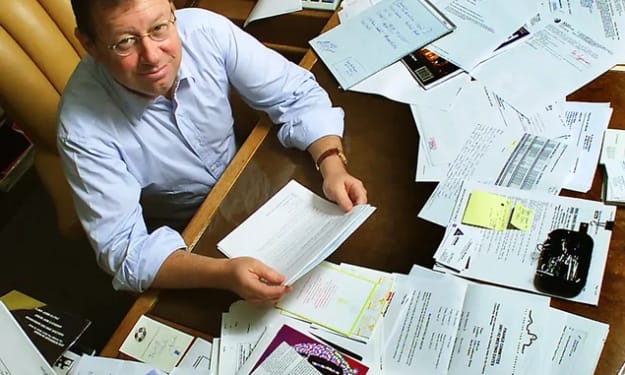
Beyond the business model, Outbox Technology was particularly enticing because of its new CEO and familiar face, Fred Rosen.
With support from the original ticketing visionary, many commentators trusted that AEG could revolutionize the industry and threaten Ticketmaster's throne. One Forbes article, confident in the succession of a second Rosen-ran ticketer, was relishing their destined demise.
Unfortunately, as admitted by AEG themselves, the company did not mature into a competitive Ticketmaster rival. Ticketmaster holds too much power over the industry for AEG to put up a fight. The DOJ-prescribed services of Ticketmaster likely would have boosted their market share, but they failed to capitalize on the opportunity.
As a result of these shortsighted blunders and the avarice of corporate America, Ticketmaster collects 83.4% of all gross ticket revenue from the top-grossing arenas in the United States.
AEG receives 9.3% and Paciolan receives 2.1%.
This consent decree intended to assemble formidable opponents, but ultimately turned the ticketing tycoon into a two-headed terror.
A terror not even its founding father could rival.
For Part IV of Admit One, click here.
About the Creator
DJ Nuclear Winter
"Whenever a person vividly recounts their adventure into art, my soul itches to uncover their interdimensional travels" - Pain By Numbers
"I leave no stoned unturned and no bird unstoned" - The Sabrina Carpenter Slowburn
Keep reading
More stories from DJ Nuclear Winter and writers in Beat and other communities.
It's 2026. Songs Turning 10 This Year
In 2016, we saw the rise of short form videos and what would lead to the birth of TikTok. We cannot forget the Snapchat filters no matter how cringe worthy some of them might have been. It was also the year in which the hit series Stranger Things debuted.
By Jasmine Aguilar6 days ago in Beat
"Palomino" - A Grace Filled Memory Ride Toward Todd Mosby's Upcoming Album "American Heartland"
With the release of “Palomino,”, acclaimed composer and guitarist Todd Mosby offers listeners a vivid and deeply personal entry point into the emotional world of his forthcoming album American Heartland.
By Whitney Miller5 days ago in Beat
Echoes
I stepped carefully around the corner, the familiar sights and sounds hitting me like a brick to the face. My eyes watered. I could practically see us, all of us, back then, clustered around the outdoor tables in front of the pizza shop, the bar, the coffee shop. I could smell the various stalls from the events we’d been to on this street. I could taste the churros and nachos.
By Phoenixica246 days ago in Fiction


Comments
There are no comments for this story
Be the first to respond and start the conversation.