
James Parsons Jr
Quiet Metals Genius Who Helped Forge the Age of Stainless Steel
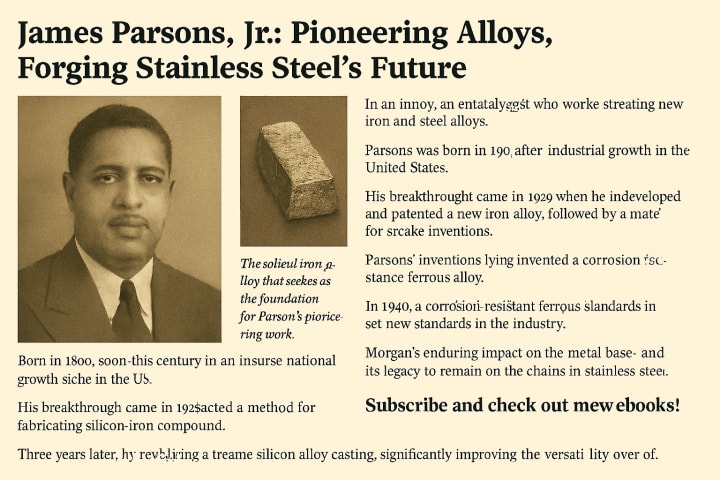
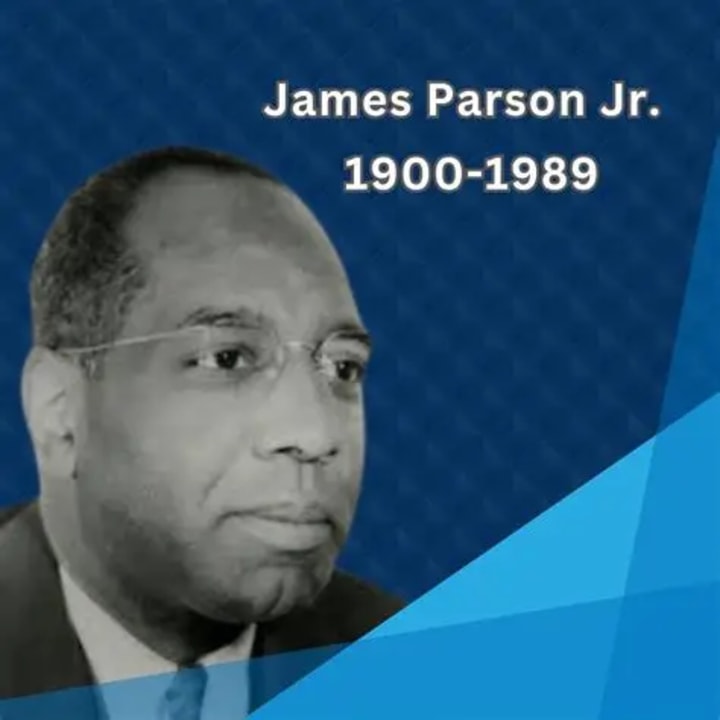
In the vast and often overlooked world of industrial innovation, certain individuals shape the future not through fanfare or celebrity, but through the relentless pursuit of improvement. These are the inventors whose hands never rested, whose minds wove new possibilities from raw materials, transforming entire industries in the process. Among them stands James Parsons Jr. (1900–1989), a metallurgist and inventor whose work quietly laid important groundwork for the development of stainless steel—one of the most essential materials in modern technology, construction, and manufacturing.
Parsons never sought the spotlight. His contributions were not flashy consumer inventions or devices meant for the showroom. Instead, he worked in the demanding, technical realm of metal alloys, refining the properties of iron, silicon, and other elements to create stronger, more durable, and more resilient mixtures. His patents, though highly specialized, reshaped the standards of metallurgy and paved the way for the widely used corrosion‑resistant steels that define everything from skyscrapers to surgical tools.
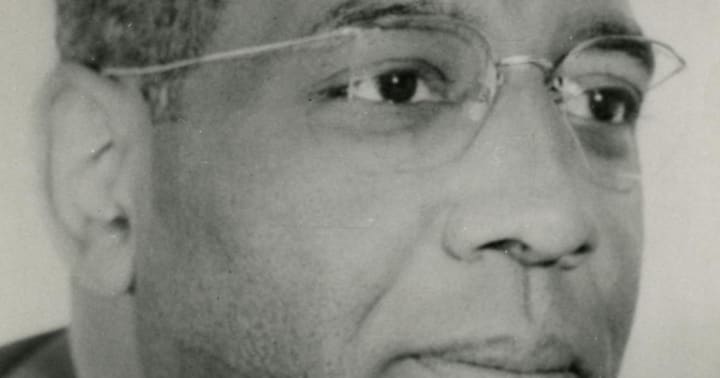
Born in 1900 in an era of explosive industrial expansion in the United States, Parsons grew up at a time when steel production was rapidly evolving. Factories thundered across the nation, rail lines stretched into new territories, and the science of metallurgy became central to national growth. While others saw steel as a finished product, Parsons saw it as a beginning—something malleable, perfectible, and full of hidden potential. This vision would guide his entire career.
By the 1920s, when Parsons began his professional work, iron and steel production was shifting toward more complex alloys, blends engineered to enhance specific characteristics such as strength, elasticity, and corrosion resistance. Parsons quickly immersed himself in the chemistry and physics of metals, studying how slight changes in temperature, carbon levels, and added elements altered performance. His early experiments led him into the world of fabricating silicon‑iron compounds, materials known for their magnetic properties and durability.
In 1929, Parsons secured one of his earliest patents—an innovative iron alloy that demonstrated improved structural characteristics compared to existing materials. This was no small feat. The late 1920s were a competitive time in metallurgy, with companies and laboratories racing to create alloys suited for the rapid growth of construction, transportation, and industrial machinery. Parsons’ invention earned him recognition among his peers and propelled him deeper into advanced research.
Just two years later, in 1931, Parsons earned another patent, this time for a fabrication method for silicon‑iron compounds. Silicon-iron, or ferrosilicon, played a crucial role in reinforcing steel’s properties, and Parsons’ new technique improved both the efficiency and consistency of the manufacturing process. Engineers quickly recognized its usefulness, especially in the production of electrical transformers, motors, and machinery that required precision‑engineered components.

But Parsons was far from finished. One of his most significant breakthroughs arrived in 1934, when he developed a treatment process for silicon alloy castings. This innovation allowed silicon‑rich alloys to achieve superior hardness and stability, qualities essential for industrial environments where components faced extreme temperatures, friction, and wear. His method refined casting uniformity, reducing defects and improving overall performance. In an industry where small imperfections could lead to catastrophic mechanical failures, Parsons’ advancement made a measurable difference in safety and reliability.
Then, in 1940, as the world was gripped by global conflict and manufacturing demands skyrocketed, Parsons introduced what would become his most influential contribution—a corrosion‑resistant ferrous alloy. This invention helped bridge the gap between traditional iron and the emerging family of stainless steels, setting new standards for materials that could withstand moisture, chemicals, and harsh weather conditions without degrading.
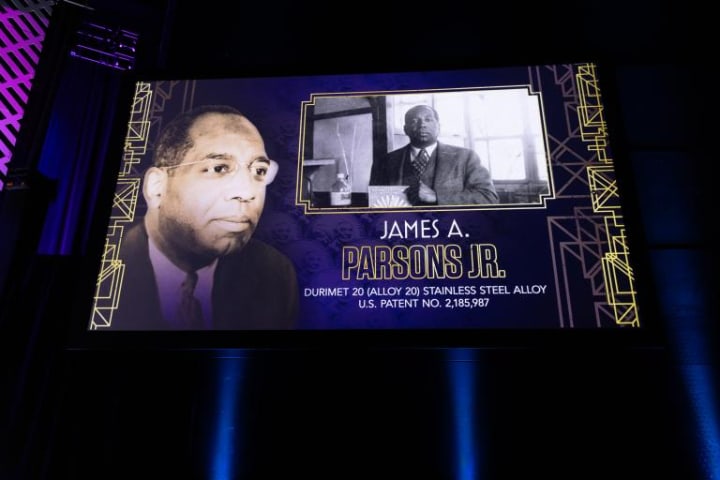
Before stainless steel became widely used in household appliances, medical tools, military equipment, and architectural structures, research like Parsons’ laid the scientific foundation for its creation. His corrosion‑resistant alloy offered improved protection against rust and chemical breakdown at a time when industries desperately needed stronger materials for ships, aircraft, vehicles, and infrastructure.
It was through incremental innovations like Parsons’. Treatment methods, alloy compositions, and fabrication processes collectively shaped what would later become one of the most indispensable materials in the modern world. Stainless steel today is so ubiquitous that we rarely stop to consider its origins. But behind its gleaming surfaces, behind the skyscrapers that pierce the sky and the tools that save lives in operating rooms, lie the contributions of pioneers like James Parsons Jr.
Despite working in laboratories and factories rather than public view, Parsons’ influence reached far and wide. Metallurgists built upon his patents, engineers adapted his fabrication processes, and industrial designers relied on the alloys that resulted from his work. His inventions weren’t singular devices—they were the seeds that allowed countless others to invent, refine, and build.
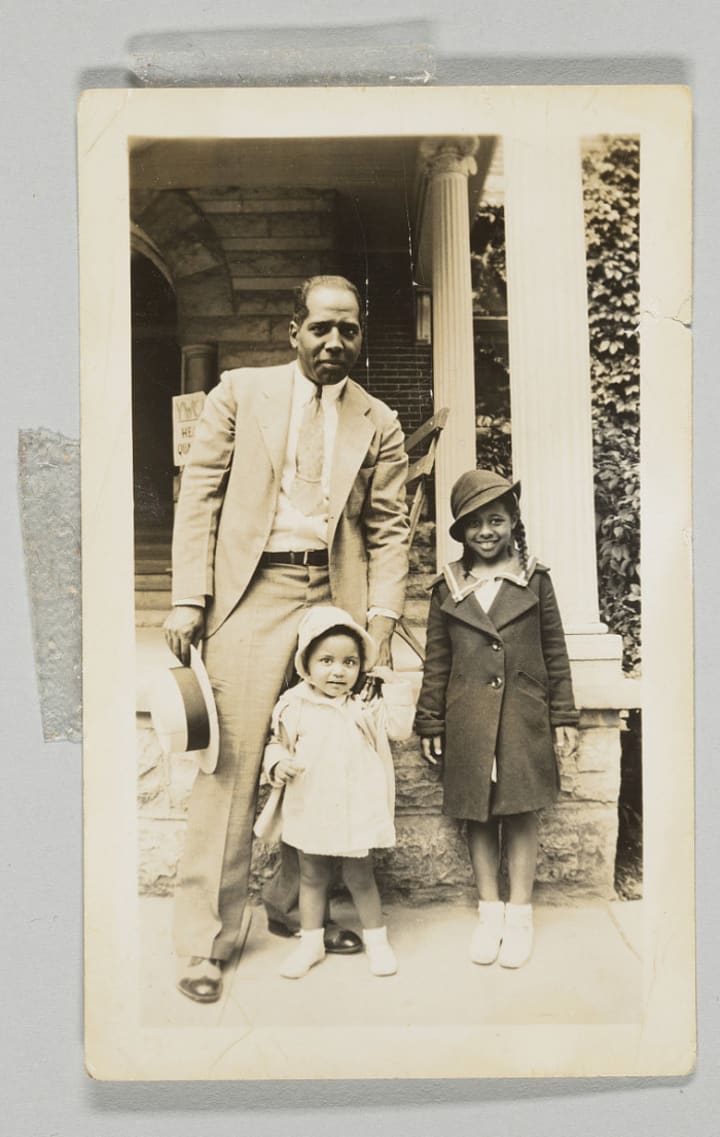
Parsons lived through some of the most transformative decades in American history. He witnessed the Great Depression, World War II, the rise of the post‑war economy, and the dawn of the technological age. Throughout these changes, he remained committed to advancing the field of metallurgy, contributing research, refining processes, and pushing the boundaries of what metals could do. His work reflected not only scientific skill, but a broader belief in human progress—a belief that better materials create better machines, better structures, and ultimately, better lives.
Even in his later years, Parsons continued to advise younger engineers and researchers. Though not a public figure, he became a respected mentor within his industry, known not only for his knowledge but for his precision, patience, and commitment to excellence. He passed away in 1989, leaving behind a legacy that still resonates through every steel beam, every reinforced structure, every rust‑resistant tool that makes modern life possible.
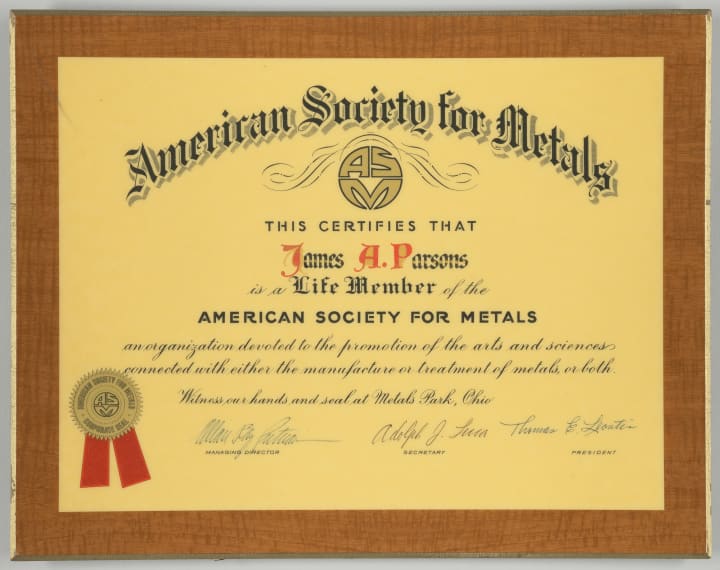
Today, his name may not appear in textbooks as widely as some of his contemporaries, but his contributions remain embedded in the very fabric of industrial advancement. Parsons’ story serves as a reminder that innovation is often a collective pursuit driven by individuals whose determination and intelligence quietly alter the world.
He was one of those individuals: a man whose work strengthened the backbone of modern engineering and laid the groundwork for the stainless steel that has become vital across industries worldwide.
The legacy of James Parsons Jr. is not merely the alloys he created. It is the enduring lesson that progress relies not only on bold ideas but on meticulous craftsmanship, deep curiosity, and the courage to look at a raw material and imagine what it could become.
Subscribe and Check Out My New Ebooks
Subscribe today and explore my new ebooks for more in‑depth profiles and inspiring history.

About the Creator
TREYTON SCOTT
Top 101 Black Inventors & African American’s Best Invention Ideas that Changed The World. This post lists the top 101 black inventors and African Americans’ best invention ideas that changed the world. Despite racial prejudice.
Keep reading
More stories from TREYTON SCOTT and writers in BookClub and other communities.
Garrett Morgan
ORDER HERE In the long arc of American innovation, certain names blaze brightly across history, their ideas reshaping how entire societies operate. Yet among these extraordinary figures, few embodied creativity, courage, and practical foresight as completely as Garrett Augustus Morgan, an inventor whose work continues to influence daily life more than a century after he first began tinkering with his ideas. Known today for the gas mask precursor and the modern traffic signal, Morgan was much more than an inventor; he was a problem solver who possessed the rare ability to recognize trouble before it unfolded and build solutions that protected the public without fanfare or expectation.
By TREYTON SCOTTabout 10 hours ago in BookClub
Book Review: Atmosphere by Taylor Jenkins Reid
I flipped the book over in my hands in the centre of the small airport book shop. Although I had heard promising reviews of Atmosphere by Taylor Jenkins Reid, I hesitated. The synopsis didn’t compel me - I wasn’t much of a space girly. In high school it made me cringe when my peers would talk about the stars.
By sleepy drafts28 days ago in BookClub
The Night Circus: The Enchanting Story That Made Me Believe in Magic, Mystery, and the Power of Dreams
When I first picked up The Night Circus, I expected a story about magic and spectacle, but I did not anticipate the spellbinding way it would pull me into its world. From the very first page, Erin Morgenstern creates a universe that feels both fantastical and intimate, a place where time bends, illusions breathe, and every detail—no matter how small—is imbued with enchantment. The novel is a tapestry of mystery, romance, and competition, woven with such care that it lingers long after the final sentence.
By Lukáš Hrdlička2 days ago in BookClub




Comments
There are no comments for this story
Be the first to respond and start the conversation.