
Can the Taliban win a war against Pakistan? Retaliation for Pakistani airstrikes in Paktika, US weapons left in Afghanistan 2026
Following the deadly February 2026 airstrikes in Nangarhar and Paktika, the Taliban government warns of retaliation against Pakistan. Discover the military strength of both nations, the reality of civilian casualties, and why guerrilla warfare remains the Taliban’s ultimate "wild card" in this escalating border conflict.

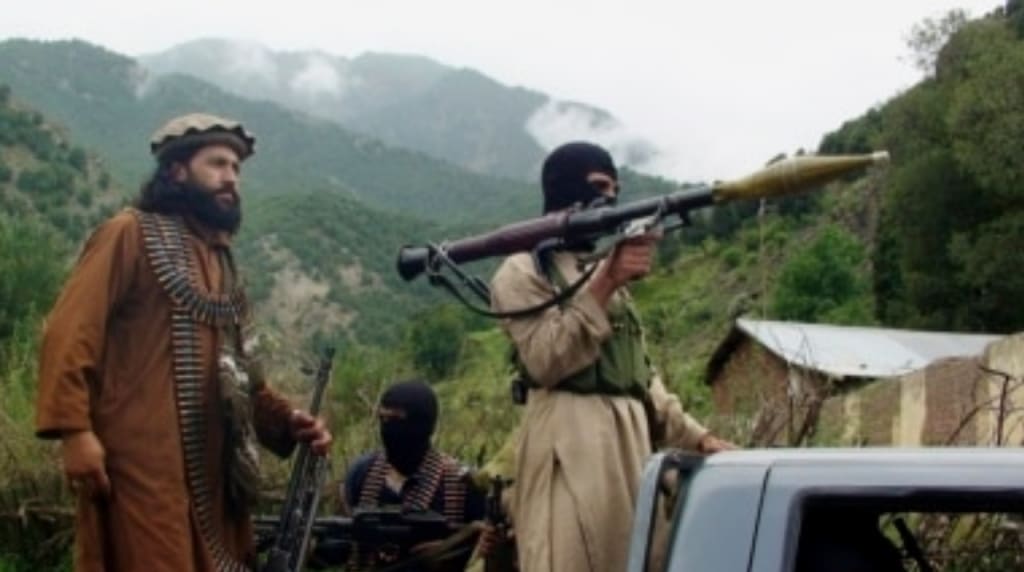
On February 22, separate airstrikes in Afghanistan’s Paktika and Nangarhar provinces killed and injured multiple people. Military sources in Pakistan claimed that seven hideouts of the TTP (Tehreek-e-Taliban Pakistan) or Pakistani Taliban and other militant groups were targeted across three provinces—Nangarhar, Paktika, and Khost. However, after visiting the affected areas, Al Jazeera’s team confirmed civilian casualties. It is worth noting that Al Jazeera is an impartial news organization.
Following the Pakistani airstrikes on Afghan territory, the Taliban government’s Ministry of Defense warned of retaliation, stating that they would respond “at the appropriate time in an appropriate manner.” But what could such a response look like?
In a recent interview, Taliban government spokesperson Zabihullah Mujahid said, “It will become clear then; no crime will go unanswered.” After the attacks in Nangarhar and Paktika, Afghan citizens have been seen in local media demanding that the Taliban government take action in “revenge.”
The Taliban Government’s Military Strength and Weapons
The Taliban government’s military equipment has largely been acquired from three sources: weapons and equipment from the former Afghan army, arms left behind after the withdrawal of U.S. and other foreign forces, and newly obtained weapons from various sources such as the black market.
According to experts, videos of past clashes between Afghan Taliban forces and Pakistani troops show that the Taliban primarily used light weapons against Pakistan, with very little evidence of heavy or long-range weaponry.
During the 20-year war, reports from the U.S. Special Inspector General for Afghanistan Reconstruction (SIGAR) and the country’s Ministry of Defense indicate that more than 1.6 million light and heavy weapons and pieces of military equipment were supplied to the former government. Approximately 70 percent over one million ultimately fell into Taliban hands.
Currently, the Taliban government’s light weapons include Kalashnikovs, American M16s, M4s, and M249 light machine guns. They also possess heavy machine guns such as the M2 and M240, grenade launchers, RPG-7s, AT4 rocket launchers, and anti-tank missiles.
According to U.S. Department of Defense (Pentagon) reports, the Taliban also have heavy armored vehicles, aircraft, and other heavy military equipment previously provided to the former Afghan army. Among these are 122mm howitzers known as D-30s. An estimated 100 to 120 of these guns remain in Afghanistan. Additionally, the Taliban possess approximately 155mm howitzers and various Russian weapons, such as the ZU-23(-2).
In 2024, during a military parade at Bagram Air Base, the Taliban government displayed heavy weaponry, including Scud missiles R-17 and Elbrus R-300, with a range of about 300 kilometers. They also showcased Luna missiles (also known as “Frog-7”), Grad rocket launchers, Milan anti-tank missiles, Uragan rocket systems, and other weapons capable of striking targets up to approximately 35 kilometers away.
These weapons have not been used in Afghanistan for at least three decades. Some were stored in Ministry of Defense warehouses, while others were kept in mountainous areas. Although the Taliban Ministry of Defense claims to have reactivated some of them, their technical condition and actual combat readiness remain unclear.
One advantage Pakistan holds is its modern fighter jets and established air force, whereas the Taliban government does not possess comparable air power. Although the Taliban have repaired some helicopters inherited from the former Ministry of Defense and trained pilots, they cannot match the Pakistani Air Force.
According to Pentagon reports, aircraft captured by the Taliban include C-280 planes, MD-530 helicopters, Black Hawks, A-29 aircraft, Mi-17 transport helicopters, Mi-24 attack helicopters, and MD-500 light attack helicopters.
With these recent developments, the Taliban’s apparent willingness to engage in war with Pakistan seems beyond conventional calculation. Abdul Hadi Himmat, head of the Taliban government’s northeastern military court, speaking at a gathering in Kunduz on Tuesday (February 24), said, “If the Amir permits, we will spend the next night in Peshawar.” He insisted that if war breaks out, they will emerge victorious.
A senior Taliban government official, speaking on condition of anonymity, said that while they may lack long-range missiles or air power, “our war with Pakistan is at hand. We have ground routes where air power is not as necessary.” The official emphasized the guerrilla warfare experience Taliban fighters gained against U.S.-led NATO forces and earlier during the war against the Soviet Union.
Echoing this sentiment, Syed Irfan Ashraf, a university professor and researcher in Peshawar, said that while Pakistan has a well-organized military and equipment, “there is significant fear of guerrilla warfare from the Taliban side.” He noted that militant groups are already active in Pakistan. If direct fighting begins, these groups could exploit the situation for their own benefit, making it difficult for the Pakistani military—already engaged on multiple fronts—to control the conflict. According to him, “suicide attacks are another factor that strengthens the Taliban and spreads fear.”
His assumption is that Pakistan is aware of all these aspects and is not attempting to organize a large-scale direct war. Instead, such strikes are being used to pressure the Taliban government to implement policies aligned with Pakistan’s preferences and to consider Islamabad’s strategic and geopolitical interests. Islamabad openly accuses the Taliban government of sheltering its enemies, such as the TTP, and providing them with safe havens.
Ashraf further stated that a structured war requires a strong economy, and Pakistan does not wish to face such a conflict given its fragile economic condition.
The Legal Dimension of the Conflict
Two days after the strikes, the Taliban government’s Foreign Minister Amir Khan Muttaqi spoke by phone with UN Under-Secretary-General for Political Affairs Rosemary DiCarlo. According to a Foreign Ministry statement, Muttaqi said that Afghan civilians were killed in the recent Pakistani strikes and that “over the past four years, such repeated attacks by Pakistan have only targeted civilians. Moreover, no militants have ever been killed in these attacks, contrary to Pakistan’s claims.”
Afghanistan’s Permanent Mission to the United Nations also submitted a “formal complaint” to the Security Council regarding the recent Pakistani airstrikes in Nangarhar and Paktika.
Nasir Ahmad Faiq, who represented the former Afghan Republic at the UN and currently serves as Afghanistan’s fourth Permanent Representative to the organization, wrote on his Facebook page on February 23 that “women and children” were among the civilians killed in the recent Pakistani airstrikes.
“Today, Afghanistan’s Permanent Mission submitted its official complaint to the UN Security Council,” Faiq stated.
He added, “We demand the proper cessation of these violations, investigation, accountability, respect for territorial integrity, adherence to the UN Charter, and full compliance with international law.
In a statement issued yesterday, Afghanistan’s Permanent Mission to the UN condemned Pakistan’s strikes as a “clear violation of the UN Charter” and of “recognized principles of international human rights.
Analysts say the Taliban government, which lacks broad international diplomatic recognition and is reportedly recognized only by Russia, is unlikely to gain significant support.
So far, only India has clearly condemned Pakistan’s attacks on Afghanistan; no other countries have issued formal condemnations. Nasrullah Stanekzai, a former Kabul University professor, stated that the complaint by Afghanistan’s former representative at the UN would be recorded as “moral outrage.” He said, “The Taliban may now realize the importance of membership in international organizations and engagement with them.”
Regional players with close ties to Pakistan—such as China, Turkey, Qatar, and Saudi Arabia even though some have accepted Taliban diplomats, have remained largely silent. However, Turkey, Qatar, and Saudi Arabia have reportedly attempted mediation efforts.
About the Creator
Keep reading
More stories from Real content and writers in Chapters and other communities.
The Ahnenerbe
The Ahnenerbe — short for Deutsches Ahnenerbe — Studiengesellschaft für Geistesurgeschichte, Deutsches Erbe (“Ancestral Heritage Research and Teaching Society”) — was one of Nazi Germany’s most mysterious and controversial institutions. Founded in 1935 under the auspices of Heinrich Himmler, the powerful head of the SS, the Ahnenerbe was a pseudo-scientific organization aimed at uncovering the ancient roots of the so-called “Aryan race.” It blended archaeology, anthropology, mythology, and mysticism in an effort to validate the Nazis’ racial ideology and to craft a glorious, mythical past for the German people.
By Gus Woltmann5 days ago in Chapters



Comments
There are no comments for this story
Be the first to respond and start the conversation.