
Is the Middle East War Turning Into World War III?
Rising Regional Conflict, Global Power Involvement, and the Fear of a Wider War

Is the Middle East War Turning Into World War III?
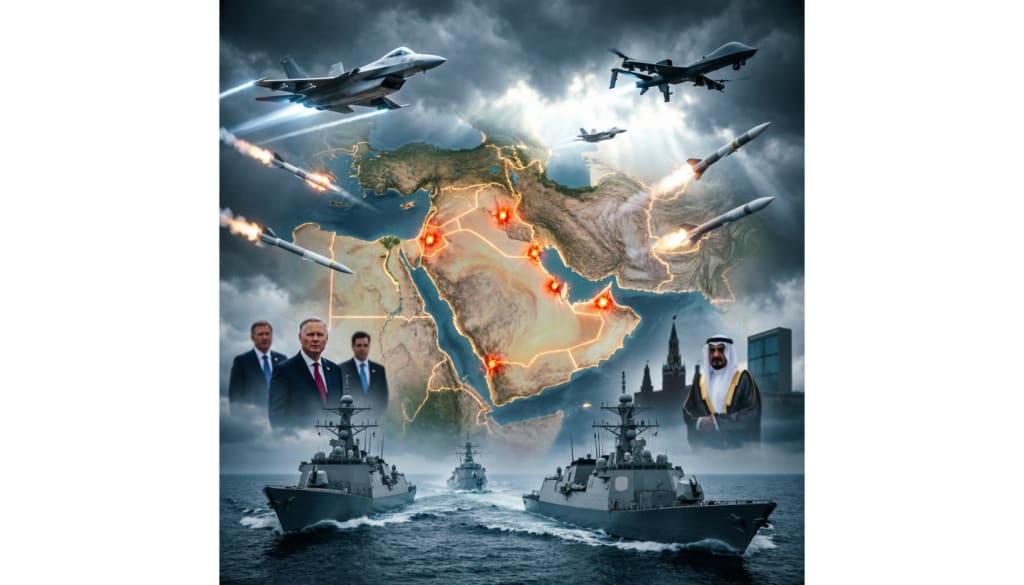
The current situation in the Middle East has once again raised a serious question around the world: could this conflict grow into World War III? Tensions in the region have increased due to military strikes, political warnings, and the involvement of several global powers. While no country has officially declared a world war, the combination of regional conflicts and international alliances has made many experts worry about the possibility of a much larger confrontation.
At the center of the tension is the long-standing rivalry between Iran and Israel, along with the strategic presence of the United States in the region. Iran has strong influence through allied groups across the Middle East, including in Lebanon, Syria, Iraq, and Yemen. Israel, on the other hand, views many of these groups as direct threats to its national security. This situation creates a complex network of tensions where a local conflict can quickly spread to several countries.
Military actions in the region have increased over the past years. Airstrikes, missile launches, and drone attacks have become more common. Modern warfare technologies such as drones, cyber attacks, and long-range missiles allow countries and non-state groups to strike targets without traditional armies crossing borders. This makes the situation more unpredictable and dangerous.
The United States plays a major role in the region. American military bases and naval fleets are located in several Middle Eastern areas to protect allies and maintain strategic control of important trade routes such as the Persian Gulf. When tensions rise between Iran and Israel, the United States often becomes involved diplomatically and militarily. This increases the risk that a regional conflict could draw in other powerful nations.
Another important factor is the involvement of other global powers such as Russia and China. Russia has military influence in Syria and has worked closely with the Syrian government for many years. China has major economic interests in Middle Eastern oil and infrastructure through its global trade initiatives. While neither country openly seeks war with the United States, geopolitical competition means they closely monitor any major conflict in the region.
Energy is another reason the Middle East remains globally important. A large portion of the world’s oil supply passes through this region, especially through the strategic Strait of Hormuz. If war were to block these routes, it could disrupt global markets, cause oil prices to rise dramatically, and trigger economic crises around the world. Economic pressure can sometimes lead governments to take stronger military positions.
Despite these dangers, most analysts believe that a full world war is still unlikely. Large powers understand that a global conflict today would be extremely destructive, especially because many of them possess nuclear weapons. The presence of nuclear arsenals acts as a powerful deterrent. Countries know that escalation could lead to consequences that no nation could control.
However, the greatest risk does not come from a planned global war. Instead, it may come from miscalculation or accidental escalation. A missile strike, drone attack, or cyber operation could be misunderstood as a larger attack. If leaders react quickly without full information, the conflict could spread rapidly before diplomacy has time to calm the situation.
Regional alliances also make the situation complicated. Countries often support partners through military cooperation, intelligence sharing, or economic aid. If one country becomes directly involved in fighting, its allies may feel pressure to respond. This chain reaction is one of the main ways regional wars have expanded into global wars in the past.
Another new factor in modern conflicts is technology. Artificial intelligence, automated defense systems, and cyber warfare tools can operate faster than human decision-making. If these systems are not carefully controlled, they could contribute to misunderstandings during a crisis.
For now, the Middle East conflict remains a regional struggle with global attention rather than a world war. Diplomatic negotiations, international pressure, and economic cooperation still play major roles in preventing escalation. Organizations such as the United Nations often work to reduce tensions through negotiations and peace initiatives.
In conclusion, the Middle East remains one of the most sensitive regions in global politics. The involvement of powerful nations, the presence of advanced weapons, and the importance of energy resources make every conflict in the region a matter of international concern. While the current tensions have not yet turned into World War III, the situation reminds the world how fragile global stability can be. The future will depend on diplomacy, restraint, and the willingness of nations to avoid turning regional conflicts into a global catastrophe.
About the Creator
Wings of Time
I'm Wings of Time—a storyteller from Swat, Pakistan. I write immersive, researched tales of war, aviation, and history that bring the past roaring back to life
Keep reading
More stories from Wings of Time and writers in Chapters and other communities.
AI, Nuclear Escalation, and Pakistan’s Critical Role
AI, Nuclear Escalation, and Pakistan’s Critical Role If World War III begins, it is unlikely to start with marching armies or formal declarations. Instead, it may begin silently—inside algorithms, early-warning systems, and automated decision tools powered by artificial intelligence. Nowhere is this risk more serious than in regions where nuclear weapons exist alongside historical rivalries, limited decision time, and high political tension. South Asia, especially Pakistan, sits at the center of this emerging danger.
By Wings of Time 3 days ago in Chapters
Inside Rebels
I presented him with a list of his harsh remarks, each entry dated and quoted verbatim, hoping that the undeniable record would force him to acknowledge his misconduct. He laughed, a harsh, guttural sound, and replied, “You think you can challenge my authority with petty grievances? I have been teaching for twenty‑three years; you are merely students with no right to question me.” The tension snapped, and the room seemed to close in, as if the very walls were listening, poised to judge, while I felt the crushing weight of his disdain settle upon my shoulders like an oppressive blanket.
By Forest Green2 days ago in Chapters



Comments
There are no comments for this story
Be the first to respond and start the conversation.