
Moses Fleetwood Walker
The Forgotten Trailblazer Who Changed Baseball, Cinema, and American Innovation
March 6, 2026 —Leavie scott
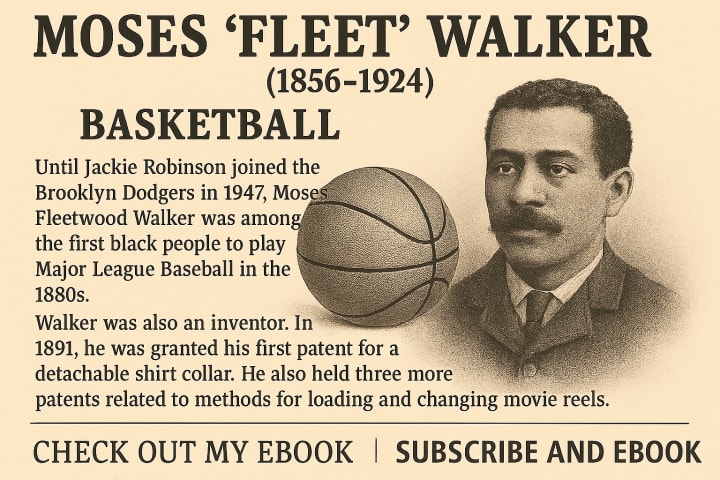
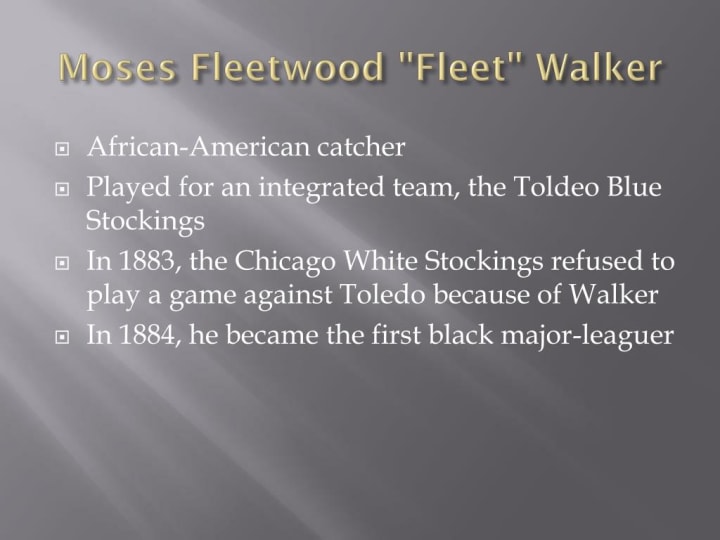
Long before Jackie Robinson became a household name in 1947, another pioneering athlete stepped onto the field and challenged the deeply entrenched racial barriers of his era. His name was Moses Fleetwood “Fleet” Walker (1856–1924), and although history remembers him primarily as one of the earliest Black athletes to play in professional Major League Baseball, his extraordinary life story stretches far beyond the diamond.
Today, historians, archivists, and scholars of American culture are revisiting Walker’s legacy—not only as a courageous athlete but also as a prolific inventor whose innovations helped shape early 20th-century cinema.
A Groundbreaking Athlete in a Hostile Era
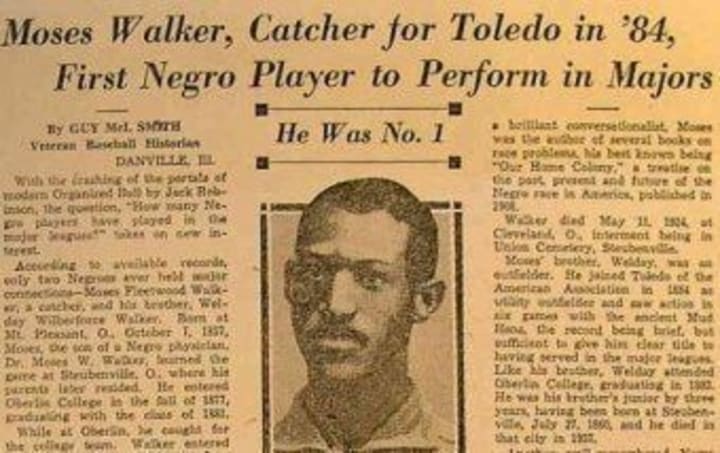
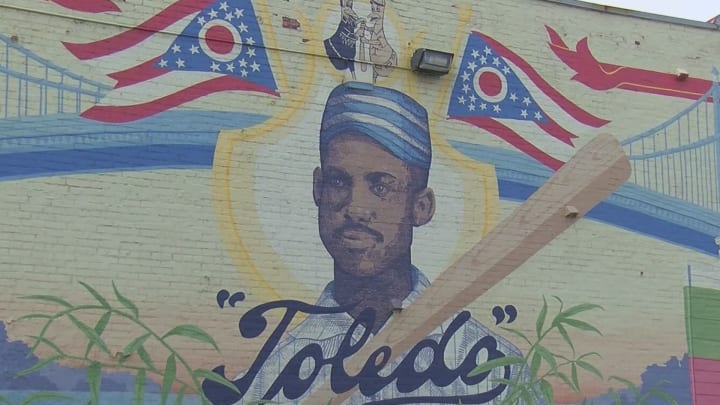
In the mid-1880s, Walker played as a catcher for the Toledo Blue Stockings of the American Association, a major league of its time. Throughout the 1884 season, Walker endured open hostility, threats, and discriminatory policies that would have forced many others out of the sport entirely.
Unlike the more modern baseball environment Jackie Robinson entered, Walker faced an era with virtually no protections, no institutional support, and no public sentiment pushing for integration. Yet he played with a resilience that would echo for generations.
Baseball historians today widely regard Walker as one of the earliest—and most courageous—athletes to integrate the highest level of the sport, decades before America was willing to acknowledge the significance of his efforts.
An Inventor Ahead of His Time
While baseball was a defining chapter in Walker’s life, his journey into inventing was equally remarkable. After leaving professional sports, Walker reinvented himself—this time figuratively—through engineering, creativity, and entrepreneurship.
In 1891, Walker secured his first U.S. patent for a detachable mechanical shirt collar, a design intended to improve comfort and utility. But this was just the beginning.
Walker went on to earn three more patents, all tied to innovations for loading, feeding, and changing motion picture reels. His designs targeted problems that plagued early film projection, offering greater speed and safety. At a moment when moving pictures were still a technological novelty, Walker was already imagining ways to streamline the process—making him an overlooked contributor to the evolution of cinema.
A Legacy Too Long in the Shadows
Despite his achievements, Walker’s story faded from mainstream historical narratives for much of the 20th century. The intersection of his race, his era, and the limited documentation of early baseball contributed to his obscurity.
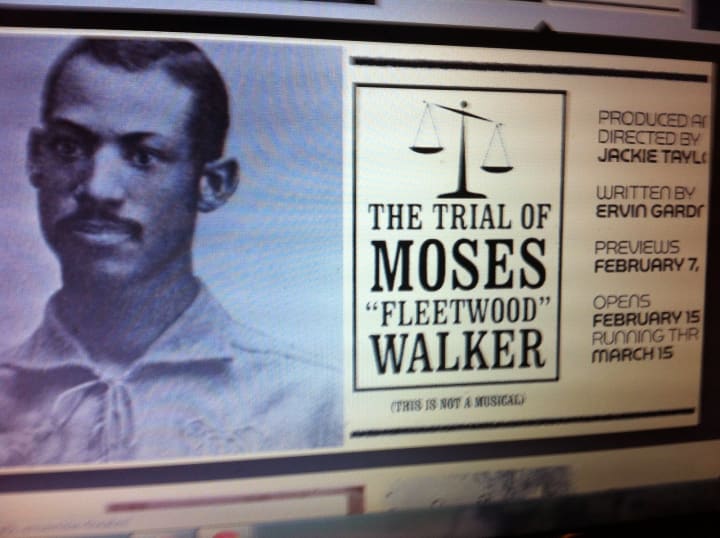
But in recent years, researchers and cultural institutions have begun working to revive Walker’s legacy. From academic conferences to museum exhibitions and independent publications, more people are discovering the astonishing scope of his accomplishments.
Walker’s life defies a single label.
He was:
A pioneering professional baseball player
An inventor with multiple patents
A businessman
A writer
A fierce advocate for Black rights in a post–Civil War America
His story is not simply one of survival—it’s one of transformation, resistance, and relentless ingenuity.
Connecting the Past to Today
In an era where technology and entertainment continue to evolve at lightning speed, Walker’s dual legacy in sports and innovation feels more relevant than ever. His early contributions to film projection echo through modern digital media, while his courage on the baseball field helped lay early groundwork for future integration.
As scholars push for greater recognition of forgotten pioneers, Walker’s life stands as a powerful reminder: history is full of trailblazers whose stories remain untold—until someone chooses to shine a light on them.
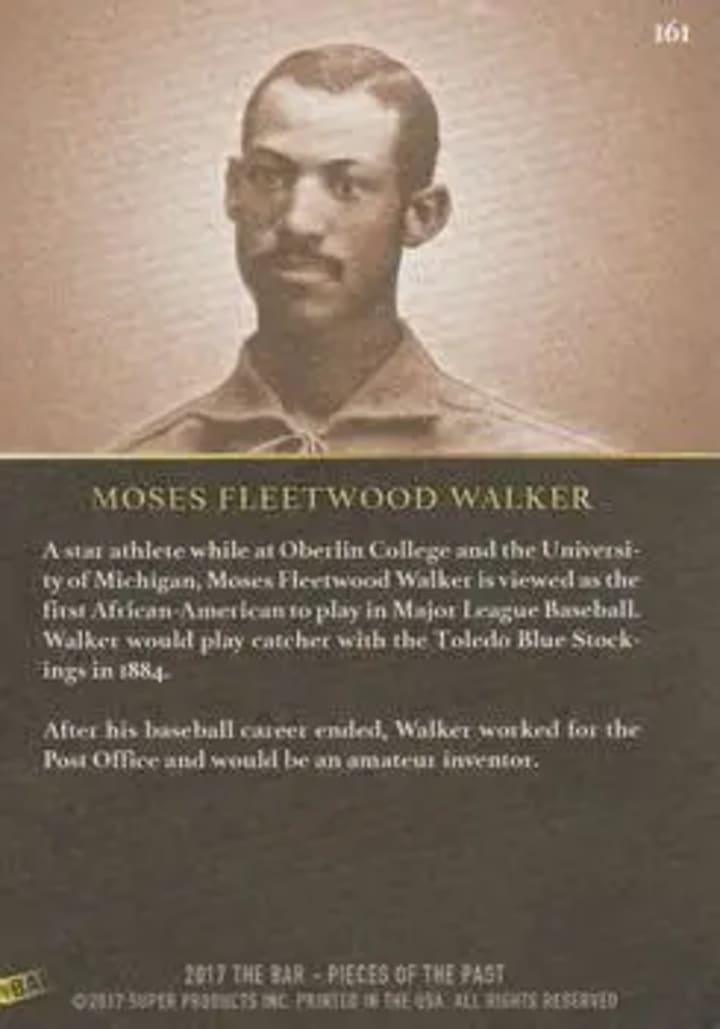
Want to dive deeper into hidden Black inventors, trailblazers, and early American history?
Explore my ebook for exclusive stories, rare research, and powerful historical insights you won’t find anywhere else.
Get new features, historical deep dives, and special updates delivered directly to your inbox.
Subscribe today and never miss a story that deserves to be remembered.
About the Creator
TREYTON SCOTT
Top 101 Black Inventors & African American’s Best Invention Ideas that Changed The World. This post lists the top 101 black inventors and African Americans’ best invention ideas that changed the world. Despite racial prejudice.
Keep reading
More stories from TREYTON SCOTT and writers in Chapters and other communities.
Sarah Boone
Her design was patented in 1892 By Staff Reporter March 6, 2026 —Leavie Scott In the late 19th century, when American households were rapidly transforming under the weight of industrial growth and changing fashion, an inventor from Connecticut quietly reshaped one of the most common domestic tools in history: the ironing board. Her name was Sarah Boone (1847–1904), and her innovative design would become the blueprint for the ironing boards still used around the world today.
By TREYTON SCOTTa day ago in Chapters
Has World War III Started?
Has World War III Started? The question “Has World War III started?” is no longer limited to academic debate or fictional movies. It is now openly discussed in newsrooms, policy circles, and online platforms around the world. While the simple answer remains no, the conditions shaping today’s global environment are deeply alarming. The world is experiencing an unprecedented convergence of regional wars, technological disruption, and power competition that closely resembles the early stages of past global conflicts.
By Wings of Time 4 days ago in Chapters
Tatt~Master
— Assembly Line Tatt Machine ~ Impressions to Impress — As I begin to understand more about the Tattoo Phenomenon. I've written silly, yet verbatim, dating site anecdotes in 'Frazzled.' So let me ask you: Would you be More attracted to someone slathered with tattoos, or Less?
By Jay Kantor6 days ago in Humor


Comments
There are no comments for this story
Be the first to respond and start the conversation.