
He Confessed to Murder in My DMs: The Dark Side of Going Viral
When your most-liked story becomes someone else's confession booth

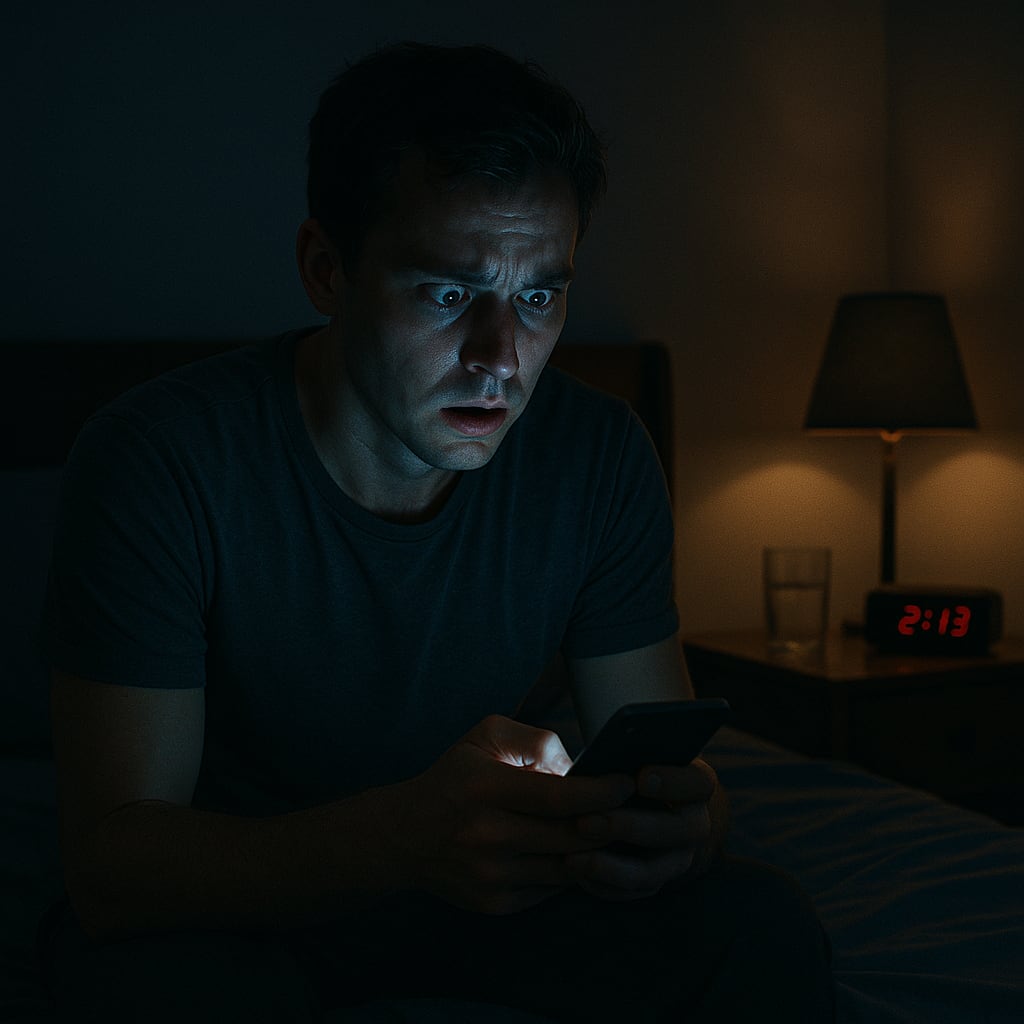
When your most-liked story becomes someone else's confession booth
The message came in at 2:13 a.m.
I saw the notification glow on my nightstand, that soft blue light that usually means spam, or a heart emoji, or someone asking, “Did this really happen?”
Instead, the first line said:
“I’ve never told anyone this, but I killed someone, too.”
I wish I could say I closed my phone and went back to sleep.
I didn’t. I opened the message. I read it. I read all of it.
And that’s how a story I wrote for the internet turned my inbox into a crime scene.
How a viral story opened the door
A few days before the confession, I’d posted a personal essay about a man who almost killed me.
Not in a metaphorical, “he broke my heart” way.
A real man, a real night, a real fear that I might not make it home. It was messy and honest and more vulnerable than I usually allow myself to be online.
The story got traction right away.
People shared it. Comments poured in.
I saw that little earnings counter tick upward and told myself the rawness was worth it.
Strangers wrote about their own close calls and predatory exes and Uber rides that didn’t feel right.
Some messages were grateful. Some were angry. Some were just trauma yelling into the void, hoping someone would yell back.
For a while, it felt strangely beautiful.
Like I’d unlocked this secret room where we were all finally telling the truth about the things that scared us.
Then the tone of the messages started to shift.
First it was one guy who said, “You made him sound worse than he probably was. You women exaggerate.”
Then another, asking for the man’s full name so he could “teach him a lesson.”
Then, that night, the confession.
The DM that crossed a line
The message was long, broken up into panicked paragraphs.
He said my story “hit too close.”
He said he saw himself in the man I wrote about.
He said, “But in my case, she didn’t get away.”
Those words changed the air around me.
It was like my bedroom shrank. Everything in me went quiet and loud at the same time.
He described a woman, a fight, a night that went too far.
He used phrases like “it just happened” and “I lost control” and “she wouldn’t stop yelling.”
He never used her name.
He wrote like he wanted absolution but not responsibility.
Like if he poured this poison out into my inbox, maybe I would drink it for him and he could walk away lighter.
I scrolled, looking for anything concrete—dates, details, a location.
There were hints, but nothing solid enough to type into a police tip form without feeling like I might be accusing the wrong person.
At the end, he wrote:
“I’m telling you because you understand bad men. You’re the only one who would get it.”
I felt physically ill.
He thought my story made me qualified to be his priest, his therapist, and his accomplice in silence—all at once.
When storytelling turns into emotional trespassing
People talk about the dark side of social media like it’s trolls and doomscrolling and misinformation.
They don’t talk about this—
about how going viral can quietly break the wall between “I shared a story” and “Now I’m responsible for your secrets.”
There’s a specific kind of boundary that dissolves when your writing hits big numbers.
Readers stop seeing you as a stranger.
They think they know you, because they’ve seen that one raw, bleeding part of your life.
To them, you’re not just “someone who wrote a story.”
You’re the person who said the thing they’ve kept buried.
That connection can be beautiful when it’s handled with care.
And it can be terrifying when people use it as a free pass to unload the darkest parts of themselves without warning.
I’ve had people confess cheating, addiction relapses, secret pregnancies, self-harm, assaults they never reported.
Sometimes I’m grateful they trusted me. I respond gently, point them toward resources, remind them they’re not alone.
But a murder confession?
That’s not “thanks for sharing, here’s a hotline.”
That’s a line you can’t un-read.
The strange power imbalance of going viral
Here’s the weird thing about being “the writer” or “the viral person” in these situations:
You look powerful on the outside—
hundreds of comments, shares, strangers quoting your words back to you.
Inside your inbox, though, the power flips.
You’re cornered in a digital hallway with someone you’ve never met, holding a secret you never asked for.
They know where you live online, what you look like, how to reach you.
You know nothing about them except that they might have killed someone and decided you were the right person to tell.
The imbalance isn’t just emotional.
It’s ethical.
If he’s telling the truth, there’s a victim who never got justice.
If he’s lying, he’s using someone else’s trauma—and mine—as entertainment or manipulation.
Either way, I’m stuck with the same terrible question:
What am I supposed to do with this?
The impossible ethics of a DM confession
The morning after, I did what most of us do when the internet hands us something we’re not equipped for:
I Googled.
“Stranger confessed to crime online what do I do”
“Can you report a DM confession to the police”
“Anonymous potential murder confession internet”
The answers were vague, because reality is vague.
You can report it, said some posts, but without details, there’s not much they can do.
You can ignore it, said others, because it might be trolling.
You can block and move on.
None of those options felt clean.
Reporting meant I had to decide whether I believed him.
Blocking meant pretending I hadn’t just read what I read.
And doing nothing felt like a choice, too—a choice I’d have to carry.
I ended up taking screenshots, blurring his handle, and sending them to a lawyer friend to ask about process.
She said something I still think about:
“The internet has made it way too easy for people to offload their guilt onto strangers and call it confession. You’re not obligated to be anyone’s evidence locker.”
I did file an anonymous tip, with every detail I could extract from the message.
Then I blocked him.
It didn’t feel heroic or satisfying.
It felt like taking out the trash and knowing some smell will still linger.
The emotional hangover nobody warns you about
The confessional DM stopped being about him pretty quickly.
It became about me not being able to concentrate on anything for days.
About re-reading my own story and seeing it through his eyes, which made me feel contaminated.
I started second-guessing every line I’d written.
Was I too detailed? Too triggering?
Did I accidentally send a beacon out to men who want to be seen as “monsters” instead of just… accountable?
For the first time, I understood why some writers go vague.
Why they blur edges, change timelines, sand down the sharpness of what really happened.
There’s safety in generalities.
My story wasn’t general. It was sharp enough to cut.
And just like anything with an edge, people will pick it up and use it how they want—
sometimes against the very people it was meant to protect.
The fantasy of “raw, honest storytelling”
We love the idea of “sharing our truth” online.
We talk about brave essays, vulnerable posts, “speaking out.”
We applaud the person who opens their chest and lets the world look in.
But we skip the part where the world doesn’t just look.
It steps inside. It rearranges the furniture. It leaves things behind.
Raw storytelling has become a kind of currency.
We trade our most painful experiences for clicks, reads, ad revenue, followers, attention.
Most platforms even reward it.
The more “real” you are, the more the algorithm smiles on you.
What almost no one admits is that the cost isn’t just emotional for the writer.
It’s structural.
The more we normalize bleeding in public, the more people assume that any boundary we might have is flexible.
Of course you’ll read my ten-paragraph trauma dump.
Of course you’ll respond at 3 a.m.
Of course you’ll hold my confession the way no one ever held yours.
After all, you “started it,” right?
You wrote about your pain first.
The line between storytelling and consent gets blurry fast.
Storytellers are not crisis centers
This is where I probably sound colder than I am, but it needs to be said:
Writers, creators, and viral storytellers are not crisis centers.
We are not priests.
We are not law enforcement.
We are people who put words on a screen and press publish.
Some of us have the training to hold heavy things. Most of us don’t.
We’re figuring it out as we go, usually badly.
There’s a reason hotlines exist.
There’s a reason therapists train for years.
There’s a reason legal systems—flawed as they are—have protocols.
Dumping life-or-death confessions into a stranger’s inbox isn’t catharsis.
It’s outsourcing responsibility.
I don’t say that to shame anyone who’s ever reached out in desperation.
I say it because if the internet has become the place we go instead of help, we’ve built a trap, not a community.
Consent goes both ways
We talk a lot about consent in the context of bodies.
We talk about “no means no” and “enthusiastic yes.”
We rarely apply that same logic to emotional labor.
But it’s a violation, in its own way, to force someone to carry the weight of your worst act against their will.
I did not consent to being the witness to a murder confession.
I did not consent to holding evidence I could not verify, to wondering whether there was a woman whose story ended where mine only almost did.
And yet there I was, awake at 2:15 a.m., scrolling through a stranger’s guilt like it was just another side effect of “good engagement.”
That’s the part that sticks with me.
Not just what he said, but the way the platform made it feel almost… routine.
Just another DM. Just another “thanks for sharing, here’s my pain.”
At some point, we have to admit that our appetite for raw stories comes with an ethical hangover.
When we invite people to “open up” online, to “tell their truth,” we’re not just opening a door.
We’re removing a wall.
And we haven’t really figured out what to build in its place.
The quiet boundaries I keep now
I still write.
I still tell stories that are uncomfortably honest sometimes.
But there are quiet rules I keep now that I didn’t have before.
I don’t read DMs in the middle of the night.
If a message starts with “I’ve never told anyone this,” I pause before deciding whether I’m the right person to hear it.
Sometimes I respond with links—to hotlines, to resources, to therapists, to legal aid.
Sometimes I don’t respond at all.
I no longer feel obligated to be everyone’s safe place just because I wrote one unsafe story.
I’m more intentional about the details I share.
I ask myself: “Am I giving readers what they need to feel seen, or what some people might twist to feel justified?”
There’s no perfect way to calculate that.
I get it wrong, I’m sure.
But I’m at least asking the question now.
What we owe each other in the age of viral confession
If there’s anything I’ve taken from that DM—and all the ones since—it’s this:
We need new rules for living in each other’s heads like this.
If you share raw stories online, you’re allowed to protect yourself.
You’re allowed to set boundaries on what you’ll read, respond to, or hold.
You’re allowed to say, “I’m not equipped for this,” and point someone toward actual help.
If you consume raw stories, you’re allowed to feel seen.
You’re allowed to reach out, to say “me too,” to be human.
But there’s a line between “I relate” and “Here, carry this for me or I’ll drop it on the floor.”
The dark side of viral storytelling isn’t just trolls or backlash.
It’s the quiet ways we use each other as containers for feelings, for guilt, for horror we don’t want to face alone.
That DM didn’t make me stop writing.
But it did make me understand that every story that goes out into the world is also a kind of invitation.
Not everyone who walks through the door will be someone you’re ready to meet.
And yet, here we are—
telling our stories anyway,
hoping we can keep the door open
without letting the whole house burn down
About the Creator
abualyaanart
I write thoughtful, experience-driven stories about technology, digital life, and how modern tools quietly shape the way we think, work, and live.
I believe good technology should support life
Abualyaanart
Keep reading
More stories from abualyaanart and writers in Criminal and other communities.


Comments
There are no comments for this story
Be the first to respond and start the conversation.