Play
Why Saying Less Makes Words Feel More Valuable
There is a widely held belief that words gain value through scarcity. When someone speaks rarely, their statements are treated as weightier, more deliberate, and more worth attending to. When someone speaks often, their words are assumed to be interchangeable, disposable, or less carefully considered. This intuition is not entirely wrong, but it is frequently misapplied. Scarcity does affect perception, but perception is not the same as truth, and rarity is not the same as meaning.
By Peter Thwing - Host of the FST Podcastabout an hour ago in Critique
Speaking to Time Instead of the Room
Much of modern communication is oriented toward immediacy. Writing is framed as something meant to be consumed quickly, reacted to instantly, and replaced just as fast by whatever comes next. Under this model, the value of a piece is measured almost entirely by its initial reception. If it does not land immediately, it is treated as a failure. This assumption narrows the purpose of writing and misunderstands how meaning actually travels through time.
By Peter Thwing - Host of the FST Podcast15 days ago in Critique
Practice vs Performance
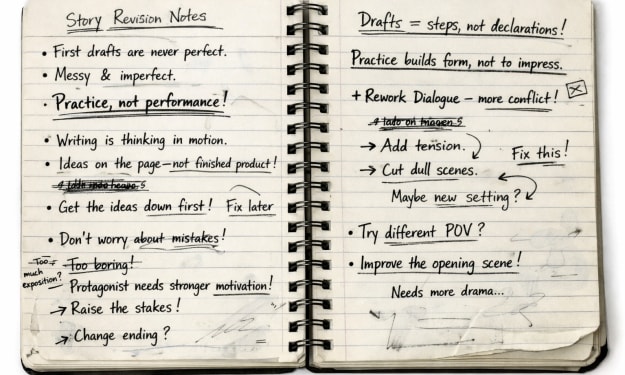
One of the quiet pressures shaping modern communication is the assumption that anything written should be immediately shareable. Drafts blur into declarations, and exploration is mistaken for conclusion. Under this pressure, writing becomes performative by default. The moment words are placed on a page, they are treated as finished statements rather than steps in a process. This expectation distorts both how writing is produced and how it is received, collapsing practice into performance and leaving little room for genuine development.
By Peter Thwing - Host of the FST Podcast16 days ago in Critique
AI as a Reflective Surface
Much of the confusion surrounding artificial intelligence comes from treating it as an agent rather than a surface. When people speak about AI “doing the thinking,” “creating the ideas,” or “speaking for someone,” they are often projecting agency onto a system that does not possess intention, belief, or understanding. This projection obscures what is actually happening in many real-world uses. In those cases, AI is not acting as a source of meaning, but as a surface that reflects, redirects, and reshapes what is already present.
By Peter Thwing - Host of the FST Podcast24 days ago in Critique
When Is a Move Final?
The Commitment Problem in Modern Chess Modern chess operates under a fractured commitment model that no longer aligns with how players think, how turns function in most games, or how chess itself is actually played across physical and digital formats. At the heart of the problem is that chess treats physical contact with a piece as binding commitment while simultaneously relying on a separate explicit action to end a player’s turn. This creates a logical contradiction: a move becomes final before the turn is over. In most turn-based games, interaction with game components is provisional until the player explicitly signals the end of their turn. Chess is an anomaly in this respect, and the inconsistency becomes increasingly visible in modern play.
By Peter Thwing - Host of the FST Podcastabout a month ago in Critique
3 TV Shows and 10 Truths: From Background Hummus to Main Course
For decades, Hollywood treated Arab women like background hummus, flat, decorative, and just there to make someone else look exotic. Veiled, silent, or sighing theatrically, they were reduced to one-note caricatures. Finally, that’s changing.
By Sara Yahia6 months ago in Critique
Trailer Trash McMansions
Feeling poor? Sometimes it’s a matter of just not being able to land a job with a good pay cheque. Or sometimes it’s a matter of refusing to tolerate corporate bullshit even for a good pay cheque. There is absolutely nothing wrong with being poor.
By Narghiza Ergashova7 months ago in Critique
Tunisian Man Sentenced to Six Months in Jail for Refusing to Listen to President's Speech
In a development that has sparked serious concerns among human rights activists and international observers, a Tunisian citizen has been sentenced to six months in prison for refusing to listen to a televised speech by President Kais Saied. The unusual and controversial sentence, handed down by a local court, has once again brought Tunisia's declining state of freedom of expression under the spotlight.
By Ikram Ullah8 months ago in Critique
🎼 Music: The Language That Speaks When Words Fail . AI-Generated.
Have you ever listened to a song and felt like it was telling your story—without a single word? Music is a universal language, but not in the way we usually think of language. It doesn’t rely on grammar or vocabulary. Instead, it uses rhythm, melody, harmony, and silence to speak directly to our emotions.
By The Yume Collective8 months ago in Critique