
Ankur Patel Qualifies for LAUSD Board Race
A two‑candidate, winner‑take‑all election in Board District 4 sets the stage for a clear contrast in vision for Los Angeles public schools.

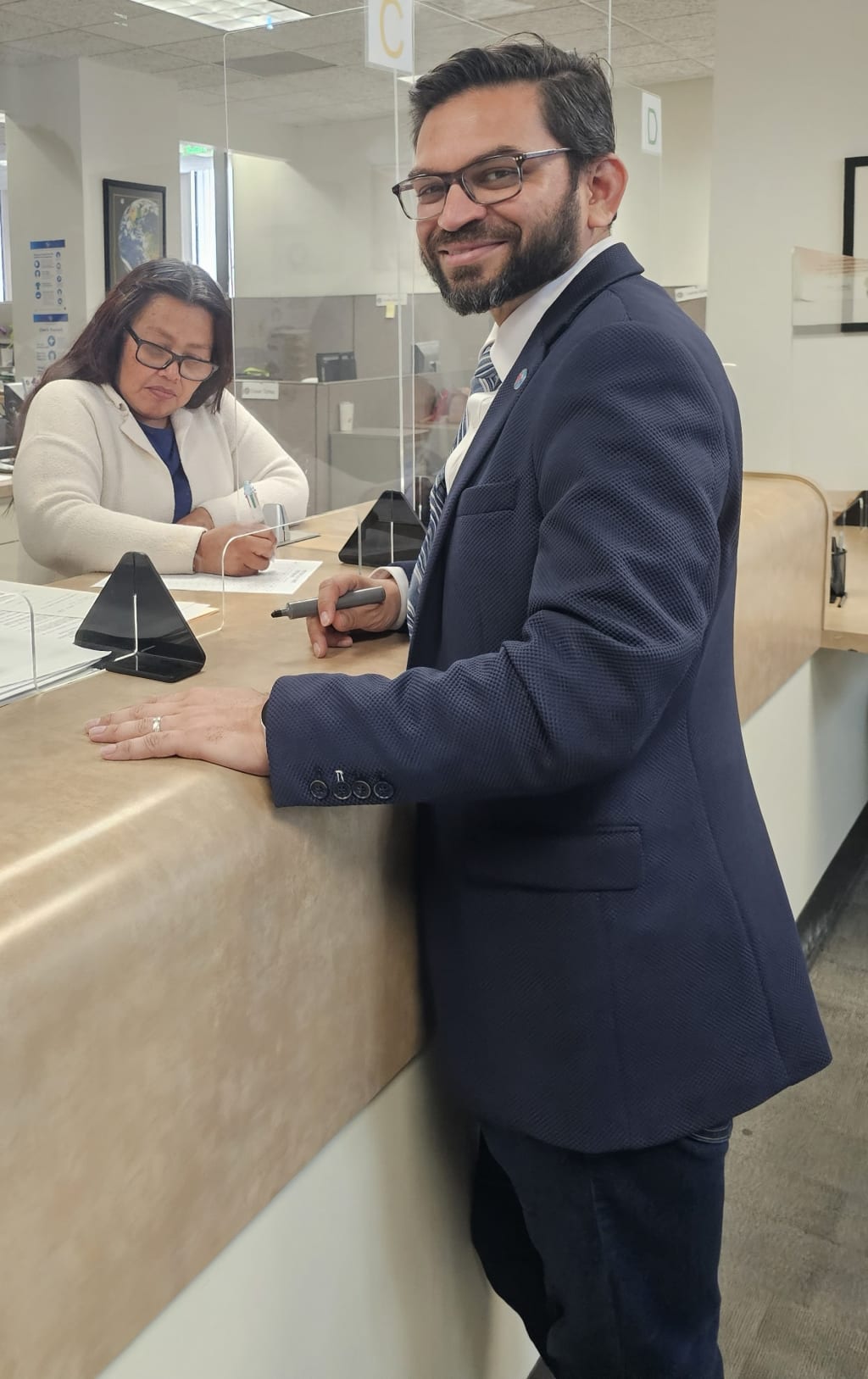
“When we meet the needs of students who require the most support, we raise the standard of education for everyone."
— Ankur Patel
On Friday, Ankur Patel became the final candidate to qualify for the LAUSD School Board election and will face incumbent Nick Melvoin in June. With only two candidates in the race, this is now a winner‑take‑all election.
All challengers were provided with six questions to introduce themselves to voters. These are Patel’s responses:
- What is your current occupation?
I have served as the Director of Outreach at the Hindu University of America since 2023. Before this, I served as the Director of Advancement from 2019 to 2023.
After earning a B.S. from UCLA in 2007, I taught English for a year in South Korea and six months in Beijing. I then earned my M.S. at CSUN in 2014, during which I served as Reverend James Lawson's Graduate Assistant for a semester in 2013.
After being a student activist, I ran for LA City Controller in 2013 and LAUSD BD3 in 2015.
- Do you or have you ever worked for the LAUSD? If yes, in what position(s)?
Yes, I have proudly worked for the Los Angeles Unified School District in multiple roles. From 2015 to 2018, I served as the School and Community Coordinator for LAUSD Board District 3 Member Scott Schmerelson.
I also worked as a Substitute Teacher from 2018 to 2023 working across dozens of schools, mostly at Olive Vista Middle School in Sylmar. I had multiple long-term assignments, taught over 100 days in each of the 2019-2020 and 2020-2021 school years, while being an active member of UTLA.
- Do you have any children currently enrolled in the LAUSD? Any graduates of the District?
My wife Mitsu and I don't have any children yet, but I attended LAUSD schools from K-12, including Chatsworth Park, San Jose, Portola, and North Hollywood High School, where it was my privilege to graduate from the wonderful magnet programs offered by LAUSD.
My two younger brothers attended Chatsworth Park, Lawrence, and Chatsworth High School.
We are a public school family and will send our future children to LAUSD schools.
- Why are you running?
Quality public education is one of my core values. I have benefited from the great public education I received, and I want to pay it forward.
I’m running because I believe in strong public schools as a public good, and because education is the great equalizer. Every child, regardless of zip code, income, ability, language, or immigration status, deserves a high-quality public education.
Right now, our system isn’t living up to that promise. We can only turn things around if we protect and invest in public schools, not hollow them out.
I’ve been a teacher. I’ve worked inside schools. I’ve seen how board-level decisions impact real classrooms, especially for special education students, working families, and kids who rely on public schools the most. Too often, decisions are made far from classrooms and driven by politics or money, not by what students, parents, and educators actually need.
Public education should not be privatized. Schools are not businesses, and students are not products. When education is treated like a market instead of a public responsibility, equity suffers, transparency disappears, and the most vulnerable students are left behind. What we need right now are public school champions, leaders who are willing to stand up for neighborhood schools, educators, and families, even when it’s not convenient. Those champions are missing, and that’s a big reason I’m running. I will work for you, not special interests.
I believe in investing in public institutions, respecting educators and staff, and making evidence-based decisions that put people before profit. This means accountability, transparency, and honesty about what’s working and what’s not. We only have 180 instructional days, rising student needs, and shrinking margins for error, yet we avoid the hard conversations. I’m running to have those conversations and to push for solutions that actually improve learning.
Los Angeles is one of the most diverse school districts in the country, yet too many families feel invisible in decision-making. I’m running so more voices are heard at the table, and public education truly serves the public. This is about defending public education and making sure it works for every child. Representation matters.
Do you have any thoughts about how the LAUSD provides Special Education services?
Every child deserves an excellent education - no matter their abilities, learning style, or needs. Special education is not a side program or an afterthought; it is a core responsibility of our public school system and, under the Individuals with Disabilities Education Act, a legal obligation under Federal law.
My perspective is shaped by a 50-day assignment in a moderate-to-severe special education classroom at OVMS. Here, I saw what success looks like: coordinated teams of aides and educators, individualized instruction, and strong collaboration with families. In those environments, students thrive because programs are tailored to their behaviors, personalities, goals, and support needs.
But I have also seen classrooms stretched beyond capacity with large class sizes, limited support staff, unaddressed behavior issues, and educators asked to do more with less. The issue is not just funding; it is also implementation, prioritization, and the will to scale what we know works.
In Board District 4, we have powerful examples of what is possible. Specialized campuses like Diane Leichman Career Preparatory and Transition Center show how thoughtful design, accessibility, and dedicated staffing can transform learning for students with significant needs. We should be expanding and strengthening these models, not mainstreaming students before they are ready.
We must also confront inequities in access. Families who understand the system often secure services, while others, sometimes due to stigma or lack of information, do not access supports that could help their children succeed. Special education must be responsive, transparent, and equitable, with decisions about IEPs and 504 plans applied consistently and fairly across schools.
As a Board Member, I will advocate for increased state and federal investment in special education while also pursuing local solutions now. That includes rethinking staffing models, deploying expert teachers strategically, strengthening training for new educators, and designing student schedules and class structures that allow every learner to receive meaningful attention. Innovation is how we move forward.
My vision is holistic. Strong special education systems strengthen the entire district. When we meet the needs of students who require the most support, we raise the standard of education for everyone. I will be a proactive board member who listens to parents, students, and educators, learns from proven models across districts and around the world, and works relentlessly to ensure our schools deliver the high-quality education that helps every child reach their full potential.
- Do you have any thoughts about how the LAUSD regulates charter schools operating within its boundaries?
I am concerned that oversight and enforcement decisions within LAUSD’s Charter School Division can appear to shift depending on the political will of the sitting board rather than on consistent standards. Families, educators, and school operators deserve a system that is predictable, fair, and grounded in clear rules -- not politics. As a board member, I will work to ensure that all schools are evaluated and supported using transparent criteria applied evenly across the board. Audits of charter schools have been conducted in the past, and we should continue to do so.
Over time, too many corporate and privatization interests have entered the charter school space in bad faith, treating education as a marketplace rather than a public good. That approach undermines trust, diverts resources, and too often prioritizes profit over students. We must be honest about that reality and ensure that public dollars are always used transparently and in the best interests of children and families.
At the same time, I recognize that not all charter schools are the same. There are community-generated charter schools that are rooted in their neighborhoods, operate transparently, follow District regulations, and serve students responsibly.
One area that demands urgent reform is the unequal application of Proposition 39. Too often, classroom reallocations have disproportionately harmed neighborhood schools, disrupting students and educators while creating the perception, and sometimes the reality, of biased decision-making. Facilities policy must be implemented fairly, transparently, and with the stability of existing school communities as a top priority.
My approach is simple: listen carefully to all stakeholders, insist on accountability and fairness, and keep the focus on what is best for the students and families of Los Angeles.
About the Creator
Carl J. Petersen
Carl Petersen is a former Green Party candidate for the LAUSD School Board and a longtime advocate for public education and special needs families. Now based in Washington State, he writes about politics, culture, and their intersections.
Keep reading
More stories from Carl J. Petersen and writers in Education and other communities.
LAUSD Candidate Joseph Quintana: Answers in Full
“I want to ensure that voices from every part of our community are heard and respected." — Joseph Quintana In the recently concluded filing period for the LAUSD School Board primary in June, Joseph Quintana was one of the entrants whose candidacy had not been previously announced. Quintana, who describes himself as “a Native American community advocate, nonprofit leader, and education and workforce development collaborator,” is running in Board District 2 against incumbent Rocío Rivas and Raquel Zamora.
By Carl J. Petersen26 days ago in Education
Strategy Before Software: Why Content Strategy Matters More Than Platform Technology
A strong content strategy matters more than platform technology because strategy shapes every choice a team makes. It guides tone, purpose, structure, and audience focus. Technology can help with speed and reach, but it cannot replace direction. A tool only works well when someone uses it with a clear plan. Without a strategy, even the best systems fail to connect with real people.
By James Kaminskyabout 3 hours ago in Education
How I Minimized My Digital Shadow Without Disappearing From the Internet
A few months ago, I did something uncomfortable. I searched my own name. Not just on Google. I checked social media platforms, old forums, public directories, and even usernames I used years ago. I searched my email address. I searched my phone number. I wanted to see what someone else could see.
By Stephano kambeta7 days ago in Education


Comments
There are no comments for this story
Be the first to respond and start the conversation.