
How AI-Powered Smart Intake Forms Improve Insurance Onboarding Efficiency
In the competitive world of insurance, how you collect customer information at the very start can make or break the client experience. Traditional manual intake forms long PDFs, email attachments, or web forms are familiar, but they often slow down the onboarding process, confuse users, and keep staff stuck in repetitive tasks. That’s why more agencies are turning to smart intake questionnaires powered by AI chatbots to transform the way they engage prospects and collect data.


What Are Manual Intake Forms?
Manual intake forms are the standard tools used for years in agencies. They come as downloadable PDFs, long online forms, or email attachments that clients are asked to fill out before the agency can begin processing a quote or policy. While straightforward in theory, these forms can be overwhelming in practice.
Clients are presented with page after page of fields all at once, often without guidance on what each question means. Insurance terminology can be confusing, and when users misunderstand a question, leave blanks, or use inconsistent formats, staff must follow up to correct it. These back-and-forth wastes time for both the client and the agency and in many cases leads to incomplete or inaccurate submissions.
What Is a Smart Intake Questionnaire?
A smart intake questionnaire takes all the effort out of traditional forms and replaces it with an engaging conversational experience. Rather than a static list of fields, users interact with an AI chatbot that asks questions one at a time much like chatting with a real person.
These AI tools guide the user through every step. They can check answer formats in real time, ask follow-up questions where needed, and even offer explanations if something is unclear. Responses are captured in a structured way and can be automatically funneled into your agency’s management system, reducing manual entry and errors.
Key Advantages of Smart Intake Technologies
Let’s dive deeper into what makes smart intake questionnaires such a game changer:
1. Better Engagement and Completion Rates
Traditional forms feel like homework. Clients see a long wall of questions and often abandon the process midway. In contrast, conversational interfaces feel more natural and less daunting. They guide users through only relevant questions, one at a time, keeping them engaged until completion.
2. Improved Data Accuracy
With manual forms, data validation only happens once the form has been completed and reviewed by staff. This means mistakes aren’t caught until later, which leads to frustrating follow-ups. Smart questionnaires can validate answers in real time—catching errors on the spot and prompting clients for corrections.
3. Reduced Internal Workload
One of the biggest hidden costs of manual intake is the time staff spend fixing mistakes, chasing missing information, and re-typing client responses into agency systems. Smart intake tools significantly cut down on these repetitive tasks by capturing structured, correct data from the outset.
4. Faster Turnaround Time
Because smart questionnaires collect higher-quality data more efficiently, agencies can move prospects through the onboarding process more quickly. Quotes can be prepared sooner, follow-ups are reduced, and clients get the answers they want faster.
Why the Insurance Industry Is Embracing AI Chatbots
The shift toward conversational intake isn’t just about modernizing technology it reflects changing customer expectations. People are used to chat-based interactions from apps and services they use every day. Filling out a long paper form feels outdated by comparison.
At the same time, agencies face pressure to respond more quickly and efficiently. Smart intake chatbots help teams handle more inquiries without increasing workload. They free up staff to focus on higher-value tasks like advising clients and closing policies.
FBSPL’s Smart Intake Questionnaire: PhoenixQ
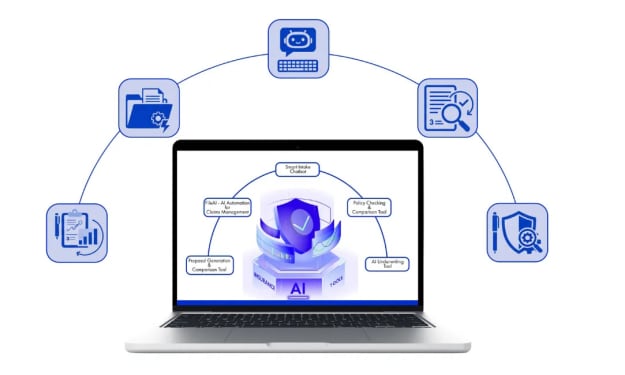
One example of this approach is PhoenixQ by FBSPL. It’s a Smart Intake Questionnaire designed for insurance agencies, using conversational AI to collect and validate information as prospects move through the intake process. The structured data can then flow directly into agency systems, helping reduce manual handling and improve overall accuracy.
Conclusion: A Smarter Start to Client Relationships
Manual intake forms may still serve a purpose, but their limitations are hard to ignore in a world that demands speed, clarity, and convenience. Smart intake questionnaires and AI-powered chatbots deliver a better experience for both clients and agencies—boosting completion rates, improving data quality, and reducing administrative burden.
For insurance agencies looking to modernize their onboarding process, smart intake tools offer a practical way to enhance productivity and strengthen the client journey from the very first interaction.
About the Creator
Fusion Business Solution P Limited
Empowering businesses through innovative outsourcing solutions since 2006. As a leader in BPM & Consulting, we specialize in Insurance Outsourcing, Accounting & Bookkeeping, Data Annotation, BI & Digital Marketing Services
Keep reading
More stories from Fusion Business Solution P Limited and writers in Education and other communities.
How AI Is Revolutionizing Policy, Claims, and Underwriting Workflows
Why AI Is Now Essential AI is no longer optional—it’s becoming central to insurance operations. It offers rapid task execution without cutting corners, intelligent decision-making powered by predictive analytics, and 24/7 customer engagement through chatbots. More than just automating routine tasks, AI enables insurers and agencies to shift human effort from repetitive work to high-value, strategic roles.
By Fusion Business Solution P Limited3 months ago in Education
Hard Hats Over Diplomas
The traditional path toward professional success formerly followed a singular trajectory through a four-year university. Generations accepted the mounting debt and the promise of a white-collar desk as the only legitimate marks of achievement.
By Angela Ash8 days ago in Education
Professional Skills That Separate Good Consultants from Great Ones
Consulting is a competitive field where expertise alone is no longer enough to stand out. While many consultants possess strong technical knowledge and industry experience, only a select group consistently delivers transformative results for their clients. What separates good consultants from great ones is the ability to combine analytical strength with exceptional communication, leadership, adaptability, and emotional intelligence to accelerate sustainable business growth.
By Nicole Metz4 days ago in Education
It's 2026. Songs Turning 10 This Year
In 2016, we saw the rise of short form videos and what would lead to the birth of TikTok. We cannot forget the Snapchat filters no matter how cringe worthy some of them might have been. It was also the year in which the hit series Stranger Things debuted.
By Jasmine Aguilar4 days ago in Beat



Comments
There are no comments for this story
Be the first to respond and start the conversation.