
Is Nursing a Good Career in Global? Education, Salary & Global Demand Explained
Explore nursing scope, government jobs, private hospital salaries, and opportunities in Gulf countries, UK, USA, and beyond.

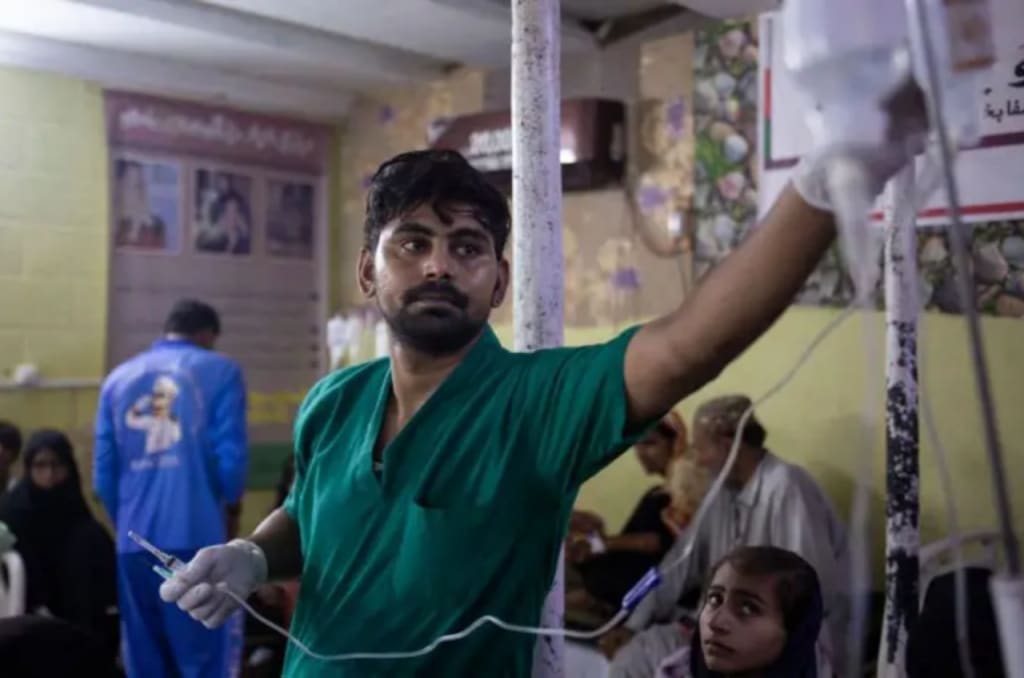
When a patient writhing in pain is admitted to a hospital, the first face they usually see is that of a nurse.
Before a doctor arrives, it is generally the nurse who asks about the illness, records the patient’s name and details, checks blood pressure and temperature, and then takes all this information to the relevant doctor.
In other words, the first stage of treatment begins with the nurse.
Although doctors are often seen as the central figures in the medical world, in reality the role of a nurse in the healthcare system is just as important as that of a doctor.
Nursing is a field whose demand is steadily increasing not only in Pakistan but around the world. Young people in Pakistan can choose this profession to meet global demand and secure good employment for themselves.
A study conducted by the Pakistan Business Council titled “Pakistan’s Nursing Workforce, Export Potential and Challenges” states that in Pakistan there are only five nurses available for every 10,000 people. Each year, only 5,600 nursing graduates are produced in the country. This number is insufficient not only to meet the growing domestic demand but also limits Pakistan’s ability to take advantage of global opportunities.
Nurses Are the Doctor’s Right Hand
Dr. Afrah Malik, who works at a hospital in Islamabad, says that nurses play a key role in the healthcare system and can be called the doctors’ right hand.
She explained that nurses strictly implement all instructions and treatment plans given by doctors and assist them whenever needed.
According to Dr. Afrah, during their shift nurses check a patient’s vital signs at least once or as needed—such as blood pressure, pulse rate, temperature, and oxygen levels. If any sign is abnormal, they inform the doctor so that appropriate action can be taken.
Dr. Azhar Farooq, a pediatric consultant in Lahore, also agrees about the importance of nurses.
He says no hospital can function without nurses. Their job is not limited to giving injections or setting up drips; they act as guardians of patients, provide continuous care, recognize warning signs, and serve as a link between the patient and the doctor.
Often, a patient’s life is saved because a nurse notices something in time.
Dr. Azhar says that nursing is not just a profession but a name for service, sacrifice, and humanity.
This raises the question: if nurses are the doctor’s right hand, what skills should they have in the medical field?
Not Doctors, But No Less Important
Dr. Afrah Malik says that nurses working in any hospital department must have expertise in their specific area. For example, in emergency departments or intensive care units (ICUs), nurses must be able to respond quickly. They should be capable of recognizing when a patient’s condition deteriorates and immediately inform the on-duty doctor. If a patient’s heart stops beating, the nursing staff present must recognize the situation and know how to start CPR (cardiopulmonary resuscitation).
Similarly, nurses working in operation theaters assist surgeons. According to Dr. Afrah, they prepare instrument trays and keep count of gauze pads used during surgery so that before stitching the wound, the surgeon can confirm that nothing has been left inside. Dressing wounds is also the responsibility of nurses.
She adds that maintaining a documented record of medications given to patients is also a nurse’s responsibility. Nurses must know the side effects of medications and be skilled in basic medical procedures such as inserting a cannula, placing a urinary catheter, and performing similar tasks.
Dr. Afrah believes that although nurses are not doctors, they are no less important.
But what are the job prospects for someone who becomes a nurse?
Growing Demand at Home and Abroad
Pakistan’s Health Minister Mustafa Kamal has said that there is a shortage of 950,000 nurses in the country, while globally there is a demand for 2.5 million nurses.
He stated that only about 6,000 Pakistani nurses are working abroad, compared to 650,000 Indian nurses serving in other countries.
This means that if a Pakistani citizen obtains nursing education, there are immense opportunities to work abroad.
According to the Pakistan Business Council’s research, Gulf countries have the highest proportion of foreign nurses. In Qatar, 99.2% of nurses are from other countries. In the United Arab Emirates, the figure is 98.8%; in Luxembourg, 76.9%; in Switzerland, 27%; in Germany, 16.9%; in Australia, 41.9%; and in the United States, 16.7%.
Thus, nurses have opportunities not only for overseas employment but also for permanent residency. Moreover, global demand for nurses is expected to rise further.
The research notes that in 2023 there were an estimated 29.8 million nurses worldwide, and by 2030 there could be a shortage of 4.1 million nurses.
Can Pakistan meet this growing demand? In response, Health Minister Mustafa Kamal said that currently the country does not have enough high-quality, well-trained nurses, which limits its ability to meet global demand. He said this is due to the lack of quality educational institutions. He added that efforts are being made to develop a system that produces well-trained nurses capable of meeting international demand.
How to Become a Nurse
Muqaddas Tasneem, a nurse and instructor at the Postgraduate College of Nursing in Lahore, explains that to become a nurse, one must complete a four-year BS Nursing degree, followed by a one-year internship. Those who wish to continue can pursue a master’s degree or even a PhD in the same field. Eligibility for BS Nursing requires intermediate (pre-medical) education with biology, physics, and chemistry.
According to her, candidates apply to relevant institutions after intermediate education, and admissions are merit-based. Seats are given to applicants with the highest marks.
Regarding expenses, she says that fees vary by university, but on average the four-year BS Nursing program costs around 500,000 to 600,000 Pakistani rupees.
Speaking about job opportunities after graduation, she says that the Punjab government offers Grade 16 positions to BS Nursing graduates, with an initial salary of about 50,000 rupees. Salaries in private hospitals vary.
She added that promotions to higher grades depend on the availability of positions. For example, in Punjab there are only eight Grade 20 positions for nurses.
Muqaddas Tasneem says that while there are opportunities for advancement in Pakistan, they are limited; however, global demand in this field is very high.
Aaqib Liaqat, associated with a private hospital in Islamabad, also says there is no shortage of employment in Pakistan’s nursing sector.
It is often assumed that nursing staff consist only of women, but that is not the case. Men can also join the nursing profession.
Aaqib, who is originally from Khyber Pakhtunkhwa and lives in Islamabad for work, describes nursing as an “excellent field” with many opportunities for advancement, depending on the individual.
Previously, there were only diploma programs, but now new courses are available. One can pursue a Master’s in Nursing and then specialized courses.
“If you do all this, you can advance based on your experience,” he says.
According to him, both public and private sectors offer good packages for nurses.
Even within Pakistan, one can earn a good livelihood in this profession.
About the Creator
Keep reading
More stories from Real content and writers in Education and other communities.
Does Handwriting Improve Memory and Learning?
The development, affordability, and easy availability of electronic and digital devices have changed many things. They have brought convenience, comfort, and ease into life. However, experts say that they are also creating certain problems that are negatively affecting our mental abilities. One example is the growing trend of typing instead of writing by hand. Today, most people around the world have a smartphone in their hands. Many of them can be seen rapidly typing on a small screen using their two thumbs. Those who need to write more use a tablet, laptop, or computer keyboard, typing either with two fingers or, if skilled, with eight fingers of both hands. In developed countries, it is now rare to see someone writing on paper with a pen. In modern schools of both developed and developing countries, children are introduced to computers in the early grades. In higher classes, pens, paper, notebooks, and even books are no longer commonly seen; instead, students work on tablets or laptops. Although the heavy burden of schoolbags has been lifted from children’s shoulders, experts say this has also led to a decline in certain abilities related to memory and learning. Professor of Psychology, Brigadier (Retd.) Dr. Shoaib Ahmed (Sitara-e-Imtiaz) at Dow University of Medical Sciences in Karachi, said that our brain has two parts that perform different functions. The left hemisphere controls bodily functions largely related to movement, while the right hemisphere is associated with creative abilities. He explained that when we type, it is more of a mechanical process. The brain does not pay attention to the structure or formation of letters and words because it knows that pressing a key will produce them; there is no need to shape them manually. However, when we write with a pen, the right side of the brain also becomes active, and the act of handwriting engages both hemispheres together. He added that the left hemisphere controls the right side of the body, and the right side of the body is governed by the left hemisphere of the brain. This is why most people perform tasks with their right hand. Dr. Shoaib further explained that when we write on paper by hand, the writing is not only being inscribed on paper but also being imprinted in our memory. This is why students who prepare notes by hand tend to remember them better than those who type them. How do handwriting and typing affect the brain? At the Norwegian University of Science and Technology in Trondheim, researchers included three dozen students in an experiment where they were asked to write by hand and to type. During this process, electronic scans of their brains were taken. The researchers found that brain waves were more active and pronounced during handwriting, while more limited activity was observed during typing. Professor Audrey van der Meer, from the Department of Psychology and co-author of the study, said that during typing, they did not observe the same organized oscillations in brain waves that were seen during handwriting. She stated that the act of handwriting is rich in neural activity. Many students also report similar experiences. Maryam Idris, who recently completed her MPhil, said that she remembers things better when she writes them by hand. To prepare for exams, she writes things down to memorize them. She mainly uses typing for assignments because it saves time. Kathleen Arnold, a psychologist at Radford University in the U.S. state of Virginia, said that although there is an increase in brain wave oscillations during handwriting compared to typing, it is not yet clear whether this is directly related to memory. Further research is needed. Dr. Shoaib Ahmed views it from another perspective. He says that when you write by hand, the part of the brain associated with creativity is also involved. That part pays attention to the structure of words. When you focus on something, it is transferred into our memory.
By Real content9 days ago in Education
Practical steps to handle a medical school interview invite
Receiving a medical school interview invite is a major milestone. It means the admissions committee already likes the grades and the test scores. Now they want to see the person behind the application. For many students this is the most intimidating part of the entire journey.
By Jelena Smiljkovic2 days ago in Education
The Brilliant Journey of Otis Boykin
Otis Frank Boykin was born in 1920 in Dallas, Texas, into a world that expected little from people who looked like him. But from the moment he entered the world, he seemed determined to challenge every limitation placed in front of him. His mother, a homemaker, tragically passed away when he was just a year old, and his father—a carpenter—raised him with a strong work ethic and a belief that intelligence could be a tool of transformation. Boykin carried that belief throughout his life, turning it into an engine of groundbreaking inventions that would eventually power some of the most advanced technologies on earth.
By TREYTON SCOTT5 days ago in Education


Comments
There are no comments for this story
Be the first to respond and start the conversation.