
Apple’s Power Move: Everything Announced in the Massive March 2026 Refresh
From the AI-Ready iPhone 17e to the M5 MacBook Air, Apple just redefined "Entry-Level" performance.

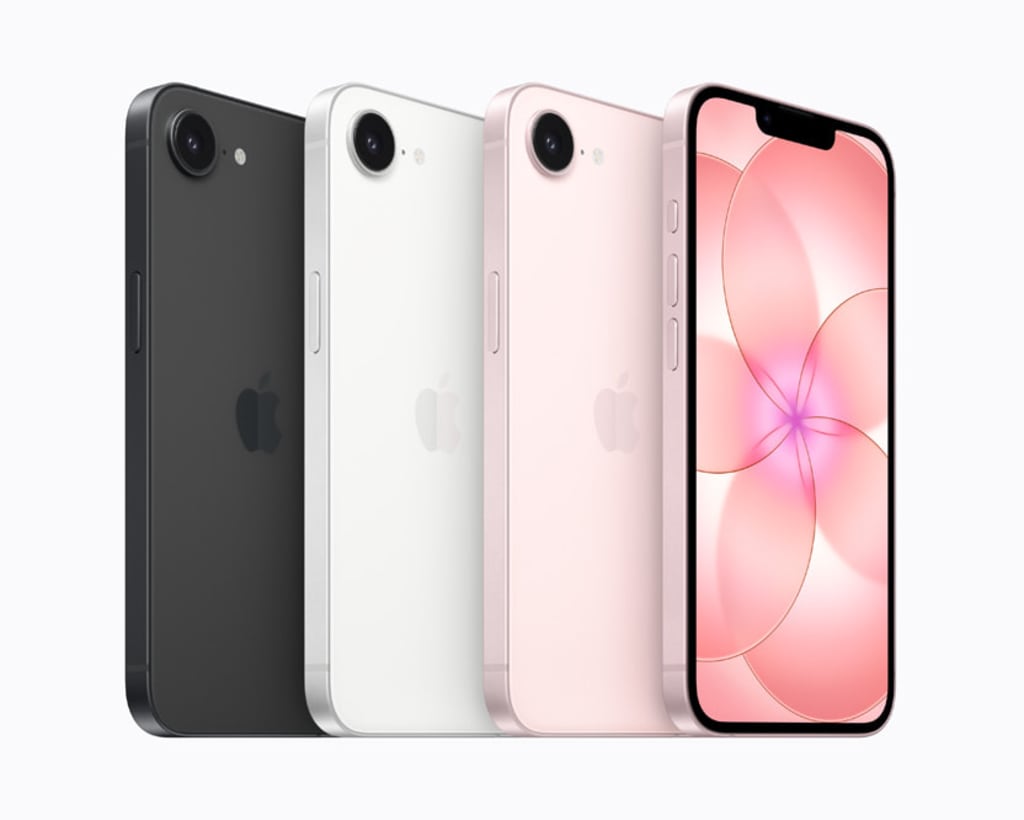
Apple has never been a company to do things quietly, but the first week of March 2026 will go down in tech history as one of its most aggressive hardware blitzes to date. Foregoing a traditional singular keynote, Apple opted for a "rolling" launch week, dropping bombshell announcements daily before culminating in a press "experience" in New York, London, and Shanghai.
If you’ve been waiting to upgrade your tech stack, your patience just paid off. Apple has officially introduced the iPhone 17e, the M4 iPad Air, and a powerhouse lineup of M5-series MacBooks. Here is everything you need to know about the new hardware, the specs, and why this shift matters for the future of Apple Intelligence.
1. The iPhone 17e: A Budget Beast with Flagship Internals
The most surprising announcement of the week was the iPhone 17e. Traditionally, Apple’s "e" or "SE" models have recycled older processors. Not this time.
The iPhone 17e is powered by the A19 chip—the exact same silicon found in the flagship iPhone 17. By putting its most modern chip into a $599 phone, Apple is sending a clear message: Apple Intelligence (AI) is no longer a luxury feature; it is the standard.
Key Upgrades:
Storage Win: In a rare move, Apple doubled the base storage to 256GB while keeping the price at $599.
MagSafe Arrival: The 17e finally gains a magnetic ring, opening the door to the world of MagSafe chargers and accessories.
Durability: It features Ceramic Shield 2, which Apple claims is 3x more scratch-resistant than previous generations.
Connectivity: It debuts the C1X in-house modem, promising faster 5G speeds and better power efficiency.
While it lacks the ProMotion (120Hz) display of its more expensive siblings, the iPhone 17e is arguably the best value-for-money smartphone Apple has ever released.
2. iPad Air M4: The Sweet Spot Gets Sweeter
The iPad Air has long been the "Goldilocks" of tablets—not too expensive, yet powerful enough for pros. The 2026 refresh moves the Air to the M4 chip, closing the performance gap with last year's iPad Pro.
The move to M4 isn't just about speed; it's about the 16-core Neural Engine. With iPadOS 26 on the horizon, the iPad Air is now fully optimized for complex generative AI tasks, from real-time video masking to advanced language modeling.
The Specs at a Glance:
Sizes: Available in 11-inch ($599) and 13-inch ($799) models.
Memory: Boosted to 12GB of unified memory to support heavier AI workloads.
Connectivity: Includes the new N1 chip, bringing Wi-Fi 7 and Bluetooth 6 support for the first time.
3. MacBook Air M5: The AI Laptop for the Masses
Apple’s most popular laptop just got a brain transplant. The new MacBook Air now features the M5 chip, a piece of silicon specifically engineered for "AI compute." Apple claims the M5 is up to 4x faster for AI tasks than the M4, making things like local LLM (Large Language Model) execution incredibly snappy.
Perhaps the most cheered change, however, is the storage. Apple has finally retired the 256GB base model. The M5 MacBook Air now starts with a 512GB SSD and 16GB of RAM as standard. While the starting price has shifted to $1,099, the value proposition is actually better when you consider that a similarly spec'd M4 model previously cost more.
4. MacBook Pro: The M5 Pro and M5 Max Era
For the power users, Apple quietly refreshed the 14-inch and 16-inch MacBook Pros. These machines now house the M5 Pro and M5 Max chips.
These aren't just incremental bumps. The M5 Max features a massive increase in memory bandwidth, allowing creative professionals to render 3D environments or edit 8K spatial video with zero lag. The 12MP Center Stage camera has also been improved with a new "Desk View" sensor, making your Zoom calls look like a professional studio production.
5. The Studio Display XDR: Professional Vision
To round out the Mac ecosystem, Apple refreshed its monitor lineup. The new Studio Display keeps the 5K resolution but adds a Nano-texture glass option as standard.
The real showstopper is the Studio Display XDR. This 27-inch monitor brings the "Extreme Dynamic Range" technology from the Pro Display XDR down to a smaller, more accessible form factor. With 1,600 nits of peak brightness and a 1,000,000:1 contrast ratio, it is the new gold standard for photo and video editors.
Why This Matters: The "Apple Intelligence" Push
Looking at these releases as a whole, a clear pattern emerges. Every single device released this week—from the cheapest iPhone to the most expensive MacBook Pro—is built with a massive surplus of AI processing power.
By doubling RAM and storage across the board, Apple is preparing its user base for macOS Tahoe and iPadOS 26, which are expected to rely heavily on on-device AI. Apple is ensuring that no matter which device you buy in 2026, you won't be left behind in the AI revolution.
Release Dates and Pricing
If you’re ready to pull the trigger, here is the timeline:
Pre-orders: Opened March 4, 2026.
In-store Availability: Starting March 11, 2026.
Pricing Summary:
iPhone 17e: Starts at $599 (256GB)
iPad Air M4: Starts at $599 (11-inch)
MacBook Air M5: Starts at $1,099 (512GB/16GB)
MacBook Pro M5 Pro: Starts at $1,999
Final Thoughts: This wasn't just a hardware refresh; it was a floor-raising event. By upgrading the "minimum" specs of its entire lineup, Apple has effectively killed the "entry-level" compromise. Whether you’re a student, a creative, or just someone who needs a phone that lasts, the March 2026 lineup offers the most future-proof hardware we’ve seen in years.
What are you planning to pick up? Let us know in the comments below!
About the Creator
Mohammad Hamid
Big Dream Work Hard and Achieve 💪
Keep reading
More stories from Mohammad Hamid and writers in Futurism and other communities.
The End of an Era: Why the Galaxy S27 Ultra’s Latest Leak is the News Samsung Fans Have Been Waiting For
For the better part of a decade, the premium smartphone market has been defined by a quiet tension between R&D conservatism and the marketing need for "newness." We’ve reached a point of industry-standard stagnation where yearly flagships often feel like software-driven refinements rather than hardware revolutions. The current Galaxy S26 Ultra is perhaps the ultimate expression of this trend; it is a masterclass in squeezing every drop of performance out of aging components. However, even the most sophisticated computational photography has a ceiling, and the latest leaks surrounding the Galaxy S27 Ultra suggest Samsung is finally ready to shatter it. For enthusiasts who have grown weary of "good enough," the shift in the S27’s hardware trajectory signals the end of a long period of strategic inertia.
By Mohammad Hamidabout 23 hours ago in Futurism
Magnet Market Outlook: Industrial Machinery Demand, Automation Growth & Industry Forecast to 2025
The global magnet industry is undergoing a significant transformation, evolving from a traditional component sector into a strategic pillar of the modern green economy. According to IMARC Group’s latest data, the global magnet market size reached USD 41.75 Billion in 2024. Looking forward, IMARC Group estimates the market to reach USD 58.7 Billion by 2033, exhibiting a CAGR of 3.82% during 2025-2033.
By Andrew Sullivana day ago in Futurism
The Soul's Tight Sock: A Manifesto of the Matrix
Part 1: The Eight-Year Odyssey – The Architecture of Instant Creation Before the "sock" became my reality again, I spent eight years wandering through the multidimensional realms. This was not a dream, nor was it a vague journey described in the dusty pages of earthly religious cults. There were no golden gates, no judgments, and no dogmatic heavens.
By Dominique Carden6 days ago in Futurism
When the Shelter Closes
Across the street from my house, a man slept under a tree, his dog by his side. My first, naive thought: he must be traveling through. But he kept coming back, often sleeping there during the day. Then it hit me—that person might not have a home.
By Bride of Sound6 days ago in Humans




Comments
There are no comments for this story
Be the first to respond and start the conversation.