
Construction Robots Market Outlook: Automation in Building Processes and Infrastructure Development Opportunities
The construction robots market is witnessing rapid growth, driven by increasing demand for automation, improved productivity, and enhanced safety in construction projects.

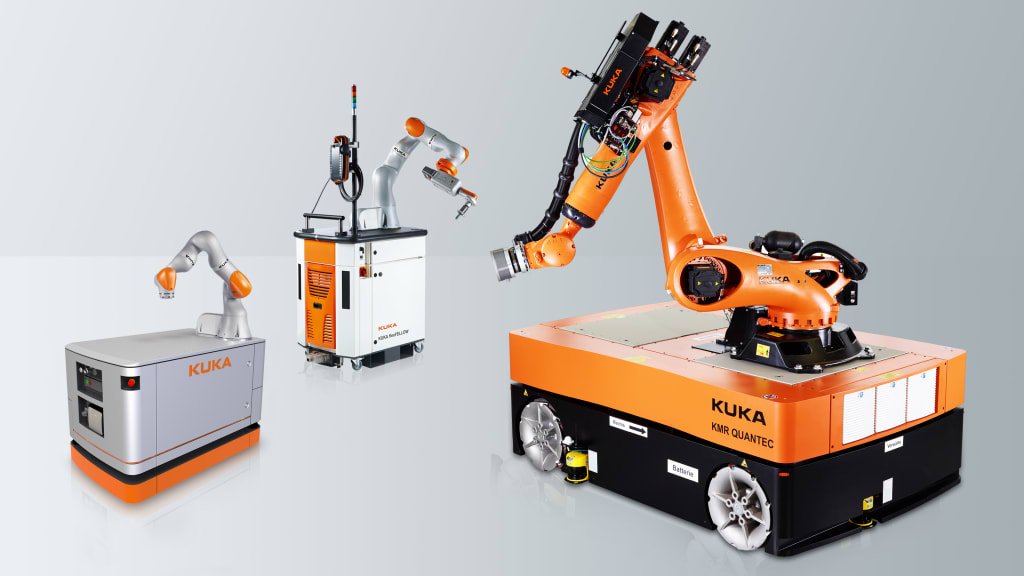
According to IMARC Group's latest research publication, The global construction robots market size reached USD 171.4 Billion in 2024. Looking forward, IMARC Group expects the market to reach USD 556.1 Billion by 2033, exhibiting a growth rate (CAGR) of 13.27% during 2025-2033.
How AI is Reshaping the Future of Construction Robots Market
- Real-Time Site Monitoring and Predictive Analytics: AI-powered systems analyze sensor data and environmental conditions to optimize robot performance on construction sites. Machine learning algorithms predict equipment failures before they occur, enabling construction firms to schedule maintenance proactively and minimize costly downtime.
- Autonomous Navigation and Obstacle Detection: Computer vision technology enables robots to navigate complex construction environments independently, identifying and avoiding obstacles in real time. These intelligent systems adapt to changing site conditions, ensuring safe operation around workers and equipment while maintaining productivity.
- Precision Task Execution and Quality Control: AI-driven robots perform tasks like bricklaying, welding, and concrete placement with millimeter-level accuracy that surpasses human capabilities. Advanced algorithms continuously monitor work quality, detecting defects and deviations immediately to ensure consistent standards across large-scale projects.

Construction Robots Industry Overview:
The construction robotics sector is experiencing rapid transformation driven by severe labor shortages and technological innovation. The Association of Builders and Contractors reports that more than 454,000 additional construction workers are needed to meet industry demand in 2025, creating urgent pressure to adopt automated solutions. Major manufacturers like Caterpillar, Komatsu, and Built Robotics are deploying autonomous excavators, robotic bulldozers, and drone-guided machinery on construction sites worldwide, with equipment performing tasks 24/7 without human intervention while maintaining millimeter-level precision that reduces material waste and rework.
Construction Robots Market Trends & Drivers
Acute labor shortages combined with an aging workforce are driving unprecedented adoption of construction robotics across all project types. Over 500,000 construction positions currently sit vacant in the United States while 40% of experienced workers approach retirement, creating a perfect storm where vital infrastructure projects face abandonment or multi-year delays. Robotic systems fill this gap by automating repetitive tasks like bricklaying, where machines such as Hadrian X can lay over 1,000 bricks per hour compared to typical human rates of 300-500 bricks daily. Companies implementing automation report labor cost reductions of up to 30% while accelerating project timelines by several weeks, making robotics economically essential rather than merely innovative as construction demand continues outpacing available workforce capacity.
Safety improvements and regulatory compliance are accelerating robot adoption as construction remains one of the world's most dangerous industries with an estimated 60,000 fatal accidents annually on global construction sites. Robots eliminate human exposure to high-risk activities like demolition, working at heights, and handling hazardous materials, with automated systems equipped with advanced sensors that detect unsafe conditions and halt operations before incidents occur. Major infrastructure projects now mandate robotic deployment for specific dangerous tasks, while insurance companies offer premium reductions for contractors utilizing automation technologies. Microsoft's $80 billion commitment to data center construction in 2025 explicitly requires autonomous earthmoving equipment for site preparation, demonstrating how safety-driven robotics adoption has become contractually required rather than optional.
Infrastructure investment surges and sustainability mandates are creating massive demand for construction robotics across public and private sectors. Government infrastructure programs worldwide are funding large-scale projects requiring rapid execution that only automation can deliver, with autonomous machines enabling 24/7 operations that cut months off earthwork phases for massive developments. Skanska piloted battery-electric autonomous excavators on Los Angeles transit projects, reducing carbon emissions by approximately 40% while maintaining productivity standards. ABB Robotics partnered with SAMSUNG E&A in June 2024 to automate prefabricated module production, deploying robots in Smart Shops for cutting, welding, and rebar assembly that improve quality consistency while supporting green building certifications increasingly required by commercial developers and government agencies.
Leading Companies Operating in the Global Construction Robots Industry:
- Brokk AB
- Husqvarna AB
- Komatsu Ltd.
- Ekso Bionics Europe GmbH
- Fujita Corporation
- Conjet AB
- Giant Hydraulic Tech Co., Ltd.
- Automated Precision, Inc.
- Alpine Sales and Rental Corporation
- CyBe Construction BV
- MX3D BV
- Construction Robotics
- Fastbrick Robotics Ltd.
- TopTec Spezialmaschinen GmbH
Construction Robots Market Report Segmentation:
By Type:
- Traditional Robot
- Robotic Arm
- Exoskeleton
Traditional robot represents the largest class, as these versatile systems handle diverse tasks from material handling to demolition and structural assembly across large-scale construction sites.
By Automation:
- Fully Autonomous
- Semi-Autonomous
Based on the automation, the market has been segmented into fully autonomous and semi-autonomous.
By Function:
- Demolition
- Bricklaying
- 3D Printing
- Concrete Structural Erection
- Finishing Work
- Doors and Windows
- Others
Demolition exhibits a clear dominance in the market owing to robots' ability to perform dangerous tasks with precision while minimizing risk to human workers.
By Application:
- Public Infrastructure
- Commercial and Residential Buildings
- Nuclear Dismantling and Demolition
- Others
Public infrastructure has the largest market share due to extensive use in large-scale projects like bridges, roads, tunnels, and transit systems.
Regional Insights:
- North America (United States, Canada)
- Asia Pacific (China, Japan, India, South Korea, Australia, Indonesia, Others)
- Europe (Germany, France, United Kingdom, Italy, Spain, Russia, Others)
- Latin America (Brazil, Mexico, Others)
- Middle East and Africa
North America exhibits a clear dominance in the construction robots market due to advanced technological infrastructure and substantial investment in infrastructure projects.
Recent News and Developments in Construction Robots Market
- January 2025: Komatsu showcased its innovative lunar construction excavator and underwater construction robot at CES 2025, highlighting the company's advancements in autonomous technology for extreme applications in construction and mining industries. The demonstrations featured next-generation autonomous systems capable of operating in environments previously inaccessible to traditional equipment.
- January 2025: Brokk Inc. was appointed as the North American distributor for Darda, significantly expanding its portfolio of demolition equipment. The company plans to build a comprehensive Darda dealer network and increase product awareness across multiple industries including construction, mining, and industrial maintenance.
- July 2025: Bedrock Robotics emerged from stealth mode after raising $80 million to address America's construction crisis through advanced autonomous technology. The company, founded by former Waymo engineering leaders, is developing systems to transform existing construction equipment into fully autonomous machines for earthwork and excavation projects.
- June 2024: ABB Robotics and SAMSUNG E&A announced a strategic partnership to automate prefabricated module production for industrial construction. ABB robots will be deployed in SAMSUNG E&A's Smart Shops worldwide to enhance productivity and sustainability by automating cutting, welding, and rebar assembly tasks.
- February 2024: Monumental, a Netherlands-based robotics company, raised $25 million to scale its artificial intelligence-driven autonomous bricklaying technology. The funding will accelerate development of AI systems that enable robots to lay bricks with enhanced precision and speed for residential and commercial construction projects.
Note: If you require specific details, data, or insights that are not currently included in the scope of this report, we are happy to accommodate your request. As part of our customization service, we will gather and provide the additional information you need, tailored to your specific requirements. Please let us know your exact needs, and we will ensure the report is updated accordingly to meet your expectations.
About the Creator
James Whitman
With years of experience in analyzing global industries, I specialize in delivering actionable market insights that help businesses stay ahead in an ever-changing landscape.
Keep reading
More stories from James Whitman and writers in Futurism and other communities.
Aquaponics Market Outlook: Sustainable Farming Innovation and Food Production Growth Opportunities
According to IMARC Group's latest research publication,The global aquaponics market size reached USD 1,459.7 Million in 2024. Looking forward, IMARC Group expects the market to reach USD 3,673.9 Million by 2033, exhibiting a growth rate (CAGR) of 10.8% during 2025-2033.
By James Whitmanabout 7 hours ago in Futurism
Flywheel Energy Storage Systems Market Worth USD 1003.3 Million by 2034 at 9.3% CAGR
Overview The Global Flywheel Energy Storage Systems (FESS) Market is on a robust growth trajectory, with projections indicating a rise from USD 412.3 million in 2024 to USD 1,003.3 million by 2034. This expansion represents a steady CAGR of 9.3% throughout the forecast period from 2025 to 2034. A significant catalyst for this growth is North America's USD 204.9 million investment in grid modernization, which has substantially accelerated the adoption of advanced FESS technologies.
By Hayden Kulas7 days ago in Futurism
Honey Market Worth USD 15.4 Billion by 2033 at 5.2% CAGR
Overview The Global Honey Market is on a robust growth path, projected to expand from USD 9.3 billion in 2023 to approximately USD 15.4 billion by 2033. This represents a steady compound annual growth rate (CAGR) of 5.2% over the forecast period.
By Hayden Kulasabout an hour ago in Futurism



Comments
There are no comments for this story
Be the first to respond and start the conversation.