
Pentagon Pressures Anthropic to Loosen Claude Guardrails, Raising Stakes for Military AI Policy
Reports say Defense Secretary Pete Hegseth has set a near-term deadline for Anthropic to allow “all lawful use” of Claude—or face contract termination and potential “supply chain risk” consequences that could ripple across defense contractors.

What Happened (Facts)
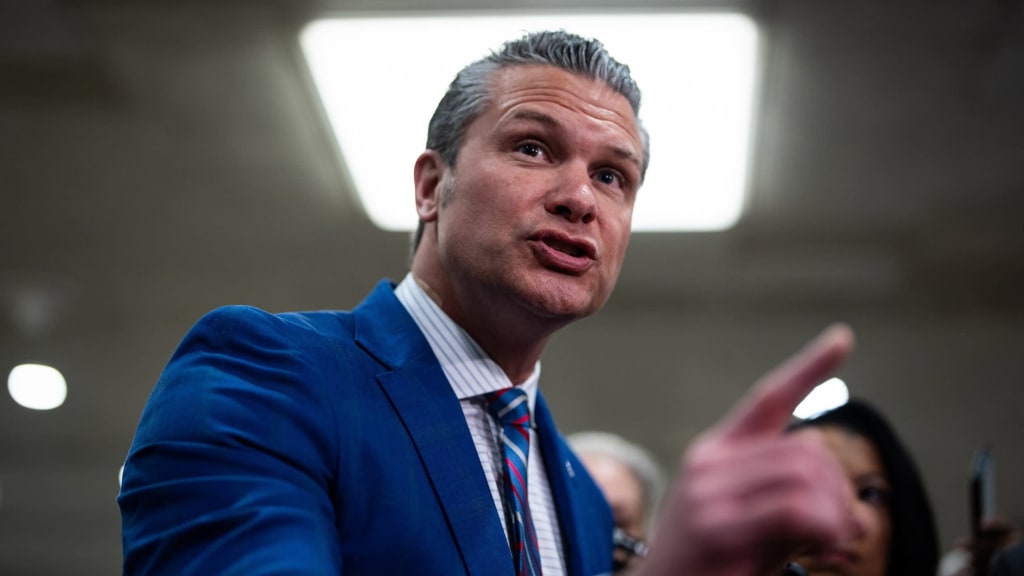
U.S. Defense Secretary Pete Hegseth has reportedly issued Anthropic a near-term ultimatum over the AI safety restrictions (“guardrails”) it places on Claude, escalating a months-long dispute about how the Pentagon can use frontier AI systems.
According to reporting from Axios and the Financial Times, the Pentagon wants Anthropic to authorize broader military use of Claude under a standard of “all lawful use,” and has warned of serious consequences if the company refuses.
The dispute matters because Anthropic holds a $200 million ceiling Department of Defense agreement (a two-year prototype “other transaction agreement” awarded through the Pentagon’s Chief Digital and Artificial Intelligence Office).
Anthropic’s stated red lines (as described in the reports) include not enabling:
fully autonomous lethal weapons control, and
mass domestic surveillance of Americans, with Anthropic arguing the technology is not reliable enough for weapons operation and that laws/regulations for large-scale surveillance applications are inadequate or unclear.
The Pentagon, for its part, has pushed back on the framing that the dispute is about unlawful conduct. Reporting describes Pentagon officials emphasizing that legality is ultimately the government’s responsibility as the end user, and that the Department of Defense “has always followed the law.”
The pressure campaign reportedly includes threats to:
terminate Anthropic’s Pentagon contract, and/or
designate Anthropic a “supply chain risk,” which could effectively discourage or bar other defense contractors from using Claude in military work—an unusually severe label typically associated with foreign-adversary-linked risks.
Some reporting also discusses the Defense Production Act (DPA) being raised as leverage—though legal and policy experts cited in coverage question how a “supply chain risk” designation would square with compelling a firm’s technology use via the DPA.
Finally, the standoff could open doors for competitors. The reporting notes the Pentagon has been exploring alternatives, with mentions of other frontier labs’ progress toward classified or defense environments, including xAI (and others) trying to be “close” to readiness.
What Is Analysis (Interpretation)
This is a flashpoint in a larger fight over who sets the rules for AI in national security: vendors, the Pentagon, Congress, or some combination. And it reveals a strategic dilemma for both sides.
1) “All lawful use” is a blunt instrument for a nuanced technology
The Pentagon’s position—if accurately characterized—leans on a familiar procurement doctrine: the government decides how to use a tool within the law, and vendors shouldn’t impose extra constraints. But frontier AI isn’t a normal tool. Claude can generate strategies, code, intelligence summaries, and potentially operational recommendations. In systems with tool access, the boundary between “assistant” and “operator” can blur fast.
That makes “all lawful use” a policy shortcut: it avoids debating which categories of use should be prohibited or bounded, and instead treats safeguards as optional friction. For a safety-forward lab like Anthropic, that’s existential—because it shifts risk from “we design responsible capabilities” to “we hand over a general capability and hope downstream governance is sufficient.”
2) Anthropic’s red lines aren’t just ethics—they’re liability containment
Anthropic’s stated objections—autonomous weapons and mass domestic surveillance—map to two of the highest-stakes AI governance domains. Even if the Pentagon insists it follows the law, the legal landscape is still evolving, and public trust is fragile. For a company selling into enterprise markets, being perceived as enabling mass surveillance or lethal autonomy could be reputationally radioactive.
In other words, refusing to loosen certain guardrails can be read as both moral posture and pragmatic risk management.
3) The “supply chain risk” threat is a powerful—and controversial—procurement weapon
If the Pentagon truly uses a “supply chain risk” designation as leverage, it would signal an aggressive new posture: using national-security procurement not only to buy technology but to discipline suppliers’ policies.
That’s why the expert skepticism matters. A label normally reserved for foreign adversary extensions carries a heavy implication; applying it to a U.S. vendor over policy disagreement could look punitive rather than protective, potentially inviting legal challenges and chilling effects across the vendor ecosystem.
4) This exposes a “single-supplier” vulnerability in classified AI
A key strategic wrinkle: if Claude is already embedded in sensitive environments, replacing it is not like swapping office software. Classified deployment requires accreditation, secure integration, and operational testing. Even if alternative models exist, the migration path may be slow and risky—especially if the Pentagon wants continuity.
So the Pentagon’s pressure could backfire if it forces a break before substitutes are truly ready. That risk increases the credibility of Anthropic’s bargaining position—at least in the short term.
5) The real governance gap is Congress, not procurement negotiation
The most durable solution probably isn’t Anthropic negotiating red lines case-by-case with defense leadership. It’s a clearer statutory and regulatory regime that answers questions like:
What counts as “meaningful human control” over weapons systems?
What oversight and transparency requirements apply to AI-assisted surveillance?
What auditing and accountability standards apply to AI used in targeting, intelligence fusion, or operational planning?
If those rules remain vague, every vendor–Pentagon contract becomes a proxy battle over norms—and the incentives will push toward whichever party has more leverage at the moment.
6) Competitive dynamics may reward the “least restrictive” vendor
A sobering possibility: if some labs are willing to relax safeguards to win defense contracts, safety-forward firms could be competitively punished—unless governments explicitly value (and pay for) safer deployment practices. That would turn “guardrails” from a differentiator into a handicap.
Conversely, if the Pentagon concludes guardrails are necessary for reliability and political legitimacy, vendors like Anthropic could benefit—especially if incidents elsewhere demonstrate why hard limits exist.
About the Creator
Keep reading
More stories from Behind the Tech and writers in Futurism and other communities.
Meta’s Chips-for-Stock Deal With AMD Signals a New Phase of the AI Hardware Arms Race
What Happened (Facts) Meta has agreed to buy billions of dollars’ worth of AI chips from Advanced Micro Devices (AMD) as part of a multiyear arrangement to support Meta’s AI development and data-center expansion. The most unusual element of the deal is that Meta can also take a financial stake of up to 10% in AMD, according to the report you shared.
By Behind the Techa day ago in Futurism
Fintech Market Outlook: Digital Financial Innovation and Expansion Opportunities
According to IMARC Group's latest research publication, The global fintech market size was valued at USD 253.4 Billion in 2025. Looking forward, IMARC Group estimates the market to reach USD 938.7 Billion by 2034, exhibiting a CAGR of 15.19% from 2026-2034.
By Michael Richardabout 18 hours ago in Futurism
Optical Position Sensors Market: IoT-Enabled Monitoring, Connected Devices & Growth Outlook
According to IMARC Group's latest research publication, the global simulation software market size reached USD 18.4 Billion in 2025. Looking forward, IMARC Group expects the market to reach USD 44.3 Billion by 2034, exhibiting a growth rate of 10.27% during 2026-2034.
By sujeet. imarcgroupabout 16 hours ago in Futurism
At My Wits’ End
Life is about taking out the trash and calling it trash because you have every reason to. It wasn't meant to be linear, they say. But the times you tried to make it straight led to problems, and you didn’t have the tools to put any of it to use. You don't put your right shoes on the right feet; you put the left shoes on the left feet. The grey hardened slab will trip you up anyway.
By Caitlin Charlton7 days ago in Humans



Comments
There are no comments for this story
Be the first to respond and start the conversation.