
Preparing for a Future Ruled by Artificial Intelligence
“Not Competing with AI, But Learning to Stand Beside It.”

A few months ago, I watched a video of a robot answering customer calls better than a human agent. It spoke clearly, responded instantly, and never sounded tired. For a moment, I felt uneasy. If machines can talk, write, design, and even think faster than us, where do students stand in this new world?
That question stayed with me.
Artificial Intelligence is no longer a futuristic idea. It’s already part of our daily routines. It recommends what we watch, corrects our grammar, suggests what we should buy, and even helps doctors diagnose diseases. For students, especially those dreaming about stable careers, this rapid change can feel overwhelming. But after thinking deeply about it, I realized something important:
The future does not belong to those who fear AI. It belongs to those who prepare for it.
The real challenge is not competing with machines — it is learning how to work alongside them.
It Starts with Digital Literacy :
In the past, being educated meant knowing how to read and write. Today, it also means understanding the digital world.
I’ve seen students scroll for hours but struggle to send a professional email. Many can use social media apps, but they don’t know how to verify information or protect their data online. That’s where digital literacy becomes powerful.
Students must learn how search engines work, how to judge reliable sources, and how to use tools like spreadsheets, presentations, and online collaboration platforms. These are not “extra” skills anymore. They are basic survival tools in the AI era.
Whether someone lives in a big city or a small village, the internet connects them to global opportunities. But only if they know how to use it wisely.
Understanding Technology, Not Just Using It :
You don’t have to become a software engineer to survive the AI era. But understanding the basics of coding or how algorithms work gives you an edge.
When students learn simple programming concepts, something interesting happens. They stop seeing technology as magic. They begin to see logic behind it. Coding teaches patience, structured thinking, and problem-solving — skills that go far beyond the computer screen.
Even learning basic data analysis or understanding how cybersecurity works can open unexpected doors. The world is shifting toward automation, cloud systems, and intelligent software. Students who understand these foundations will not feel left behind.
The Power of Critical Thinking :
AI can analyze massive amounts of data in seconds. But it does not question meaning the way humans do.
In a world filled with automated news, deepfake videos, and algorithm-driven feeds, critical thinking is a superpower. Students must learn to ask:
Is this information reliable?
What is the bigger picture?
What could go wrong?
Machines follow patterns. Humans create them.
Employers increasingly look for people who can solve complex problems, make thoughtful decisions, and challenge assumptions. Critical thinking protects us from manipulation and prepares us to lead responsibly.
Creativity Is Still of Humans :
Yes, AI can generate art and write essays. But creativity is more than combining words or colors. It is shaped by emotion, memory, and personal experience.
A student who writes from the heart, designs with passion, or builds a business idea from lived experience offers something unique. Creativity allows students to innovate instead of imitate.
In the AI era, creativity will separate ordinary work from meaningful work.
Communication and Emotional Intelligence :
As machines handle repetitive tasks, human interaction becomes even more valuable.
Clear communication — speaking confidently, writing persuasively, and working well in teams — can never be replaced by software. Emotional intelligence, the ability to understand feelings and manage relationships, remains deeply human.
Imagine a workplace filled only with efficient machines. Productivity might rise, but connection would disappear. Leadership, empathy, negotiation, and trust still require people.
Students who develop both technical knowledge and strong communication skills will always stand out.
Adaptability: The Skill That Protects All Others :
Perhaps the most important skill in the AI era is adaptability.
Technology changes quickly. A tool popular today may disappear in five years. Students who resist change may struggle. Those who stay curious will thrive.
Lifelong learning is no longer optional. Online courses, tutorials, and digital platforms make it easier than ever to upgrade skills. The question is not access — it is willingness.
The future belongs to learners.
Ethics and Responsibility :
As AI grows stronger, so do ethical challenges. Issues of privacy, bias, and job displacement are real. Students must understand that technology is powerful, but it must be used responsibly.
Knowing how to use AI tools wisely — without spreading misinformation or harming others — is part of modern education. Innovation without ethics can create serious problems.
Fear or Opportunity?
History teaches us something comforting. Every major technological revolution caused fear. When machines entered factories, people worried about losing jobs. Yet new industries were born.
The same pattern is repeating now.
AI will replace some routine roles. But it will also create new careers we cannot fully imagine yet. The difference between fear and opportunity depends on preparation.
Students who develop digital literacy, technical foundations, critical thinking, creativity, communication skills, adaptability, and ethical awareness are not preparing for survival alone. They are preparing for leadership.
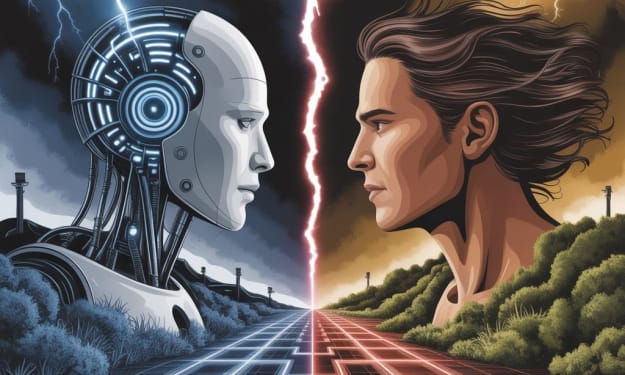
The AI era is not the end of human relevance. It is the beginning of a new partnership between humans and machines.
And those who start learning today will not just survive the future — they will shape it.
About the Creator
Keep reading
More stories from Shahid Zaman and writers in Futurism and other communities.
Should Human be afraid of AI ? The truth reveals
Artificial Intelligence isn’t something of the future anymore — it’s here. It’s in the smartphones that recognize our voices, the apps that suggest what to watch, and the systems that predict what we might want to buy next. AI is quietly shaping the world around us.
By Shahid Zamana day ago in Futurism
Ball Bearing Market: Aftermarket Replacement Demand, Maintenance Solutions & Industry Growth Ahead
According to IMARC Group's latest research publication, the global ball bearing market size reached USD 45.46 Billion in 2024. Looking forward, IMARC Group expects the market to reach USD 65.05 Billion by 2033, exhibiting a growth rate of 3.65% during 2025-2033.
By sujeet. imarcgroupabout 22 hours ago in Futurism



Comments
There are no comments for this story
Be the first to respond and start the conversation.