
Inside the Taliban’s Afghanistan
Power, Fear, and the Quiet Ways Life Goes On

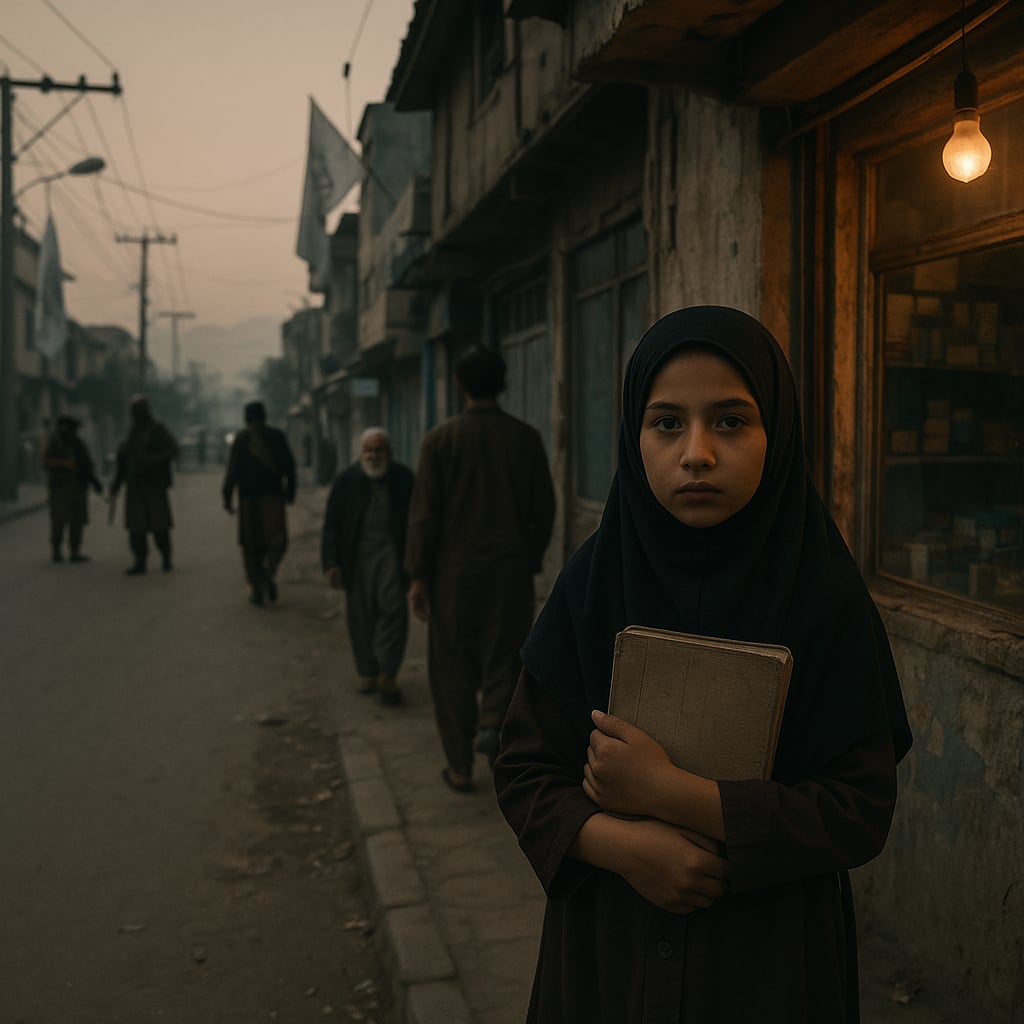
What daily life looks like when the world has stopped watching, and why the real battle inside the Taliban isn’t the one you see on the news
The last time I landed in Kabul, the plane touched down in silence.
No applause, no chatter, just a cabin full of people quietly reaching for their phones that mostly had no signal and no real internet, staring at blank screens like they were mirrors.
Out the window, the airport looked calmer than I remembered from the chaotic days of August 2021. No gunfire, no desperate crowds hanging onto aircraft.
Just Taliban white flags fluttering where the old tricolor used to be.
A man in front of me whispered to his son, “Don’t look at the fighters in the eyes. Just walk.”
You hear these small instructions all over Afghanistan now. The new etiquette of living under men who won a war and are still afraid of losing control.
That’s the thing about Afghanistan in 2026: on the surface, it’s quieter. Fewer explosions. Less visible war.
But underneath that quiet is a constant low-level tension that everyone feels and almost no one admits aloud.
And inside the Taliban government itself, that tension is worse. Because the real fight now is not between the Taliban and the West, or the Taliban and the old republic.
The real fight is inside the movement: between the men who think they’ve already won, and the men who think the real jihad is just beginning.
A government built on suspicion, not trust
If you’ve never walked into a Taliban ministry, imagine this: a building that still looks like the old Afghan government on the outside, but on the inside the desks are cracked, the computers are mostly dead, and the power cuts out at random.
The portraits of Ghani and Karzai are gone, replaced by Qur’anic calligraphy and photos of Taliban leaders, some still alive, some killed in drone strikes or suicide attacks long before they could enjoy their victory.
In one office, the man behind the desk used to be a physics teacher.
In another, a former commander who can barely read is now the director of a department that manages millions of dollars in aid and customs revenue.
They both know something uncomfortable: neither was trained to run a modern state.
There is no real “cabinet” in the way Westerners imagine it.
On paper, there’s a Prime Minister, ministers, commissions. In practice, power is scattered between:
The supreme leader and his inner circle in Kandahar, who rarely appear on camera.
Hardline clerics who believe even the current restrictions are “too soft.”
Pragmatic officials in Kabul who have to actually make things work.
Local commanders who control borders, mines, roads – and the money that flows through them.
Everyone is watching everyone else.
Phones are checked. Conversations are reported. An offhand comment in the wrong tea house can have you called in for “questions” by the intelligence service, the GDI.
People joke that in the old republic, corruption was the tax you paid to get things done.
Now, fear is the tax you pay to stay out of trouble.
Daily life under the Taliban in 2026: ordinary and suffocating at the same time
The weirdest part of Afghanistan right now is how normal some days look.
Markets in Kabul are open. Street vendors still shout prices for pomegranates and cheap Chinese electronics.
Buses move slowly through traffic. Children in poor neighborhoods kick a torn football across dusty streets, dodging motorcycles and potholes.
If you take a photo from the right angle, it could be any struggling city in South Asia.
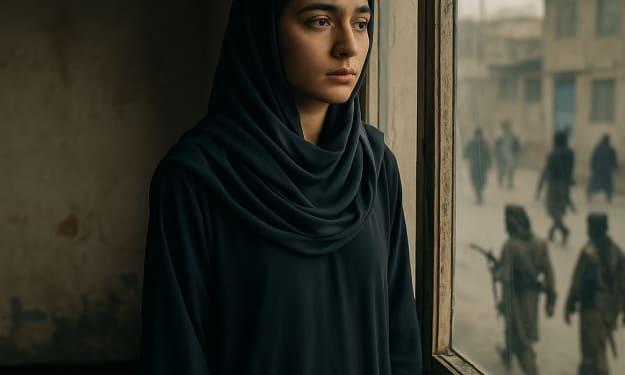
Then you shift your view slightly and see the armed fighters at checkpoints, the white flags, the absence of girls in high school uniforms, the way women move quickly and quietly, faces covered, eyes lowered.
Daily life, if you’re a man, exists inside narrow lines.
You can work, if there is work. You can go to mosque. You can do business, though the currency is weak and banks limit withdrawals. You can scroll Telegram and WhatsApp, as long as you avoid the wrong channels and don’t post anything critical.
Most people are not “for” the Taliban. They are for survival.
They say what they need to say to carry on.
If you’re a woman, your lines are even narrower.
Girls’ high schools remain closed in most provinces. Universities are technically open, but with heavy restrictions, and many female students have simply stopped going.
Office doors that once had “Gender Department” or “Women’s Affairs” written on them are shuttered or repurposed.
Women still work in hospitals, a limited number of schools, some NGOs. A few quiet offices with covered windows let them in by the back door.
At home, women are starting informal schools in living rooms again — history repeating itself from the 1990s, like the country is stuck in a loop.
One woman in Kabul told me, “The Taliban say women belong at home. So fine, we make our own school at home. But they forget: daughters grow up in homes too. They watch, they learn.”
She said it quietly, almost with a smile, and then pulled her scarf a little tighter as a neighbor walked by.
Power struggles the Taliban try to hide
From the outside, the Taliban like to show a united front: men in turbans sitting in neat lines, nodding as a statement is read out in careful, religious language.
Inside the movement, it’s messier.
There are three major tensions that shape everything:
1. Kandahar vs Kabul
The supreme leader and his council sit in Kandahar, away from foreign diplomats and TV cameras.
Kabul, by contrast, is where the world knocks: UN officials, NGO workers, the occasional delegation from Russia, China, or regional neighbors.
Kabul officials see the empty ministries, the rising poverty, the desperation. They argue for some concessions to reopen banking channels, get more aid, gain some recognition.
Kandahar clerics worry that every concession is a slippery slope back to the “corruption” of the old system.
Orders go back and forth. Policies are announced, then reinterpreted, then quietly ignored in some provinces.
No one is ever fully sure who is really in charge on any given day.
2. Ideological purity vs governing reality
Some Taliban spent 20 years in the mountains, in madrasas, or in Pakistani safe houses. Their world was war, Quran, and a very narrow vision of Islam and Afghan culture.
Others spent those years in Doha, talking to diplomats, reading global reports, calculating sanctions and trade routes.
For the first group, compromise feels like betrayal. For the second, refusing any compromise feels like suicide for the state.
You can feel this tension in small arguments:
Should girls be allowed in school if foreign aid depends on it?
Can music be played quietly in restaurants?
Is social media a tool or a threat?
There are no open debates, just quiet struggles wrapped in religious phrasing.
3. Fighters with no war left to fight
The Taliban rank-and-file were trained to fight, not to sit behind desks.
Many are now bored, underpaid, and carrying weapons with not much to do.
Some have been moved into the security forces. Others guard checkpoints or ministries. A few have drifted into smuggling and corruption, especially near border crossings and mines.
A former fighter told me, “Before, I knew where the enemy was. Now I don’t know who is the enemy: the foreigners, the Daesh (ISIS), or my own commander when I ask for my salary.”
That confusion is dangerous. Men like that become loyal to whoever pays them, not to an abstract “Islamic Emirate.”
What Afghans say when they think no one is listening
If you only listen to official statements, you’d think Afghanistan is a country finally at peace, governed by pious men, slowly rebuilding.
If you only listen to diaspora Twitter or some Western politicians, you’d think it’s an entirely hopeless prison, where everyone is either a victim or a fanatic.
The truth, as usual, lives in the cramped spaces in between.
A shopkeeper in Herat told me, “Under the republic, we had freedom and robbery. Under the Taliban, we have less robbery but also less freedom. Which one do you call better?”
A young man in Mazar said, “At least I don’t hear explosions every week anymore. But I also don’t see a future for myself here.”
A woman who used to work for a foreign-funded project now stays home. She whispered, “People abroad ask me, ‘Is it very bad?’ I never know how to answer. Some days I just make tea and sweep the floor. Is that bad? It’s not dramatic. It’s just… shrinking.”
That’s the word I keep hearing, in different ways: shrinking.
Shrinking horizons, shrinking incomes, shrinking options, shrinking hope.
And yet, if you spend an evening in a Kabul home, you’ll see something else: stubborn normality.
Families gather for dinner. Jokes are told. TV dramas from Turkey or India play in the background, sometimes on muted volume during prayer time.
The Taliban can police clothes and classrooms. They can monitor phones and knock on doors.
They haven’t yet figured out how to fully control the one thing that keeps showing up: the desire for an ordinary life.
The invisible war for Afghanistan’s future: girls, phones, and small acts of defiance
A lot of coverage of Afghanistan zooms in on dramatic moments: edicts banning girls’ education, women protesting in the streets, Taliban cracking down.
Those moments matter. But most of the resistance to the Taliban’s vision doesn’t look like protests. It looks like small, almost boring decisions repeated thousands of times.
A father quietly hiring a private tutor for his daughters, even though girls’ schools are closed.
A family saving for a cheap smartphone so their son can attend some online course in English or coding, dreaming of remote work.
A teenage girl secretly collecting PDFs on her brother’s phone and reading them at night, headphones in, pretending to sleep.
Some Taliban officials know this is happening. Some even tolerate it privately if the family is connected or discreet enough.
The battle isn’t just for ministries and flags. It’s for what fills the silence between evening prayers and sleep.
Every Telegram channel, every VPN-installed phone is another crack where outside ideas seep in.
The Taliban can try to slow modernization. But they can’t rewind every person’s mind to 1996, no matter how hard they push.
That’s what really scares the hardliners: not NATO, not drones, not sanctions.
What scares them is an 18-year-old girl on a cheap smartphone learning more about the world than they ever did.
What comes next for the Taliban government in Afghanistan?
When people ask what’s next for Afghanistan, they usually want one of two answers:
Either “The Taliban will collapse,” or “The Taliban will modernize and become like a normal government.”
I don’t fully believe either story.
Collapse is possible, but it won’t look like a Hollywood ending.
More likely, it would look like this:
Economic pressure continues. Local commanders grow more independent. ISIS attacks grow more frequent. Regional powers arm their favorite proxies. The Taliban slowly lose the monopoly on violence.
Not a fall, but a slow leak.
As for modernization, the softening is already happening in small, uneven ways — in humanitarian coordination, in some local councils, in backdoor negotiations.
But it runs up against a solid wall: a leadership that is terrified of admitting it might have been wrong about anything fundamental.
The most realistic “next” looks like a long, exhausting in-between:
A government that insists it is legitimate, even as almost no major country formally recognizes it.
A security situation that is “better than civil war” but never fully safe.
A generation of Afghans growing up fluent in both religious language and the quiet code of survival.
Eventually, something will have to give.
Maybe a serious internal split within the Taliban.
Maybe a slow, negotiated inclusion of other factions.
Maybe a new wave of protests led not by politicians or warlords, but by the generation that has known both the chaos of occupation and the suffocation of this “peace.”
Or maybe the change will be quieter still: an accumulation of small acts, unrecognized until suddenly they are impossible to reverse.
History is not as dramatic as we want it to be.
More often it’s just people reaching a point where they quietly refuse to live the way they did the year before.
The question that lingers long after leaving Kabul
On my last night in Kabul, the lights went out again.
No warning, just darkness. Someone lit a candle. The generator was out of fuel that week; diesel prices had gone up again.
In the dim room, a little girl — maybe ten years old — was reciting English words from a notebook her cousin had brought from university before women were banned from attending.
“Window,” she said carefully. “Table. Freedom.”
She didn’t pause on that last word. For her, it was just another sound on the page.
Her mother caught my eye and shrugged, a half-smile, half-sadness.
“She doesn’t know what it means,” she said softly. “Maybe one day she will.”
That’s the question that stays with me whenever I leave:
What happens when an entire generation learns the vocabulary of a life they haven’t yet lived?
The Taliban are trying to hold back a future that is already present in people’s pockets, in their whispered conversations, in their late-night lessons by candlelight.
They might hold it back for years. They might even believe they can freeze time.
But there’s a reason the white flags still flap uneasily in the Kabul wind.
Somewhere underneath the silence of this “new Afghanistan,” there’s a low, persistent murmur — not of gunfire, but of people quietly refusing to give up on the idea that their lives could be larger than the lines drawn around them.
That murmur isn’t loud enough to change everything yet.
But once you’ve heard it, you can’t un-hear it.
And maybe the real story of Afghanistan’s future will be written there — in the space between what the Taliban can control, and what people carry inside them anyway.
About the Creator
abualyaanart
I write thoughtful, experience-driven stories about technology, digital life, and how modern tools quietly shape the way we think, work, and live.
I believe good technology should support life
Abualyaanart
Keep reading
More stories from abualyaanart and writers in FYI and other communities.



Comments
There are no comments for this story
Be the first to respond and start the conversation.