
The War in Iran is Spreading FAST
Massive U.S.–Israeli strikes, Iranian retaliation across the region, and the death of Supreme Leader Ali Khamenei push the Middle East toward a wider war.

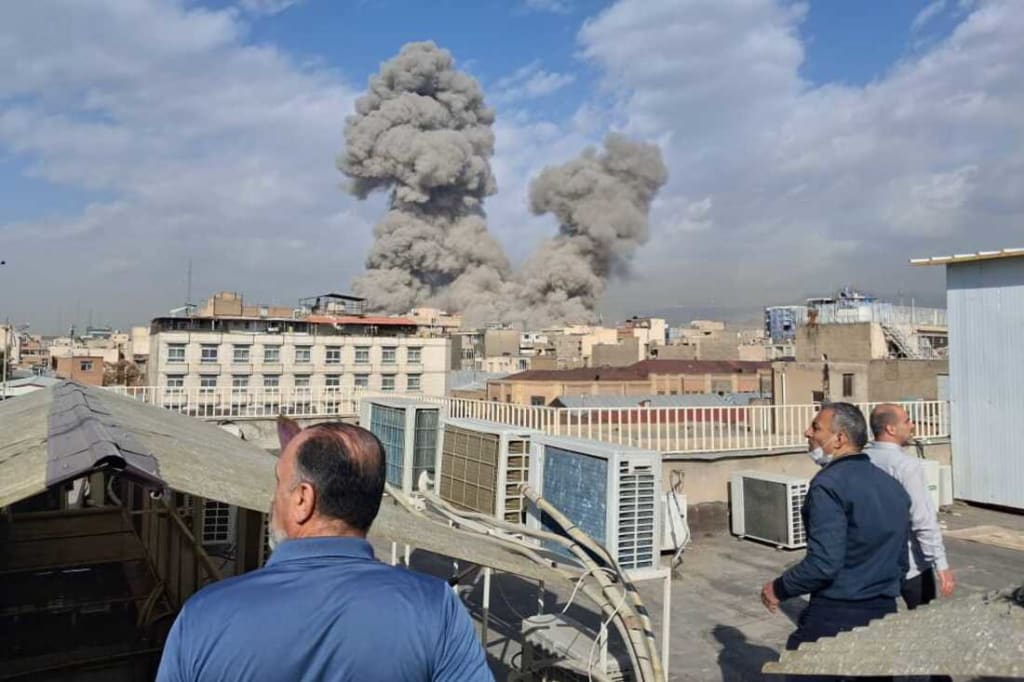
The Middle East is entering one of the most volatile moments in its modern history. What began as a massive joint offensive by the United States and Israel against Iran has rapidly escalated into a multi-front regional conflict. Airstrikes, missile launches, drone attacks, and cyber operations are unfolding across several countries simultaneously.
And in the center of it all lies a development few analysts predicted would happen so quickly: Iran’s supreme leader, Ali Khamenei, is confirmed dead.
The situation is evolving by the hour. The information available reflects events as they stood early on March 1st. Given the speed of this conflict, developments may already have moved forward. Still, the broad outlines of the war are becoming clear—and they are deeply alarming.
The Opening Shockwave
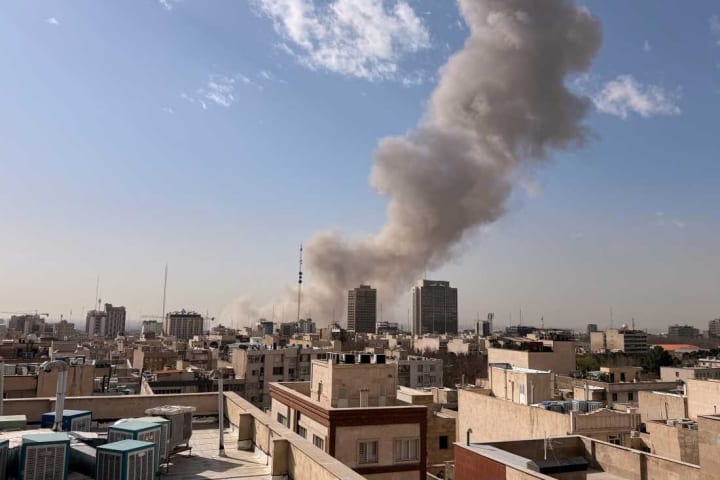
The scale of the opening strikes against Iran was staggering. Within the first twelve hours of fighting, American defense officials reported that U.S. forces carried out nearly nine hundred separate strikes across Iranian territory. These attacks targeted military installations, command structures, airfields, and defensive systems. At the same time, Israeli forces launched their own sweeping air campaign.
Israeli sources indicated that roughly two hundred fighter jets participated in Israel’s first wave of attacks, striking around five hundred separate targets. Reports suggest that these strikes were spread across many of Iran’s provinces rather than concentrated in a single region.
The coordination between Washington and Jerusalem appears deliberate. American forces have largely focused on Iran’s military infrastructure and nuclear-related facilities, while Israeli strikes have concentrated more heavily on leadership targets and missile launch capabilities. Together, the two campaigns represent one of the largest coordinated air offensives seen in the region in decades.
U.S. Central Command described the campaign, code-named Operation Epic Fury, as the largest concentration of American firepower deployed in the Middle East in a generation. That statement alone signals that this is not a limited punitive strike or symbolic show of force. It is a sustained military operation designed to degrade Iran’s ability to wage war.
And the conflict did not remain one-sided for long.
Iran’s Immediate Retaliation
Iran responded quickly and forcefully. Within hours of the initial strikes, Tehran launched hundreds of ballistic missiles and large numbers of one-way attack drones across the region. Israeli cities were among the first targets, with air defense systems activated repeatedly as incoming projectiles were detected overnight.
But Israel was not the only country affected. Iranian missiles and drones were also directed toward American military installations scattered across the Middle East. U.S. bases in Jordan, the United Arab Emirates, Saudi Arabia, and Bahrain all reported either direct hits, near misses, or intercepted incoming threats.
Bahrain experienced some of the most dramatic impacts. One missile struck the headquarters of the U.S. Navy’s Fifth Fleet. Fortunately, the facility had reportedly been evacuated in the days leading up to the conflict, suggesting that American commanders anticipated retaliation. Another strike targeted a radar dome nearby using a kamikaze drone.
Further north, the American air base in Erbil, located in Kurdish-controlled Iraq, was struck during the early morning hours of March 1st. Reports suggest the attack resulted in a direct impact, though the full extent of damage remains unclear.
Across the region, air defenses sprang into action. Saudi Arabia, Qatar, and Jordan all announced successful interceptions of incoming missiles and drones. U.S. and Israeli systems also appear to have destroyed dozens—possibly hundreds—of threats before they could reach their intended targets.
For a conflict of this magnitude, the level of damage reported so far has been described as relatively limited. Yet analysts are already noting patterns in Iran’s targeting strategy. Many of the strikes appear to be aimed not at high-profile civilian centers but at radar installations and surveillance infrastructure, suggesting an attempt to blind defensive networks before launching more powerful follow-up attacks.
If that interpretation proves correct, the opening missile barrages may represent only the first stage of Iran’s response.
The Battle for Air Superiority
Beyond missile exchanges, the next phase of the conflict is unfolding in the skies above Iran. American strikes have been heavily focused on disabling Iranian air defenses and airfields, indicating that the United States is attempting to clear the path for sustained air operations deeper inside the country.
Israeli officials have even suggested that they expect to achieve air superiority over Iran within twenty-four hours of the campaign’s launch. If such a goal is realized, it would dramatically shift the balance of the conflict, allowing allied aircraft to operate with far greater freedom across Iranian territory.
There are also reports—though not yet confirmed—that American F-35 stealth fighters engaged and shot down several Iranian MiG-29 fighter jets during the early stages of the war. If verified, the encounter would represent one of the most significant air-to-air battles of the modern era.
Meanwhile, the United States appears to be adopting tactics previously associated with Iran itself. American forces have reportedly deployed new low-cost attack drones known as Lucas, systems designed to function similarly to Iran’s widely used Shahed-136 drones. The use of such drones suggests that both sides are embracing relatively inexpensive, expendable weapons to overwhelm defenses.
The conflict has also expanded into cyberspace. Iranian government websites and communication networks have reportedly been targeted by cyberattacks. In one unusual incident, a widely used prayer application was hacked to display messages urging Iranian soldiers to rise up against the regime.
This war is not confined to a single battlefield. It is unfolding simultaneously in the air, at sea, online, and across multiple national borders.
The Death of Iran’s Supreme Leader
Amid the chaos of the opening strikes came one of the most consequential developments in the modern history of Iran.
According to Israeli reports, the compound housing Ali Khamenei, Iran’s supreme leader, was struck by roughly thirty missiles during the initial bombardment. Unlike previous periods of tension when the Ayatollah sought refuge in fortified bunkers, he was reportedly inside his office when the missiles struck.
Rumors of his death spread quickly but were initially denied by Iranian state media. For nearly a full day, conflicting reports circulated across international outlets.
Then, in the early hours of Sunday morning, Iranian state television confirmed what many had already begun to suspect.
Ali Khamenei was dead.
Khamenei had served as Iran’s supreme leader since 1989, guiding the country through decades of confrontation with the West, internal unrest, and regional conflict. At eighty-six years old, he was among the longest-serving political leaders in the Middle East.
But he was not the only senior official reportedly killed in the attack. Early reports suggest that several key figures within Iran’s leadership structure died alongside him, including the country’s defense minister, intelligence minister, senior Revolutionary Guard commanders, and advisers connected to the nuclear program.
Among those believed to have died is Mojtaba Khamenei, the Ayatollah’s son, who had often been mentioned as a potential successor. If confirmed, his death removes one of the most prominent candidates to inherit the country’s highest office.
The strike appears to have targeted not just one man, but an entire network of leadership.
Yet even this dramatic development does not necessarily mean the Iranian government will collapse.
Regime Survival and Succession
Iran’s political system was built with survival in mind. The country has long anticipated the possibility of wartime leadership losses and has constructed detailed succession plans designed to preserve continuity even during crises.
Under Iran’s constitutional framework, the death of a supreme leader triggers the formation of a temporary governing council composed of the president, the chief of the judiciary, and a senior religious jurist. This body oversees the transition while a new supreme leader is selected.
Beyond these formal mechanisms, Iran’s security apparatus—including the Islamic Revolutionary Guard Corps and intelligence services—possesses significant institutional power. These organizations are capable of operating independently and maintaining internal order even during periods of political upheaval.
In other words, removing the leadership does not necessarily dismantle the regime itself. If the United States and Israel aim to achieve regime change, eliminating the top figures would only represent the first step in a far longer and more complicated process.
That outcome would require dismantling the structures beneath them, including military command networks and political factions that continue to support the system.
The Streets of Iran
Another variable now entering the equation is public reaction inside Iran.
Videos circulating online appear to show crowds gathering in cities such as Tehran and Shiraz following reports of Khamenei’s death. Some demonstrators have reportedly celebrated the news, while others have torn down statues linked to the regime.
However, the protests remain relatively small compared with the massive demonstrations that swept the country earlier in the year. In several locations, security forces have reportedly responded to gatherings by opening fire on demonstrators.
Whether these protests grow into a nationwide movement—or are suppressed quickly—may shape the country’s political future.
For now, the streets remain tense and unpredictable.
Crisis in the Persian Gulf
While missiles continue to fly between Iran and Israel, another dangerous front has opened in the Persian Gulf.
Before the conflict began, countries such as Saudi Arabia, the United Arab Emirates, and Qatar had repeatedly urged Washington to de-escalate tensions with Tehran. Their concern centered on the possibility that Iran might retaliate by targeting the region’s critical oil infrastructure.
Instead, Iran appears to have chosen a different approach.
Missiles and drones struck civilian and financial centers across the Gulf region, including airports in Dubai and Kuwait, government sites in Bahrain, and buildings in Abu Dhabi and Riyadh. Footage from Bahrain showed drones crashing into residential towers, setting at least one building ablaze.
In the United Arab Emirates, drones reportedly threatened the Burj Khalifa, the tallest structure in the world. One was intercepted moments before reaching the skyscraper, while another struck a nearby building.
Iran appears to have deliberately targeted symbols of economic power in an attempt to shake confidence in the region’s stability.
The strategy may have been intended to pressure Gulf governments into demanding that Washington halt its offensive.
Instead, the effect has been the opposite.
Saudi Arabia and the United Arab Emirates have begun aligning more closely in their response to Iran. Turkey has condemned Tehran’s attacks. Reports also suggest that Saudi Arabia may allow American forces to operate from its territory, a decision that would significantly expand the reach of the U.S. campaign.
Rather than fracturing the region, Iran’s strikes may be pushing its neighbors into a broader coalition against it.
The Strait of Hormuz
The conflict has also begun affecting one of the world’s most critical shipping lanes: the Strait of Hormuz.
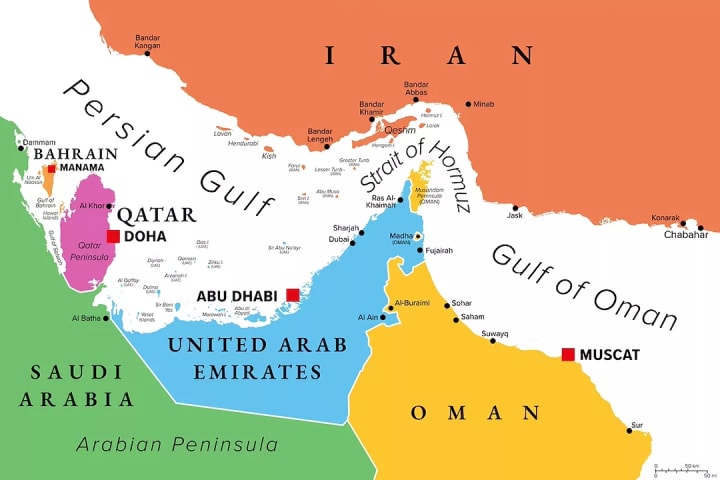
Iran has reportedly broadcast warnings declaring that no vessels will be allowed to pass through the narrow waterway. Although the strait has not been formally mined or physically blocked, the threat alone has already disrupted commercial shipping.
Many cargo vessels have halted movement, returned to port, or begun waiting in nearby waters. Insurance companies are increasing premiums dramatically or refusing coverage for ships attempting to cross the strait.
In practical terms, that means the route is effectively closed.
Because a significant share of the world’s oil supply passes through the Strait of Hormuz, prolonged disruption could quickly ripple through global energy markets.
A Region on Edge
As of now, the conflict has produced a rapidly expanding chain of consequences. Massive American and Israeli airstrikes continue inside Iran. Tehran’s retaliation has reached multiple countries across the Middle East. Gulf states are beginning to align more openly against Iran, and one of the most powerful leaders in the region is dead.
All of this has happened within the span of just a few days.
History shows that wars often accelerate once they reach this stage. Early decisions and retaliations create momentum that becomes increasingly difficult to stop.
Whether the current conflict stabilizes or spirals further remains uncertain.
But one thing is already clear.
The Middle East has entered a new and dangerous chapter—and the world is watching it unfold in real time.
About the Creator
Lawrence Lease
Alaska born and bred, Washington DC is my home. I'm also a freelance writer. Love politics and history.
Keep reading
More stories from Lawrence Lease and writers in FYI and other communities.
Mexico Is At War
“Terrifying.” “Surreal.” “Scary.” Those were the words an American tourist used to describe what unfolded in Puerto Vallarta, the resort city so many travelers associate with beaches, nightlife, and cruise ships—not burning vehicles and military convoys.
By Lawrence Lease7 days ago in FYI
The Flow of Living Energy: Why Nature Knows No Stillness
In this world, everything exists in a state of constant exchange. We often believe that when we sit in silence, we are at rest, but this is merely an illusion. Beneath the surface of our skin, a world of relentless life is teeming—billions of cells vibrate at their own specific frequency, our blood pulses, and our lungs expand in harmony with the rhythm of the universe. Even the stars above and the atoms within follow this singular rule: movement is the essence of life.
By Pavel Pavlov7 days ago in FYI



Comments
There are no comments for this story
Be the first to respond and start the conversation.