
Fandom, stewardship, and the stories we choose to protect
A Personal Reflection After My Tales From The Fandom Interview

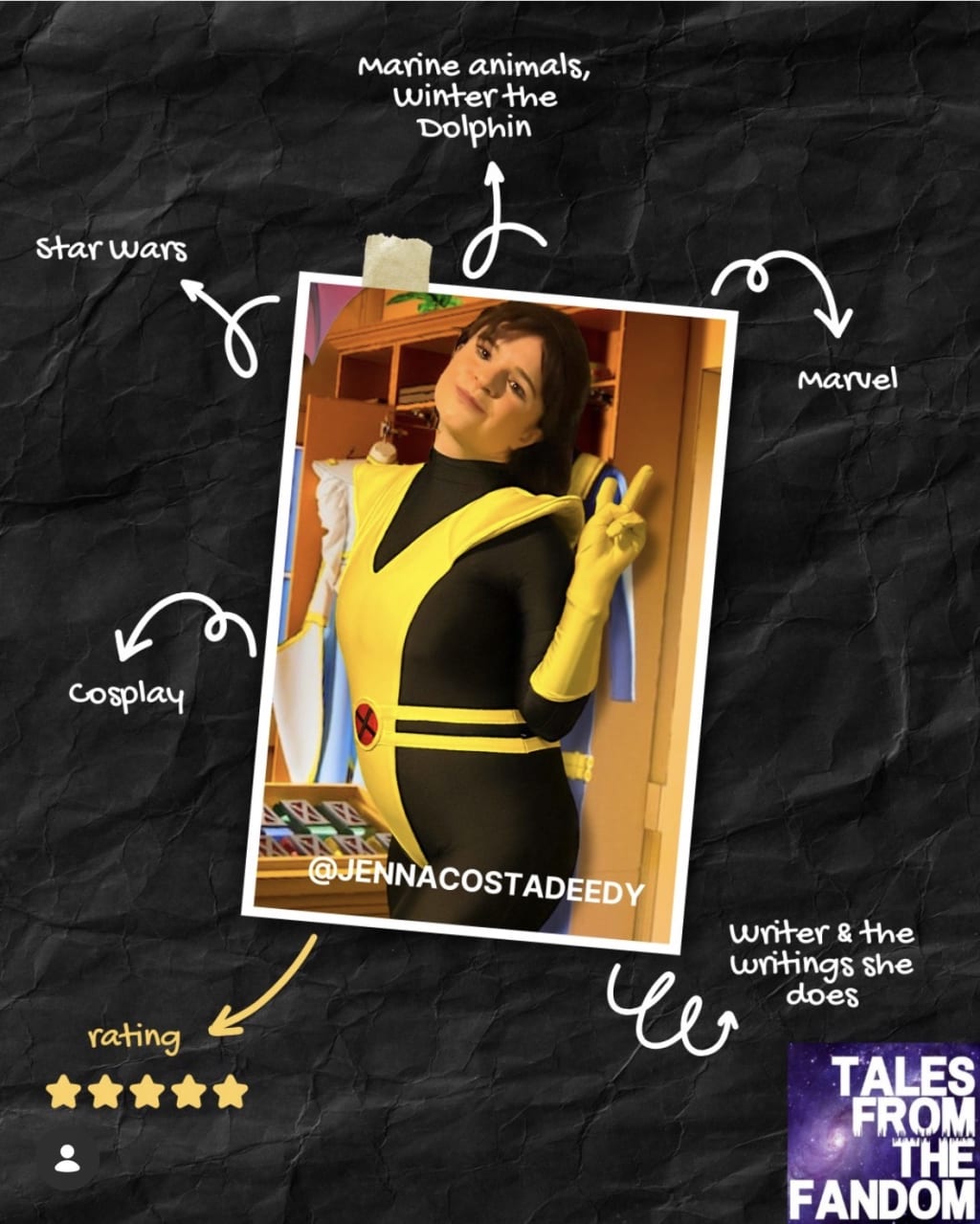
I recently sat down for an episode of Tales from the Fandom–Episode 446–where I talked about Marvel, Star Wars, marine animals, cosplay, and everything in between.
You can listen to the full conversation here.
You can also read the show notes here.
After reflecting on that conversation, I realized something powerful: all these things–my work with animals, my love for pop culture, my criticism of franchises, my cosplay–aren’t separate interests.
They’re expressions of the same principle.
Stewardship.
Stewardship Started Long Before Fandom
Before I ever analyzed cinematic universes or debated canon, I worked with animals and in zoological education from fourth grade through college.
Internships. Volunteering. Training. Observing. Cleaning. Teaching.
If you’ve never worked in an accredited zoological facility, you might assume it’s about spectacle.
It’s not.
It’s about behavior science.
Animals under human care rely on carefully structured environments that encourage natural behaviors. We built environmental enrichment devices (EEDs) that were reviewed and approved by veterinary teams to stimulate mental engagement and physical activity. These weren’t toys–they were behavioral tools designed to protect psychological well-being.
We monitored posture. Appetite. Social interaction. Movement. Subtle changes. Because in the wild, animals hide illness. Observation is prevention.
And when something was wrong, we reported it immediately so that veterinarians could intervene.
Education was the most meaningful part.
We didn’t just talk about the animals in front of the guests. We talked about ecosystems. Plastic pollution. Sustainable seafood. Beach cleanups. Reporting strandings. Protecting habitats. Reducing harm.
We empowered people to act.
That mindset never left me–it just shifted from ocean ecosystems to narrative ecosystems.
Fandom Was Always Political–It Didn’t Suddenly Become That Way
One of the strongest points I made during my interview was this: Stories have always been political.
The surprise some people express today–claiming franchises “became political” ignores history.
Take Star Wars.
From the beginning, it has been about empire and resistance.
In Star Wars: Episode I–The Phantom Menace, politics aren’t background noise–they’re central. The tension between democratic institutions and authoritarian consolidation is embedded in the structure of the prequels.
Characters like Padme Amidala represent democratic idealism. Figures like Palpatine represent calculated authoritarian power.
Even characters people once dismissed–like Jar Jar Binks—are being reinterpreted through deeper political lenses. Recent canon material exploring the idea of Jar Jar quietly supporting Padme’s rebellion highlights something important: even seemingly comedic figures can operate within complex political systems.
That’s layered storytelling.
And shows like Rebels and Andor prove the point further.
They don’t hide politics–they dissect power.
Mandalore’s arc in The Clone Wars and Rebels is one of my favorite examples. It moves from independence to internal division to occupation.
Mandalore didn't fall because it was “weak”. It fell because authoritarian forces exploit fractures.
Resistance there isn’t loud rebellion alone–It’s political rebuilding.
That’s why characters like Sabine Wren and Bo-Katan Kryze matter. They represent different phases of resistance: personal accountability, cultural reclamation, and leadership evolution.
Star Wars has always been about systems.
Not just lightsabers.
Marvel: Found Family, Structure, and Responsibility
Marvel operates on similar principles
My love for Marvel began with Guardians of the Galaxy—a movie that feels like Disney embracing chaos in the best way.
A group of criminals who don’t consider themselves heroes slowly become a family.
That’s the core.
The power of Guardians isn’t the action. It’s the emotional transformation.
In our conversation, I talked about how Marvel’s storytelling often succeeds when it understands structural balance–when character relationships drive narrative rather than spectacle dominating development.
I also addressed something more critical: adaptation responsibility.
Take Wanda Maximoff.
Elizabeth Olsen delivers an incredible performance. But I’m critical of how the MCU handled elements of Wanda’s comic heritage–especially her maternal Romani roots and her original connection to Magneto.
When adaptations erase or dilute identity details, it affects presentation. It flattens complexity.
That’s not about attacking performance.
It’s about accountability in storytelling.
Franchises have power. With power comes responsibility.
Cosplay: Bringing stories Into Real Space.
One of the most transformative experiences for me came from a Disney trip where I met Ariel in a grotto setting at Magic Kingdom.
The cast member didn’t just wear a costume. She embodied the character.
Children weren’t standing in Florida anymore–they were standing in Ariel’s world.
That moment changed how I saw performance.
My first cosplay was May Maple (Haruka) from Pokémon in 2014. It began as a hobby–something creative and personal while I was transitioning out of my marine animal career because of medical realities.
Over time, cosplay became a performance.
I now do story times and character meet-and-greets as Anna, Belle, and Captain Marvel at libraries and bookshops.
Here’s what I’ve learned.
Character acting isn’t pretending a fictional character is real. It’s creating immersive interaction.
When a child asks a character:
- “Are you scared?”
- “How did you get your powers?”
- “What would you do if…?”
They aren’t asking me.
They’re asking the story.
My role is to answer in a way that honors canon, reinforces positive values, and preserves immersion.
That’s a narrative transition.
And it mirrors my work in education–just in a unique form.
Fandom Should Be a Safe Space–Not a Weapon
This part matters deeply to me. Fandom should be a sanctuary.
It should be a space where marginalized communities find belonging, anonymity, creativity, and shared passion. But lately, some people use fandom as a tool for outrage monetization.
They frame diversity as “corruption”.
They frame inclusion as an “agenda”.
They weaponized conspiracy theories to pressure studios.
That approach misunderstands history.
- Marvel has always tackled civil rights metaphors.
- Star Wars has always challenged authoritarian power.
- Sci-fi and fantasy have always explored resistance.
What’s changed isn’t politics–it’s visibility.
When toxic actors enter fan spaces and push bigotry under the banner of “protecting canon”, they shrink communities.
Healthy critique? Absolutely.
Harassment? Manipulation? Racism? No.
If fandom becomes hostile, people withdraw–especially those who already feel marginalized.
That’s not growth.
That’s damage.
The DCEU: Darkness Idn’t Depth
I enjoyed Wonder Woman and Aquaman because they balance mythic power with emotional grounding.
But I remain critical of:
- Man of Steel
- Batman v Superman
- Zack Snyder’s Justice League
My issue isn’t the tone. Dark themes are powerful. My issue is structure.
When films prioritize aesthetic darkness and sequel setup over character development, the narrative feels rushed.
For example, the “Knightmare” sequence in Zack Snyder’s Justice League is visually powerful–but it shifts attention away from the core mission of the team uniting to defeat Steppenwolf.
The emotional investment should center on Diana, Cyborg, Flash, and Arthur growing into a partnership. Not future dystopian foreshadowing present victory.
Similarly, my criticism of how Harley Quinn was portrayed ties into narrative ethics. Harley’s relationship with the Joker is abusive in canon. When adaptations stylize that dynamic without fully confronting the harm, it risks romanticizing the trauma.
Later portrayals–especially her independence arc and relationship with Poison Ivy–feel more aligned with autonomy and growth.
Characters deserve evolution beyond toxic attachment.
The Throughline: Why I Protect Stories
When I zoom out, everything connects. Marine conservation taught me to protect vulnerable systems. Cosplay taught me to embody stories responsibly. Marvel and Star Wars taught me how power operates through narrative.
My critiques aren’t about tearing franchises down. They’re about strengthening them. Because stories influence perception. Perception shapes culture.
And culture shapes action.
We protect what we love–whether that’s oceans, fictional worlds, or fan communities.
Stewardship isn’t passive admiration. It’s active engagement. It’s an observation. Accountability. Education. Creativity.
It’s asking:
What are we reinforcing through these stories?
And how can we make them better?
That’s why I speak up. That’s why I create. And that’s why I care.
About the Creator
Jenna Deedy
Just a New England Mando passionate about wildlife, nerd stuff & cosplay! 🐾✨🎭 Get 20% off @davidsonsteas (https://www.davidsonstea.com/) with code JENNA20-Based in Nashua, NH.
Instagram: @jennacostadeedy
Keep reading
More stories from Jenna Deedy and writers in Geeks and other communities.
From Variants to Legacy
This idea didn’t come from a panel, a publisher, or a Comic-Con keynote. It came from a comment section. After I published my article about how comic shops don’t need more collectors but more readers, I came across a comment that quietly reframed the entire conversation. The commenter pointed out something that, in hindsight, feels almost obvious: libraries are often the genuine point of entry for new comic readers, not comic shops.
By Jenna Deedy8 days ago in Geeks
5 Ways AI is Silently Improving Your Daily Routine
When most people hear "Artificial Intelligence," they picture science fiction scenarios: robots taking over cities or sentient computers holding conversations. The reality of AI in 2026 is far quieter. It does not look like a humanoid robot; it looks like a curated music playlist, a fraud alert from your bank, or a faster route home during rush hour.
By ViitorCloud Technologies7 days ago in Geeks



Comments
There are no comments for this story
Be the first to respond and start the conversation.