
Antonín Kalina: The Angel of Children from Hellish Buchenwald
“Whenever I came across such a small, tattered, dirty, hungry, and emaciated little child figure, I noted down its number and had it transferred to me…” – Antonín Kalina.

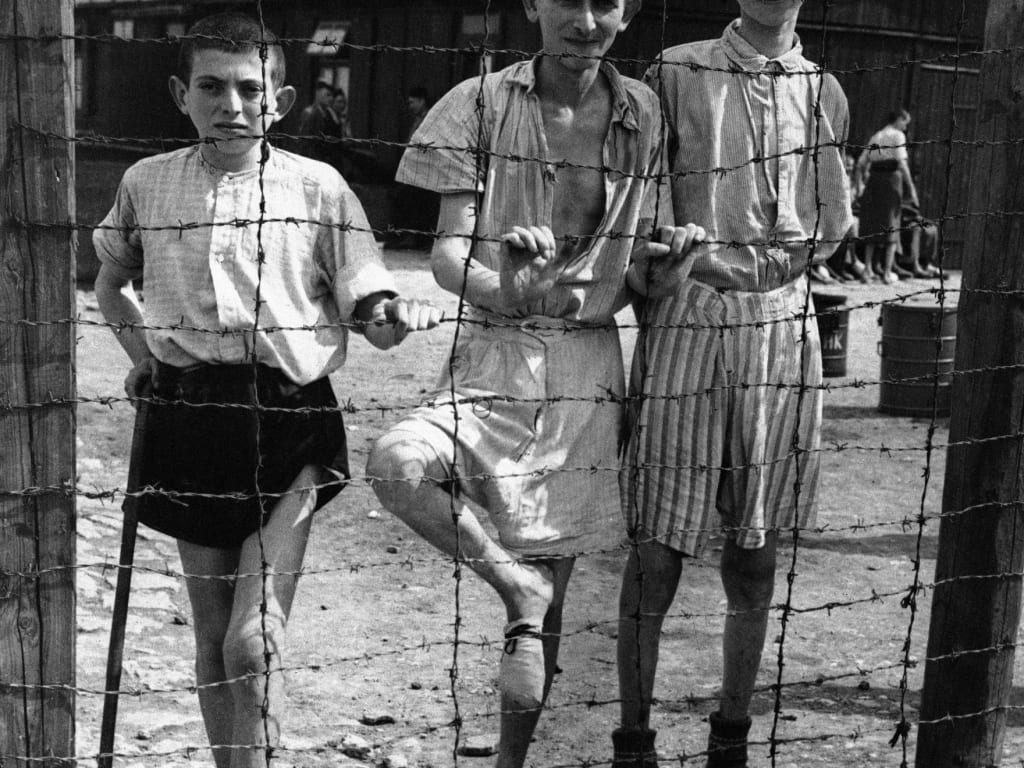
Just like Sir Nicholas Winton or Oskar Schindler, he helped save hundreds of lives. Yet his name and fate remain almost forgotten. That is exactly why I would like to share his story with you.
In the dark times of the Second World War, when it seemed that humanity was buried under layers of barbarism, heroes who, with their courage, managed to illuminate that darkness, emerged. One of them was Antonín Kalina, an ordinary shoemaker from Czechoslovakia town Třebíč, who became the savior of hundreds of children in the Buchenwald concentration camp. His story is full of risky ideas, unbreakable will, and profound humanity.
From Shoemaker to Political Prisoner
Antonín Kalina, born on February 17, 1902, into a poor shoemaker’s family, grew up as one of twelve children. He trained as a shoemaker, got married, and in 1923 joined the Communist Party of Czechoslovakia as an active member. His life changed dramatically after the German occupation in 1939, when he was arrested during the “Grilles” operation, imprisoned for political reasons in the Dachau concentration camp, and eventually transferred to Buchenwald.
In Buchenwald, thanks to his natural authority and excellent knowledge of German, Kalina earned respect not only among the prisoners but also from the guards. He had mastered fluent German already in childhood, when he attended the German school in Třebíč for the free snacks. Fellow prisoners elected him as the block leader, or “Blockälteste,” giving him some influence over the camp’s self-administration. His language skills—in addition to German, he also spoke Russian, Hungarian, and Polish—helped him navigate the chaotic and horrific environment.
Children Without a Chance
It was 1944. As the Red Army advanced, the Germans began liquidating concentration camps in Eastern Europe and sending the still-living prisoners on death marches. Some of them were directed to Buchenwald.
Among the decimated and starved survivors, Kalina noticed children, mostly boys aged 3 to 18, predominantly of Jewish origin. He knew they had no chance of survival in the regular blocks. The camp was not just for political prisoners; there were also criminals who would beat them for fun, or they would face hunger, typhus, and selection for extermination.
Despite opposition from the secret camp resistance, which feared that concentrating the children in one place would make their liquidation easier, Kalina pushed through the creation of a special children’s block No. 66-the “Kinderblock.”
Kinderblock – An Island of Hope
His idea was brilliant in its simplicity and courage. With the help of his closest collaborator, the Prague doctor Jindřich Flusser, who served as his clerk, he devised a plan. He placed a sign in front of the block warning of typhus - a disease the Nazis feared. This ensured that the SS men avoided the block like the devil avoids the cross. The children thus did not have to attend roll calls on the Appelplatz, where the guards might notice them and very likely send them straight to a transport. Buchenwald was, for the children, only a transit station.
To protect them, Kalina came up with various tricks. One of the most ingenious was “Aryanization,” or changing Jewish identities. Flusser recalled how Kalina ordered new arrivals to be recorded with ordinary pencil. Then at night he erased Jewish first names like Moše or Izak and replaced them with Aryan ones, such as Gustav or Leopold. He told the children: “When the SS come tomorrow, none of you is a Jew. You are Dutch, Poles, Czechs, Russians. Anyone who says he’s a Jew gets a spanking!” When an SS man later shouted: “Where are your Jews?”, Kalina calmly replied: “There are none here; we sent them away long ago. Look at the list.”
In the block, he often told the children stories, taught them songs, mathematics, and history - just to give them at least some sense of normalcy in a place that otherwise resembled hell on earth. Before the evacuation, he resewed the Jewish patches on their clothes and marked them on paper as Christians. In total, around 900–1,000 children passed through the block.
Fellow prisoners in the block knew about his actions and helped as best they could. They organized barter trade for food, clothing, shoes, and blankets. Some prisoners even gave up their own rations for the children. Kalina, as the organizer, was known for being able to “get anything, even a submarine.” Once they raided a Red Cross package warehouse, carefully cut out a corner, took out cigarettes (the camp currency), and put everything back. Another time he managed to obtain 700 blankets at once.
Light at the End of the Tunnel
The most dramatic moment came at the end of the war. When Kalina was momentarily away from the block one day, the SS drove the children toward the gate for transport. Fortunately, Kalina spotted it, ran over, and confidently shouted at the commander: “Sir, you promised me the kids would go last!” It was a fabrication, but his authority and perfect German did the trick. The commander told him: “Then take your kids and go to hell with them!” Kalina thus risked his life; his papers were marked “return not desired.”
When other fellow prisoners asked him in 1945 whether it was worth risking so much when the war was ending and they just had to hold out, he replied: “I’ve already lived my life, but those kids have to survive.” Born in 1902, he was 43 years old and considered himself an old man.
Among the children he saved were well-known names—for example, physicist Felix Weinberg or future Nobel Prize winners Elie Wiesel (Peace) and Imre Kertész (Literature).
Quiet Life After the War
After liberation, Kalina returned to Třebíč, where he became the national administrator of the Baťa factory. He later moved to Prague, worked at the Ministry of Light Industry, got divorced, and spent his retirement alone. He moved to a cottage in Černý Most, where he made homemade wine, distilled apricot brandy, and grew some veggies and fruit in the garden. He also refused medical treatment and medications on principle. When he felt bad, he treated himself with homemade spirits and mulled wine. And if even that didn’t make him feel like a fish in water, he would call his old friend, Dr. Flusser.
Remembrance
During his lifetime, Antonín Kalina received no recognition, partly due to his modesty and also because he did not consider his actions heroic - they were simply a moral duty for him. He died on November 26, 1990, in Prague at the age of 88.
Posthumously, in 2012, he was awarded the title Righteous Among the Nations. This honor is given to non-Jews who helped save Jews during the Holocaust. In 2014, he was then awarded the Medal of Merit, First Class, by Czech President Miloš Zeman.
He has not been forgotten in his native Třebíč either, where a memorial hall was built for him with a Tree of Life, its leaves symbolizing the 860 saved children. His story is also detailed in the book Antonín Kalina’s Children” by Stanislav Motl, and it reminds us that even in the darkest times, where there is humanity, there is also hope.
About the Creator
Keep reading
More stories from Elvira Diggory and writers in History and other communities.
Oscar 1973: Marlon Brando refused the statuette, Sasheen Littlefeather spoke and John Wayne was furious
Marlon Brando, who won the Oscar for Best Actor in the film The Godfather, refused to accept the award. Instead, 26-year-old aspiring actress and Native American activist Sacheen Littlefeather took the stage, dressed in traditional Native American deerskin attire and moccasins. Her short speech sparked a storm of emotions: boos, applause, and fury from legendary actor John Wayne. However, this act of protest was far from just a Hollywood bid for attention.
By Elvira Diggory2 days ago in History
Lil Poppa
In recent years, online searches have been filled with questions like “did Lil Poppa die?”, “is Lil Poppa dead?”, “how did Lil Poppa die?”, and “what happened to Lil Poppa?” The repetition of these phrases shows how quickly rumors can spread in the digital age. However, as of the most reliable and publicly available information, Lil Poppa is alive and continues to pursue his music career. The confusion surrounding “Lil Poppa death” or “Lil Poppa passed away” appears to stem from internet speculation rather than verified reports. In today’s social media environment, even unconfirmed posts can generate widespread concern within minutes. Who Is Lil Poppa? Lil Poppa, sometimes searched as lil.poppa or lilpoppa, is an American rapper known for his reflective lyrics and emotionally grounded storytelling. Emerging from Jacksonville, Florida, he gained attention for blending melodic hooks with narratives about street life, loss, and resilience. His music stands out for its vulnerability. Instead of relying solely on aggressive themes, he often explores personal experiences and the impact of his environment. That honesty has earned him a dedicated following. Why Are People Asking “Did Lil Poppa Die?” Search terms such as “did Lil Poppa die?”, “is Lil Poppa dead?”, “Lil Poppa died?”, and “Lil Poppa dead?” often trend when misinformation circulates online. In many cases, these rumors begin with a misleading post, a fake news headline, or confusion with another individual. In the hip-hop community, where tragic losses have occurred over the years, fans sometimes react quickly to unverified claims. When an artist goes quiet on social media or delays a project release, speculation can intensify. That does not mean the reports are true. At this time, there is no credible confirmation supporting claims like “Lil Poppa died” or “did Lil Poppa pass away.” Questions such as “is Lil Poppa still alive?” can be answered clearly: yes, he is alive. The Impact of False Death Rumors False rumors about an artist’s death can have real consequences. Family members, friends, and fans may experience emotional distress. Artists themselves can be affected by the sudden wave of speculation. When phrases like “Lil Poppa passed” or “Lil Poppa death” circulate without evidence, they highlight how easily misinformation spreads. Social media algorithms often amplify trending searches, even when the information lacks verification. For readers and fans, it is important to rely on official statements from verified accounts, reputable news organizations, or the artist’s representatives. Clicking or sharing unverified claims can unintentionally fuel confusion. Lil Poppa’s Career and Growth Lil Poppa’s rise in the rap scene has been marked by steady development rather than overnight fame. His projects often focus on real-life experiences, which resonate with listeners who appreciate authenticity. He has collaborated with other artists and released tracks that reflect both struggle and ambition. Rather than chasing viral moments, he has built a foundation through consistent releases and live performances. As fans search “Lil Poppa age,” they often discover that he entered the industry at a young stage of life. His youth, combined with mature lyrical themes, contributes to his appeal. He represents a generation of artists who share personal stories openly. What Happened to Lil Poppa? The question “what happened to Lil Poppa?” often appears alongside rumors. In reality, there has been no confirmed incident suggesting tragedy. Like many artists, he may step back periodically to focus on recording, touring, or personal matters. Breaks in public visibility are common in the music industry. They do not signal that an artist has died. When fans encounter headlines phrased as “Lil Poppa died?” or “did Lil Poppa die?” it is important to approach them critically. The Role of Responsible Media Consumption Search queries such as “is Lil Poppa dead?” or “did Lil Poppa die?” reflect genuine concern from fans. However, responsible media consumption requires checking credible sources before believing or sharing alarming claims. The hip-hop community has experienced real losses over the years, which may make fans more sensitive to potential news. Still, reacting to unverified information can spread panic unnecessarily. When looking for “Lil Poppa news,” it is best to consult established music publications or official social media pages. Verified accounts provide the most reliable updates. Is Lil Poppa Alive? To answer clearly and directly: Lil Poppa is alive. There is no confirmed report indicating otherwise. Claims such as “Lil Poppa died,” “Lil Poppa passed away,” or “Lil Poppa dead?” are not supported by credible evidence. Online speculation often resurfaces periodically, which explains why phrases like “did Lil Poppa die?” or “is Lil Poppa dead?” continue appearing in searches. These repeated questions do not equal factual events. The Broader Issue of Celebrity Death Hoaxes Lil Poppa is not the first artist to face false death rumors. Celebrity death hoaxes have circulated for decades, but social media has accelerated their spread. A single misleading post can reach thousands within minutes. For artists, these rumors can disrupt professional momentum and create unnecessary stress. For fans, they cause confusion and anxiety. The best response is patience and verification. Moving Forward Instead of focusing on unverified claims such as “did Lil Poppa pass away” or “Lil Poppa die,” attention can return to his music and artistic development. His body of work reflects growth, emotional depth, and commitment to storytelling. In an age where misinformation spreads quickly, clarity matters. Lil Poppa remains active in the music scene, and there is no credible information confirming any claims of his death. Fans searching “is Lil Poppa still alive?” can feel reassured: he is. Staying informed through reliable sources ensures that conversations about artists center on their creativity and achievements rather than unfounded rumors.
By Saboor Brohi 7 days ago in History


Comments
There are no comments for this story
Be the first to respond and start the conversation.