
Are the Chances of World War III Increasing?
Rising Global Tensions, Military Alliances, and the Fragile Balance Preventing a Global War

Are the Chances of World War III Increasing?
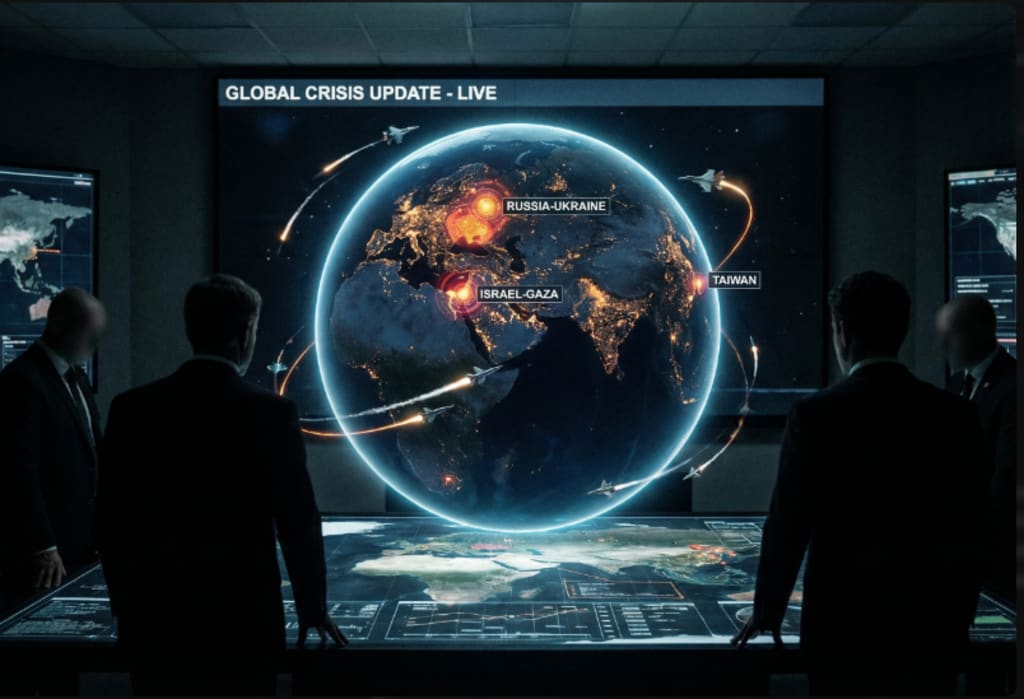
In recent years, many analysts, journalists, and ordinary citizens have begun asking a serious question: Is the world moving closer to World War III? While no global war has started, several major conflicts and political rivalries are creating a tense international environment. Wars, military buildups, nuclear weapons, and technological competition are making global security more fragile than it has been in decades.
One of the biggest concerns is the ongoing war between Russia and Ukraine. This conflict has drawn strong attention from Western nations, especially the United States and members of the North Atlantic Treaty Organization. These countries have provided weapons, financial assistance, and political support to Ukraine. Meanwhile, Russia views NATO’s involvement as a strategic threat to its national security.
Although the war remains largely regional, the involvement of major powers has increased fears that the conflict could expand if miscalculations occur. The presence of nuclear weapons in several countries involved in the crisis makes the situation particularly sensitive.
At the same time, tensions in the Middle East continue to create instability. The conflict involving Israel and the Gaza Strip has caused widespread destruction and humanitarian concerns. The crisis has drawn reactions from countries across the region, including Iran, which strongly criticizes Israeli policies and supports groups opposing Israel’s actions.
If direct military confrontation between Israel and Iran were to occur, it could quickly escalate beyond a regional conflict. The United States maintains strong military and political support for Israel, while Iran has relationships with several regional groups and partners. Because of this network of alliances, a larger war could potentially involve multiple countries.
Another factor increasing global tension is the growing rivalry between major powers. The strategic competition between the United States and China has become one of the most significant geopolitical developments of the 21st century. These two countries compete economically, technologically, and militarily.
One sensitive issue in this rivalry is the status of Taiwan. China considers Taiwan part of its territory, while the United States maintains close political and military ties with the island. Military exercises and naval patrols in the surrounding waters have increased concerns that a crisis in this region could trigger a major confrontation.
In addition to traditional military conflicts, modern warfare now includes cyber attacks, artificial intelligence systems, and advanced missile technologies. Countries are developing hypersonic missiles that travel at extremely high speeds, reducing the time available for governments to respond to potential threats.
These technological changes make global security more complicated. In earlier decades, leaders had more time to confirm warnings before making critical decisions. Today, rapid technological systems may shorten reaction times, increasing the risk of misinterpretation or accidental escalation.
Nuclear weapons remain one of the most powerful factors preventing a global war. The concept of nuclear deterrence is based on the idea that no country wants to start a conflict that could lead to mutual destruction. Countries such as the United States, Russia, China, India, and Pakistan all possess nuclear capabilities.
Because of this reality, many experts believe that global leaders remain cautious about direct military confrontation. Even during intense political rivalries, countries often prefer indirect competition through economic pressure, diplomatic influence, or regional conflicts rather than full-scale war.
Another important element is diplomacy. International organizations like the United Nations continue to promote negotiations and peace agreements between countries. While these diplomatic efforts do not always succeed immediately, they help prevent misunderstandings and reduce tensions.
Public opinion also plays an important role. Many societies today remember the devastation of past world wars and understand the consequences of global conflict. Economic globalization has connected countries through trade, technology, and finance, meaning that war would harm not only enemies but also allies and partners.
Despite these stabilizing factors, the world is clearly experiencing a period of intense geopolitical competition. Conflicts in Eastern Europe, the Middle East, and Asia demonstrate how fragile international stability can be.
In conclusion, the chances of World War III are still considered low by most experts, but the risks are higher than they were a decade ago. Multiple conflicts, powerful alliances, and advanced technologies have created a complex global environment where tensions must be managed carefully.
The future will depend on diplomacy, responsible leadership, and international cooperation. If countries prioritize dialogue over confrontation, global stability can still be maintained. But if rivalries continue to escalate without restraint, the risk of a larger conflict could grow.
For now, the world remains in a delicate balance between competition and cooperation, hoping that the lessons of history will prevent another global war.
About the Creator
Wings of Time
I'm Wings of Time—a storyteller from Swat, Pakistan. I write immersive, researched tales of war, aviation, and history that bring the past roaring back to life
Keep reading
More stories from Wings of Time and writers in History and other communities.
World on Edge: Rising Conflicts and the Fear of a Wider War
World on Edge: Rising Conflicts and the Fear of a Wider War The current global situation has become increasingly tense as several conflicts and political crises continue to develop at the same time. Many analysts believe the world is entering one of the most unstable periods since the end of the Cold War. Wars, military buildups, economic pressure, and political rivalries are creating a fragile global environment where even a small incident could trigger a much larger confrontation.
By Wings of Time 4 days ago in History
Thief who stole $3.5 billion but lost all in one phone call part 2
The following year, the owner of Silk Road was arrested and the FBI shut down the website, seizing about 170,000 Bitcoins. However, 51,680 Bitcoins were still missing, and investigators had been trying to trace them for years.
By Imran Ali Shah4 days ago in History
Guard Your Battery
Why are some people so attractive just by standing there? It’s not because they are "likable," but because they don’t need everyone to like them. I realized later that truly charismatic people allow themselves to be criticized, but they never criticize themselves. They never try to please the world; instead, the world stops to watch them.
By Emily Chan - Life and love sharing6 days ago in Poets



Comments
There are no comments for this story
Be the first to respond and start the conversation.