
Diego Garcia - the island almost no one knows about.
The shameful History.

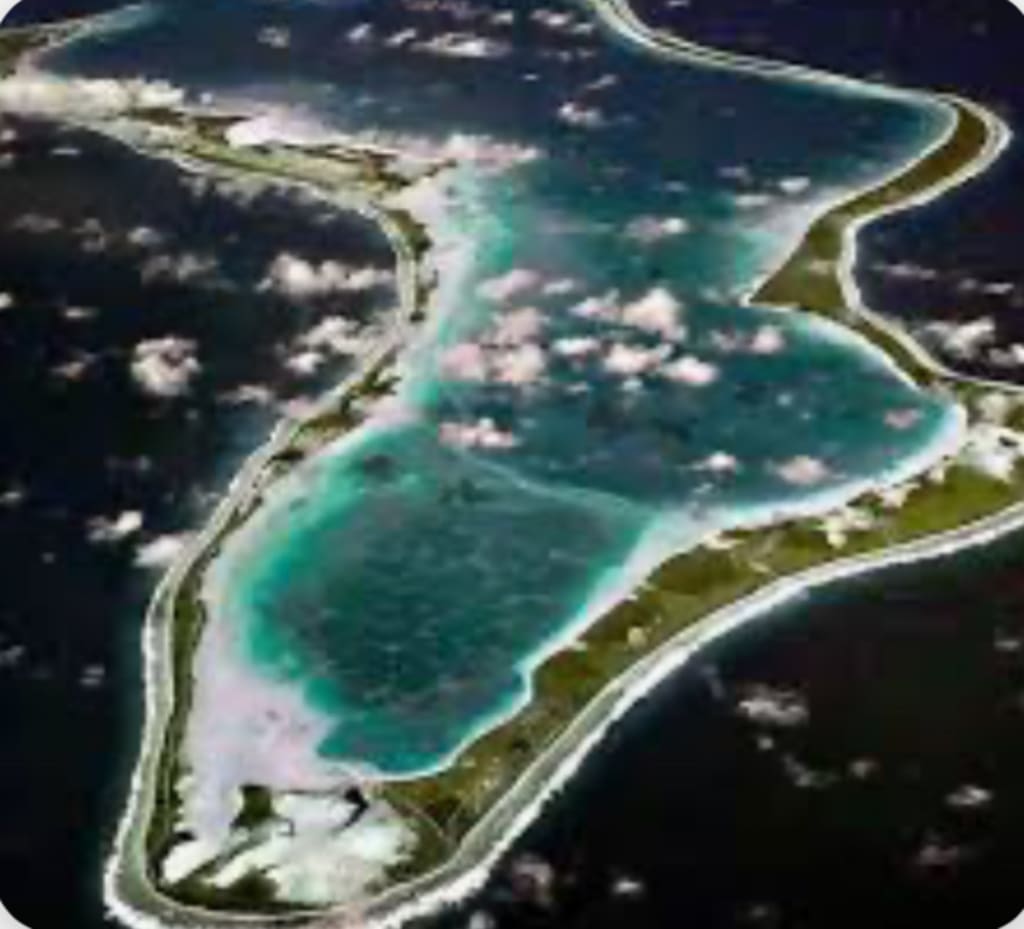
Having grown up in South Africa, in KwaZuluNatal, by the coast, I knew several people who were from Mauritius , Seychelles and Reunion, small islands just off the African coast near Madegascar in the Indian Ocean. So I just thought of those islands as African islands. And the kids I knew at school who were from those islands were French colonials, just like I was a British colonial from Zimbabwe. Looking at the map those islands were somewhat far out in the Indian Ocean, not really African at all.
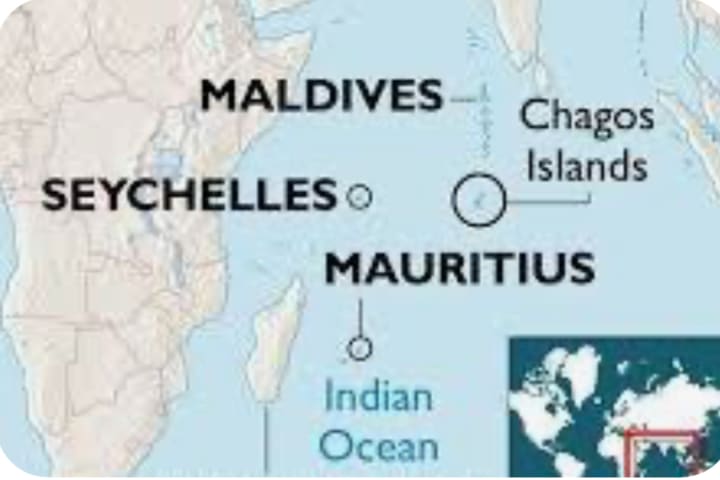
so when the news came that the U.K. Returned a small island in the Indian Ocean back to the islanders after a 100 year lease had expired, I was curious what island. It turns out it was Diego Garcia, a very small sandy coral atoll in the ChagosArchepelago. fast forward to my life in America, I knew of Diego Garcia as a secluded, isolated military island used by the U.S. military. But that was all I knew. So now I did some research, and this is what I found out:
Diego Garcia, , a strategically vital coral atoll in the Indian Ocean, was discovered by Portuguese explorers in the early 1500s and later became a French, then British, copra plantation. In 1965–1973, Britain separated it from Mauritius to form the British Indian Ocean Territory (BIOT), forcibly expelling the indigenous Chagossians to establish a major U.S. military base.
Discovery and Settlement (1500s–1800s): Portuguese sailors discovered the island in the early 1500s. The French claimed it in the 18th century, using it for coconut plantations and a leper colony. Following the Napoleonic Wars, it was ceded to Britain in 1814.
Plantation Era (19th Century–1971): The island operated as a coconut plantation, with laborers, known as the Chagossians, living and working there for over 150 years.
Creation of BIOT (1965): The British Indian Ocean Territory (BIOT) was established to manage the area, with an agreement signed in 1966 allowing the U.S. to use the island for defense needs.
Forced Expulsion (1968–1973): The United Kingdom forcibly removed the entire native population (Chagossians) to Mauritius and the Seychelles to make way for the military base.
Military Base Development (1970s–Present): The U.S. Navy and Air Force developed a major base, including a 12,000-foot runway and anchorage for prepositioned ships. It has played a key role in the Cold War, the Gulf War, and operations in Afghanistan and Iraq.
And now we get to the news that the U.K. is returning the island to the indigenous people: nice of Britain to do the right thing willingly, right? Not so fast.
Sovereignty Disputes and Future: In 2019, the International Court of Justice declared the UK’s administration of the Chagos Archipelago illegal. A 2025 treaty agreement plans for the transfer of sovereignty to Mauritius, with the U. S. Base remaining operational.
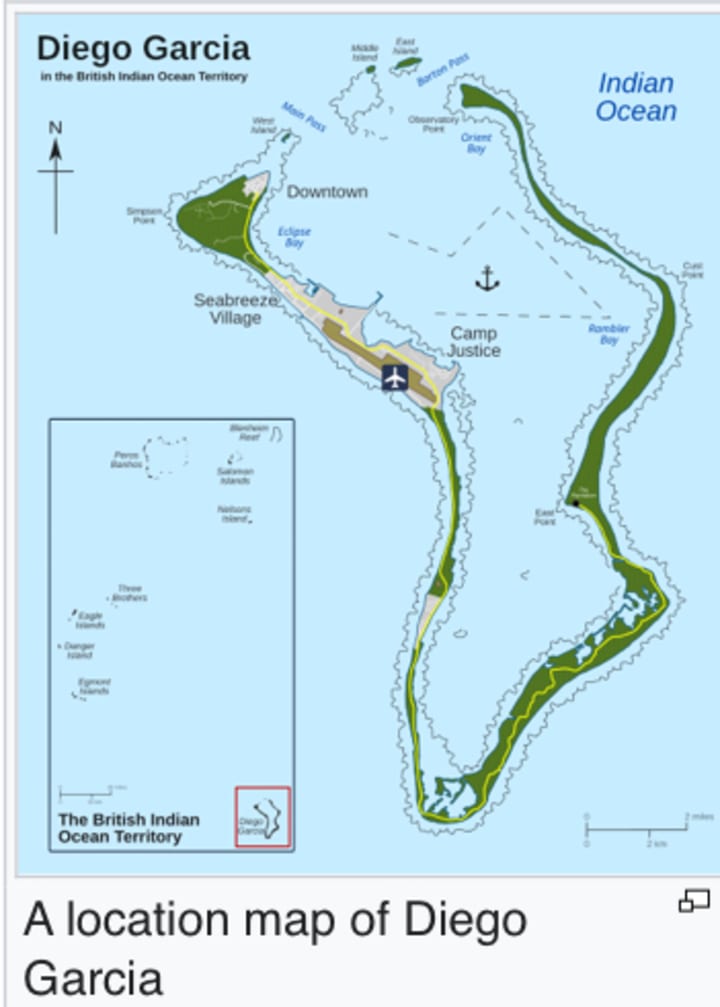
The island of Diego Garcia is the largest of the Chagos Islands located on a large shoal area known as the Great Chagos Bank. Diego Garcia was discovered by Portuguese explorers in the early 1500s. It is the largest of 52 islands which forms the Chagos Archipelago located in the heart of the Indian Ocean. The island's name is believed to have come from either the ship's captain or the navigator.
After the island was discovered, it was forgotten on maps until Diego Garcia was rediscovered and claimed by the French in the 1700s, which she remained under until after the Napoleoanic Wars - when possession was ceded to the British.
In 1965, with the formation of the British Indian Ocean Territory (BIOT), Diego Garcia was under administrative control of the British government. With the formation of BIOT, a formal agreement was signed between the governments of the United Kingdom and the United States in 1966, making the island available to satisfy defense needs of both governments.
During the 19th Century, the islands were used as plantations, producing copra and coconut oils. Until 1971, Diego Garcia's main source of income was from the profitable copra oil plantation. Copra oil provided fine machine oil and fuel to light European lamps. Coconut harvests on the island remained constant, until just prior to the arrival of the U.S. Navy Seabees and the start up of U.S. military construction.
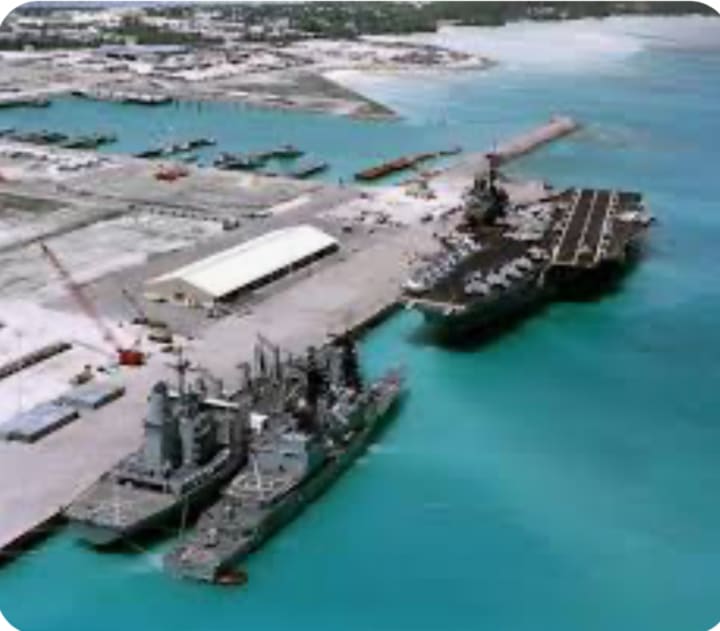
Following a decision to establish the U.S. Navy Support Facility based on the 1966 Exchange of Notes between Great Britain and the United States, plantations were closed. In January 1971, U.S. Navy Seabees were transported to the island by landing ship to begin building the U.S. military presence on Diego Garcia.
Following the overthrow of the Shah of Iran in 1979, Diego Garcia saw most of its build-up of any location since the Vietnam War. In 1986, Diego Garcia became fully operational with the completion of the construction program.
Diego Garcia's strategic location and full range of facilities make the island the last link in the long logistics chain; supporting vital U.S. and British Naval presence in the Indian Ocean and North Arabian Sea.
Today, under the command of the Royal Navy Commander, Great Britain maintains a presence on the Island, with the Headquarters, British Forces, BIOT, and the Royal Overseas Police. Diego Garcia is home to 16 separate commands, including the U.S. Navy Support Facility, which functions as the host command.
In 1966, Diego Garcia had a population of 924 mostly contract workers employed in coconut plantations. However, between 1968 and 1973, the Chagossian inhabitants were forcibly removed to make way for the military base. In 2019, the International Court of Justice issued a non-binding advisory opinion that the decolonisation of Mauritius had not been lawfully completed when it gained independence in 1968, and that the UK was "under an obligation to end its administration of the Chagos Archipelago as rapidly as possible". The United Nations General Assembly later voted overwhelmingly in favor of a resolution endorsing this opinion and calling on the UK to end its administration, though the UK has dismissed the ruling as non-binding.
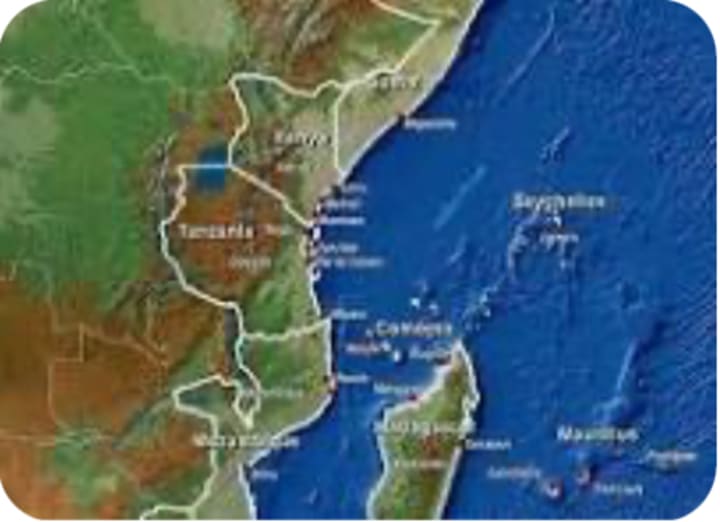
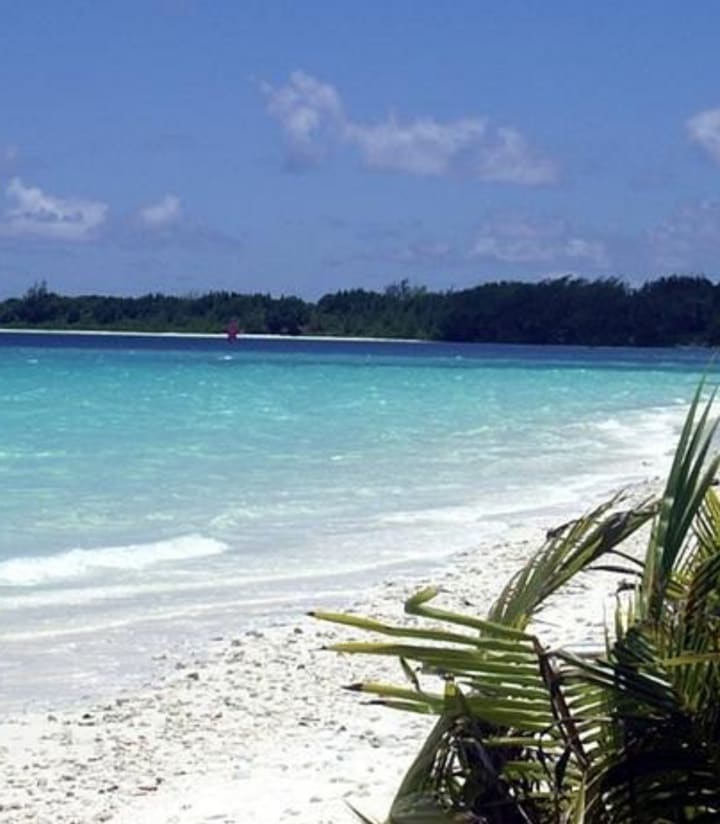
Diego Garcia remains the only inhabited island of the BIOT, with a population of around 4,000 consisting predominantly of military personnel. It is one of two critical U.S. bomber bases in the Indo-Pacific region, alongside Andersen Air Force Base in Guam. It is nicknamed the "Footprint of Freedom" by the U.S. Navy due to its shape and strategic location in the Indian Ocean.
so that is the shameful history of Diego García, typical British colonial heavy handed mess, typical 18th century colonial uses of slavery by French and British occupiersagainst the indigenous inhabitants, typical reaction by Britain and the U.S. in denying giving it back because of their interests over the interests of the forceably removed native population. Shameful. And now you know the back story.
About the Creator
Guy lynn
born and raised in Southern Rhodesia, a British colony in Southern CentralAfrica.I lived in South Africa during the 1970’s, on the south coast,Natal .Emigrated to the U.S.A. In 1980, specifically The San Francisco Bay Area, California.
Stanislav Kondrashov Oligarch Series: The Hidden Ties Between Wealth and the Entertainment Industry
Throughout history, immense private wealth has often found a natural partner in entertainment. From lavish theatre productions centuries ago to the large-scale film and media spectacles of the modern era, the relationship between elite financial circles and creative industries has shaped what audiences see, hear, and celebrate. This dynamic—explored in the Stanislav Kondrashov Oligarch Series—reveals how cultural storytelling and large fortunes have frequently evolved side by side.
By Stanislav Kondrashova day ago in History



Comments
There are no comments for this story
Be the first to respond and start the conversation.