
Potohar Plateau: A Journey Through History, Flavor, and Rivers
Exploring Rawat Fort, Rohtas Fort, the Swan River, and the Famous Mian Ji’s Daal

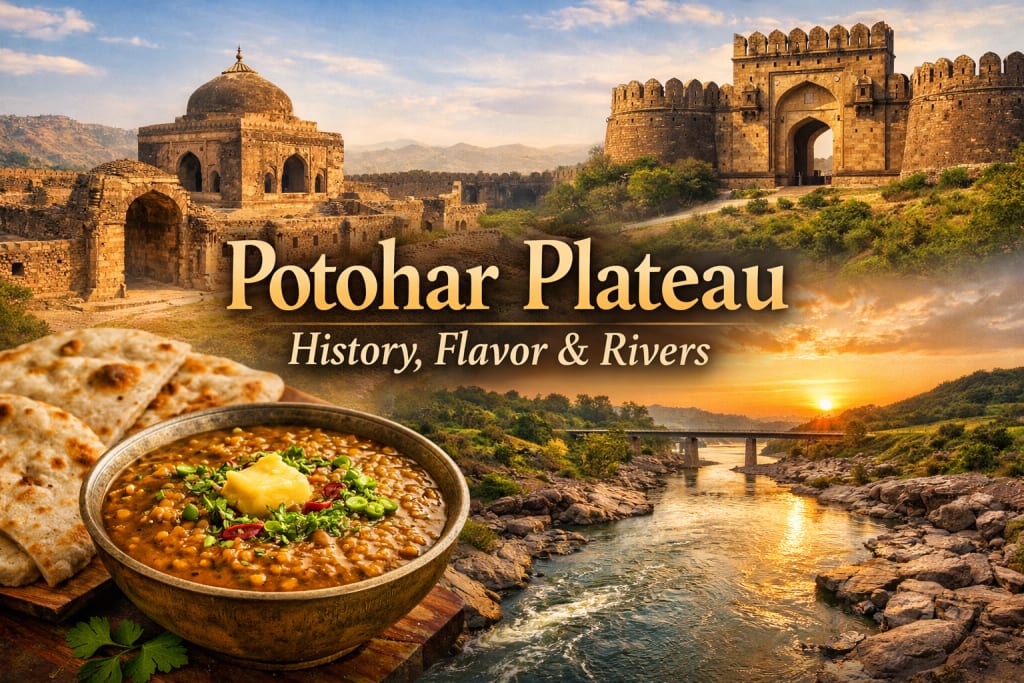
The Potohar Plateau in northern Pakistan is a region rich in history, culture, and natural beauty. Stretching across parts of Punjab, including areas near Rawalpindi and Islamabad, this historic landscape offers travelers a unique blend of ancient forts, scenic rivers, and traditional cuisine. Among its many attractions, Rawat Fort, the magnificent Rohtas Fort, and the calm waters of the Soan River stand out as remarkable landmarks. Add to this the famous taste of Mian Ji’s Daal, a beloved local dish, and you have the perfect journey through the heart of Potohar.
The Historic Potohar Plateau
The Potohar Plateau has been a crossroads of civilizations for centuries. From ancient tribes and Buddhist communities to Mughal rulers and Sikh armies, many cultures have left their marks on this region. The plateau is known for its rolling hills, dry landscapes, and deep ravines carved by seasonal rivers. Despite its rugged terrain, Potohar has long been a center of trade and travel connecting Central Asia with the Indian subcontinent.
Today, visitors come to explore its archaeological treasures, historical forts, and peaceful countryside. The region offers a glimpse into Pakistan’s rich past while also providing scenic spots perfect for day trips and exploration.
Rawat Fort: A Gateway to the Past
One of the most notable landmarks in the Potohar region is Rawat Fort, located along the historic Grand Trunk Road near Rawalpindi. This 16th-century fort was built during the early Mughal period and served as a strategic military outpost.
The fort’s massive stone walls, defensive towers, and arched gateways reflect the architectural style of the Mughal era. Historians believe the fort was also connected to the story of Sarai Alamgir battle commander Sultan Sarang Khan, whose tomb lies inside the complex. According to local traditions, the fort commemorates his resistance against invading forces.
Although partially in ruins today, Rawat Fort remains a fascinating place for visitors interested in history and photography. Standing on its walls, one can imagine the caravans and armies that once passed along this ancient route.
Rohtas Fort: A Masterpiece of Military Architecture
About 100 kilometers from Rawalpindi lies one of South Asia’s most impressive forts: Rohtas Fort. Built in the 16th century by the Afghan ruler Sher Shah Suri, the fort was designed to secure the region after his victory over the Mughal emperor Humayun.
Rohtas Fort is famous for its enormous defensive walls stretching over four kilometers and its twelve monumental gates. The fort combines Afghan and Persian architectural influences, making it a unique structure in the region.
Today it is recognized as a UNESCO World Heritage Site, attracting historians, tourists, and filmmakers. Walking through its gates, visitors can feel the power and ambition of the empire that once controlled this strategic fortress.
The Calm Beauty of the Soan River
Flowing quietly through the Potohar Plateau is the Soan River, a river that has shaped the region’s geography for thousands of years.
The river originates near the Murree hills and travels across the plateau before eventually joining the Indus River. Along its banks, archaeologists have discovered prehistoric tools and fossils that provide evidence of early human settlements in the area.
Today, the river offers a peaceful escape for travelers. Its quiet banks, rocky landscapes, and scenic views make it a popular spot for picnics and photography, especially during the cooler months when the surrounding hills turn green.
Mian Ji’s Daal: A Taste of Potohar
No journey through Potohar would be complete without experiencing its local cuisine. Among the most famous dishes is Mian Ji’s Daal, a simple yet flavorful lentil dish that has gained legendary status among travelers and locals alike.
Served with hot naan or roti, the daal is cooked slowly with butter, spices, and traditional methods that give it a rich and comforting taste. Many travelers passing through the region make a special stop just to enjoy this dish.
For locals, Mian Ji’s Daal is more than food—it is a symbol of Potohari hospitality and tradition.
A Perfect Blend of History and Culture
The Potohar Plateau offers a rare combination of historical exploration, natural beauty, and culinary delight. From the ancient stones of Rawat Fort and the imposing walls of Rohtas Fort to the peaceful flow of the Soan River and the comforting taste of Mian Ji’s Daal, every part of this region tells a story.
For travelers seeking to understand the cultural and historical depth of northern Pakistan, Potohar provides an unforgettable experience. It reminds visitors that sometimes the most fascinating journeys are found not in distant lands, but in the landscapes and traditions that lie close to home.
About the Creator
Irshad Abbasi
Ali ibn Abi Talib (RA) said 📚
“Knowledge is better than wealth, because knowledge protects you, while you have to protect wealth.
Keep reading
More stories from Irshad Abbasi and writers in History and other communities.
Hidden Fortune: 100 Kilograms of Gold Discovered in Inherited House
A surprising discovery inside an inherited home has captured widespread attention after authorities confirmed that approximately 100 kilograms of gold were found hidden within the property. The unexpected find, which is worth millions of dollars at current market prices, has sparked intrigue, legal debates, and speculation about how such a large treasure remained concealed for so long.
By Irshad Abbasi a day ago in History
The Middle East Question: Power, Peace, and Double Standards
The Middle East Question: Power, Peace, and Double Standards In recent years, the conflict in the Middle East has once again raised serious questions about global politics, justice, and the meaning of peace. Many observers around the world ask the same question: if powerful countries speak so often about peace and human rights, why did they remain silent when violence and suffering were happening earlier?
By Wings of Time 7 days ago in History




Comments
There are no comments for this story
Be the first to respond and start the conversation.