Narratives
Mondays in the East
In the Eastern part of Nigeria, every Monday has evolved into a distinctive and culturally significant phenomenon - the sit-at-home order. This tradition, born out of historical events, holds deep meaning for the people in the region. However, its observance has not been without consequences, affecting both lives and the economy in diverse ways. This article delves into the history and reasons behind the sit-at-home order, the response of the Nigerian government, and the profound effects it has on the lives and economy of the region. Finally, it explores possible avenues for a harmonious way forward.
By Obianuju Egwuatu3 years ago in History
Archaeologists Are Afraid To Enter China's First Emperor's Tomb.
In an ordinary field in the Shaanxi province of China, farmers made one of the most significant archaeological discoveries of all time in 1974. They unearthed pieces of a clay human figure while digging. Simply put, this was the tip of the iceberg.
By Francis Dami3 years ago in History
Eternal Echoes
Step aboard the grandest marvel of its time, the RMS Titanic, as it embarked on a historic journey from England on that fateful April 10, 1912. This wasn't just another ship setting sail; no, the Titanic was a breathtaking behemoth, a colossal liner that outshone all others. Stretching an astonishing 882 feet, it boasted a length almost equivalent to three vast soccer fields. And when you gazed up at its towering magnificence, you'd find yourself staring at an awe-inspiring 175-foot tall structure, matching the height of a staggering 17-story building!
By Daniel Fuentes Hermosa3 years ago in History
LIFE HISTORY OF AKBAR CHAPTER : 1(AKBAR'S LIFE)
Akbar the Great, also known as Akbar I, was one of the most renowned and influential rulers of the Mughal Empire in India. He was born on October 15, 1542, in Umerkot, Sindh (present-day Pakistan) to Emperor Humayun and Hamida Banu Begum. His birthplace is known as Umerkot Fort and is now a popular historical site.
By Dhishon Alaf singh R3 years ago in History
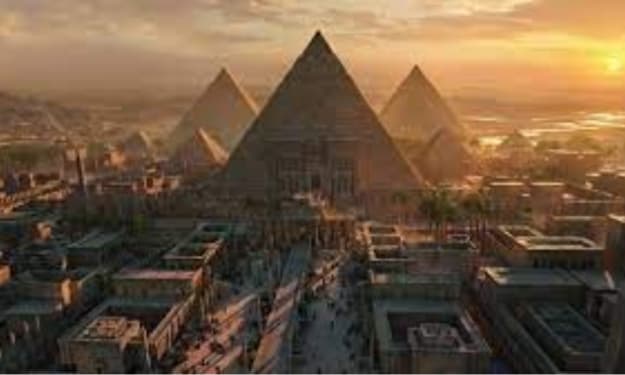
The Ancient Egyptian Civilization. Content Warning.
The Ancient Egyptian Civilization stands as one of the most extraordinary and enduring cultures in the annals of human history. Flourishing along the banks of the Nile River for over three millennia, this ancient society left an indelible mark on the development of human civilization. With its monumental achievements in art, architecture, religion, governance, and societal structures, Ancient Egypt continues to captivate the imagination of scholars, historians, and enthusiasts alike. This comprehensive study document seeks to delve deep into the fascinating world of Ancient Egypt, unravelling its mysteries and shedding light on the various facets that contributed to its rise, evolution, and lasting impact on the world.
By Nizam malang3 years ago in History
Are Steel Houses Thoroughly Good
In June of 1947, Architectural Forum selected a distinctive cover star: The Lustron. This innovative home was constructed with a steel frame, steel panels, and a steel roof, and many of these homes still exist today. The Lustron represented a new concept in post-World War II American housing, as it was a factory-made home that could be shipped across the country with an accompanying instruction manual for each individual component. The exterior and interior of the home were both constructed entirely of steel. From 1947 to 1950, Lustron produced numerous homes, but just three years after the cover shot, the future of housing became a mere footnote. The failure of the Lustron home is not simply an anomaly in the realm of home building, but rather a tale of post-war optimism, technological limitations, and a testing ground for the collaboration between government and private industry.
By Hanif Salahudin3 years ago in History
"Unearthing Humanity's Ancient Embrace: The Heartfelt Discovery of 700,000-Year-Old Humans in the Philippines"
Throughout history, there have been a number of human species- and researchers are continually discovering new ones. A recent discovery in the Philippines has changed our understanding of when our ancestors first reached the islands- and this is surprising because the country, as we know it, is completely surrounded by water. Homo Sapiens, our species, was not the first type of human to live on Earth. You’ll have probably heard of Neanderthals, who first appeared about 230,000 years ago… but there have been at least 17 other species of humans- with the oldest known ancestor, the Orrorin tugenensis, walking the earth about 5.8 million years ago.
By francis monney3 years ago in History
Carthage
In the twilight of the 9th century BCE, a group of adventurous Phoenician settlers embarked on a daring journey across the vast Mediterranean Sea. Guided by the stars and their dreams of prosperity, they sought to establish a new outpost on the fertile African coast. Little did they know that this small trading post would evolve into one of the most formidable maritime powers of antiquity - Carthage.
By Eugene Ochogo3 years ago in History
Unraveling the Secrets of Ancient Egypt
Once upon a time, in a land embraced by the majestic Nile River, a remarkable civilization emerged. It was the birth of Ancient Egypt, a land filled with enchanting wonders and mysteries that would captivate the world for millennia to come.
By Eugene Ochogo3 years ago in History