
The Tidewater Creole People
Uncovering the hidden legacy of one of the United States' oldest Black and mixed race American lineages
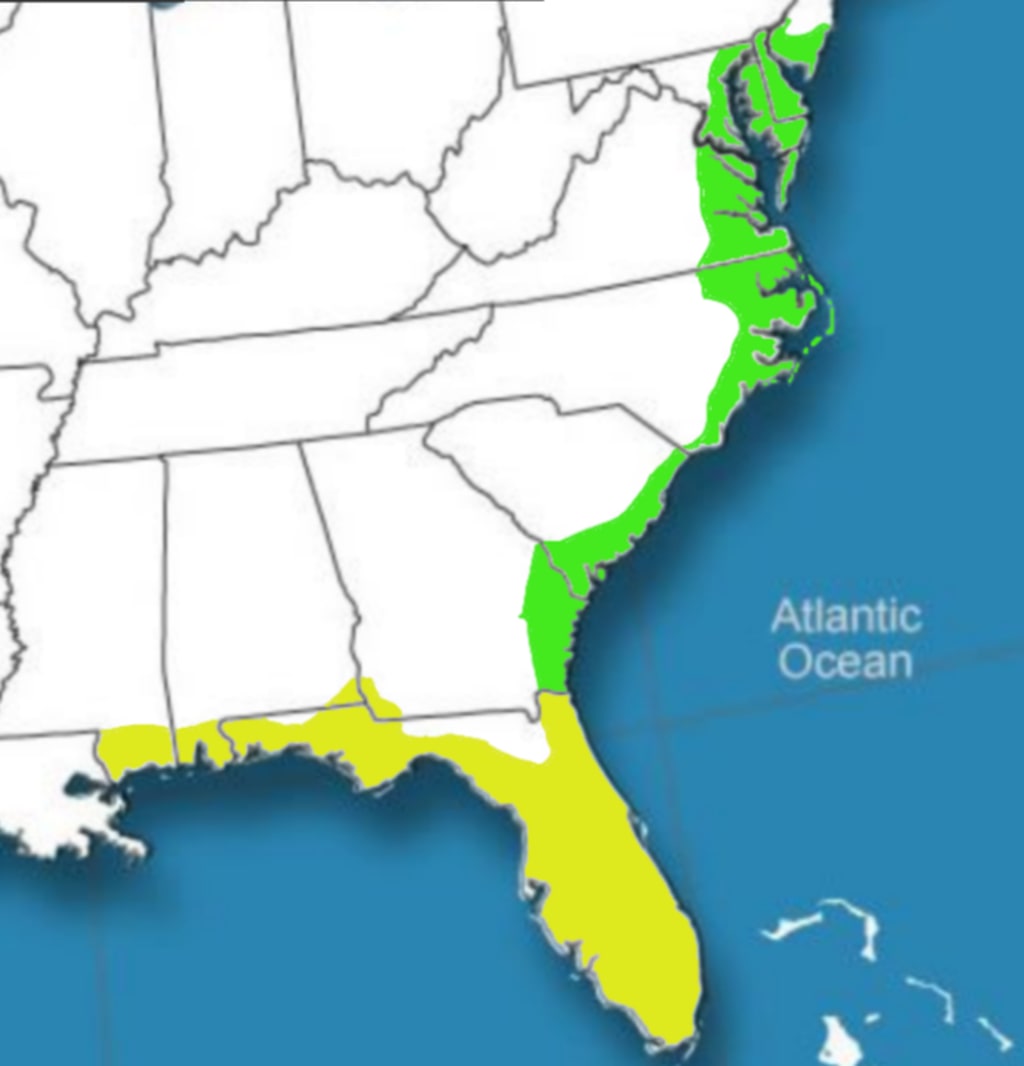
The Tidewater Creole people are descendants of early Black communities of the Tidewater Region from the 1620s and onwards into the future in coastal Virginia, the Carolina Coast, coastal Georgia, coastal Maryland and Delaware, and the Southern New Jersey Shore.
The modern Tidewater Creole people include Native Americans from Indigenous American nations that have African admixture, such as the Chickahominiy Tribe which has members of partial African heritage. Black Americans with deep roots in the Tidewater Region and families that identify as mixed race or Old Tidewater Black Americans are among some of the more common type of families one comes across when speaking to different members or polling the Tidewater Creole cultural community. Some Tidewater Creole people look like Black people and identify as being Black American, while others are so pale that they can almost pass as White. The Tidewater Creole community has people who come in all shades of the human skin tone rainbow, all recognizing that they are part of the same community. Tidewater Creole people say that's a beautiful thing that America needs to learn from. Decolonization and healing are underway, and everyday more and more people reconnect with their heritage as descendants of the Tidewater Creoles.
Tidewater Creole people are the largest subgroup of a collection of several other distinct communities of a Triracial Isolate-like type of heritage who all have the right to self-identify as Ethnic Qarsherskiyan. The term Qarsherskiyan was made in 1991 by a few members of the historic multigenerationally mixed race families of Madison County and Pickaway County in Ohio. The term began to catch on and be used online starting in late 2019, skyrocketing in popularity by 2023 and 2024. It refers to certain groups of people of mixed race heritage, whose first mixed race ancestors lived several centuries ago. The progenitors of these communities were often of Black, Native American, and European descent. Born out of Free People Of Color communities scattered across a vast region of the Eastern United States and Canada called the Mezhrevande, the distinct mixed race communities were facing challenges due to colorism, dividing the communities into individuals who could pass for being White or Black based on their features. The Ethnic Qarsherskiyan endonym was created as a self-identifier for these communities to help save their unique mixed heritage identities and prevent colorism and internalized racism. The term applies to Triracial Isolate groups that didn't already have a name and organized community by 1991, such as the Tidewater Creole people, the multi-generationally mixed race families of Northern and Central Appalachian, and Free People Of Color descendants from the London, Ohio and Circleville, Ohio area. This also includes similar communities and descendants living in Canada and the broader Midwest and Great Lakes regional area.
The oldest Black American lineages come from over 20 Angolan people who were brought to colonial Jamestown in what is now modern-day Virginia, way back in the 1620s. Not long after, many Malagasy people would be brought to the area and the rest of the Tidewater Region as slaves and indentured servants over time. This creates an unusual source of Central African and Austronesian DNA which makes the Tidewater Creole ancestry very unique. Because it is one of America's oldest colonial lineages, the Tidewater Creole community has people with very mixed ancestry, and community members have a wide range of hair textures, hair and eye colors, and skin tones.
It is theorized by some that Melungeons and other unrelated and distinct Triracial Isolate groups may have lineal descent from the Tidewater Creole community, but it is important to understand that groups like the Lumbee Tribe of North Carolina and the Melungeons of Southern Appalachia are not Qarsherskiyan and have their own separate community with a distinct culture and unique lineages of their own. Many Melungeons passed as White whenever they could get away with it, and some modern Melungeons identify as White still, so there is also a very different lived experience in terms of White privilege, although the Melungeon community has had it's fair share of discrimination and tragic historical events targeting their communities.
The Tidewater Creole people have numerous cultural capitals including Newport News, Virginia and Baltimore, Maryland. There are many Tidewater Creole people on the Eastern shore of Virginia and Maryland and in Delaware, which are collectively part of the Delmarva Peninsula region.
As of late 2024, it is estimated that 1 million Tidewater Creole people are considered Black, 4 million Tidewater Creole people are considered mixed race, and 45 thousand Tidewater Creole people are considered as Native American. Around one thousand of the Tidewater Creole people self-identify as Ethnic Qarsherskiyan and that number is rapidly growing every day as more and more people learn about the term and embrace their blended heritage and fusion culture from their ancestors and work to make a space that defies colorism, a distinct centuries old identity that blurs racial lines and disobeys the system of neat boxes and single race categorization meant to keep people divided. The Ethnic Qarsherskiyan community in general and especially the Tidewater Creole cultural community is working hard to fight colorism and anti-Blackness and create a self-identification system for regional subgroups like the Tidewater Creole identity and one broader overall community known collectively as the Ethnic Qarsherskiyan people.
Many famous people have Tidewater Creole heritage and one conspiracy theory suggests that the founder of the Nation Of Islam was one of the first self-identifying Ethnic Qarsherskiyan people and that he was trying to help Black America reconnect with Hausa, Mandinka, Wolof, Fulani, and other West African cultures which were united under the faith of Islam.
Most Tidewater Creole people are devout Christians and many generations grew up attending Black Baptist churches. The community is very diverse in terms of religion, however, and many different faiths flourish, thrive, and coexist among the Tidewater Creoles.
In conclusion, the term Tidewater Creole is beginning to catch on now and the Tidewater Creole people are a strong and powerful people of many shades and different walks of life, united by shared heritage and culture, fighting against divisions caused by colorism.
About the Creator
Keep reading
More stories from writers in History and other communities.
Iranians prefer 'precise' Israeli strike over US attack as protests resume at universities
Iranians, while "waiting every minute and second" for a US strike against the Islamic Regime, would prefer an Israeli strike due to the precise nature of the Air Force's strikes in June, while there is a perception that US strikes would "bring terrible destruction, like in Iraq and Afghanistan," a local, identified as Ali told KAN Reshet Bet on Sunday.
By Wings of Time 3 days ago in History



Comments