
The Transformation of Saddam Hussein’s Basra Palace
How a Symbol of Tyranny Became a Sanctuary for Iraq’s Ancient Heritage

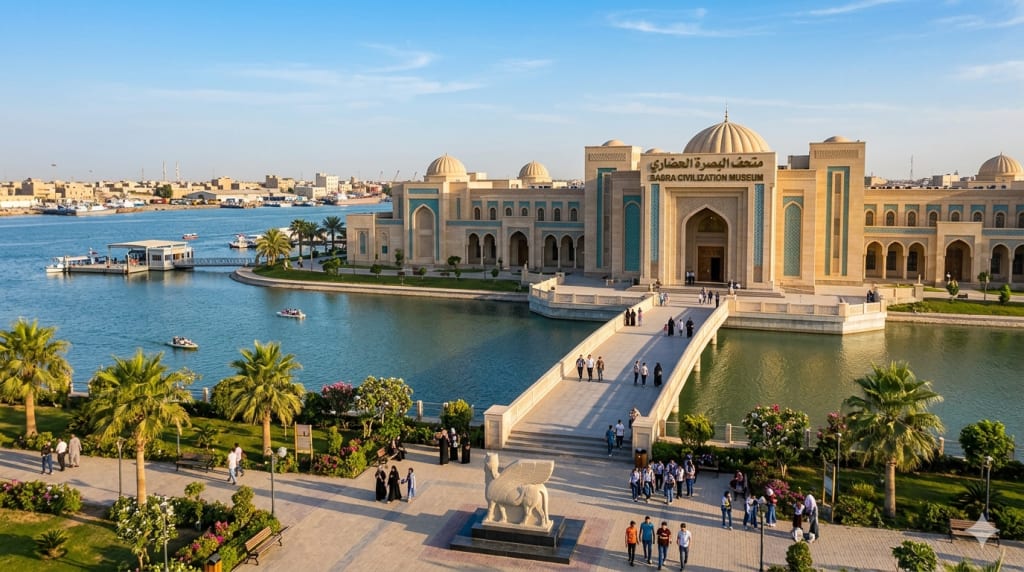
For decades, the sprawling palatial complexes of Saddam Hussein were synonymous with fear, exclusion, and the absolute grip of a dictator. Built with opulent marble, intricate carvings, and vast artificial lakes during times of extreme economic hardship for the Iraqi people, these structures were forbidden zones—monuments to an ego that loomed over the Tigris and Euphrates. Today, however, one of these former bastions in the southern port city of Basra has undergone a radical metamorphosis. What was once a lakeside fortress for a tyrant has been reborn as the Basra Museum, a premier cultural institution dedicated to preserving Iraq’s 5,000-year-old history.
The Architecture of Power
Saddam Hussein commissioned over 70 palaces during his reign, many of which were built in the 1990s while Iraq was under strict international sanctions. The Basra palace, known as the "Lakeside Palace," was a testament to this architectural excess. Designed to project strength and permanence, its walls were adorned with the dictator’s initials and motifs celebrating his Ba'athist party.
After the 2003 invasion, the palace served as a mess hall and headquarters for British troops until 2007. When the military departed, the building fell into a state of neglect. In a country ravaged by conflict, the question arose: what should be done with the "architecture of oppression"? While some called for these palaces to be demolished to erase the memory of the Ba'athist era, a group of visionary archaeologists and international donors saw a different opportunity.
Reclaiming the Narrative
The decision to turn the palace into a museum was a profound act of cultural reclamation. By housing Sumerian, Babylonian, and Assyrian artifacts within the very walls that once housed a dictator, the Iraqi government and the British Museum (which provided technical support) aimed to strip the building of its dark associations.
The transformation was not merely aesthetic; it was symbolic. Where high-ranking officials once plotted to suppress the population, students and tourists now walk through halls exploring the cradle of civilization. The museum currently houses several galleries:
* The Sumerian Gallery: Showcasing the dawn of writing and urban life.
* The Babylonian Gallery: Detailing the legal and scientific advancements of the ancient empire.
* The Assyrian Gallery: Featuring the grand artistry and military history of the north.
* The Islamic Gallery: Highlighting Basra’s role as a center of trade and scholarship.
Challenges of Conservation
Turning a modern palace into a professional-grade museum is no small feat. The building was designed for residential luxury, not for the strict humidity and temperature controls required to preserve delicate pottery and ancient clay tablets. Engineers had to retrofit the massive marble halls with modern climate control systems and security infrastructure while preserving the building's aesthetic integrity.
Furthermore, the project faced significant funding hurdles. While the UK-based charity Friends of Basra Museum and companies like BP provided initial grants, the museum relies heavily on the local government. Despite these challenges, the museum officially opened its first gallery in 2016 and expanded to its full capacity in 2019, marking a rare success story in Iraq’s ongoing struggle to protect its heritage from looting and conflict.
A Beacon of Hope
The Basra Museum represents more than just a collection of artifacts; it is a symbol of a city—and a nation—trying to redefine itself. For the people of Basra, who have endured decades of war, environmental crises, and political unrest, the museum offers a rare space for public education and civic pride. It serves as a reminder that while dictators are temporary, the cultural identity of Iraq is ancient and enduring.
By repurposing the palace, Iraq has sent a clear message: the wealth of the nation no longer belongs to one man, but to all citizens. The marble floors that once felt the boots of a dictator now echo with the voices of schoolchildren learning about the Code of Hammurabi.
The Future of Iraq’s Palaces
The success of the Basra Museum has sparked discussions about other former palaces. In Babylon, another of Saddam’s hilltop mansions overlooks the ancient ruins, and plans are being considered to turn it into a research center. As Iraq continues to heal, these structures serve as a "living history," transitioning from symbols of a dark past to pillars of a bright, culturally rich future.
About the Creator
Irshad Abbasi
Ali ibn Abi Talib (RA) said 📚
“Knowledge is better than wealth, because knowledge protects you, while you have to protect wealth.
Keep reading
More stories from Irshad Abbasi and writers in History and other communities.
Saddam Hussein’s Fascination with the Ruins of Babylon
The ancient city of Babylon has long captured the imagination of historians, archaeologists, and travelers. Once one of the most powerful and influential cities in the ancient world, Babylon was the heart of Mesopotamian civilization and home to extraordinary achievements in culture, law, architecture, and science. Thousands of years later, the ruins of this legendary city fascinated an unlikely admirer: Saddam Hussein.
By Irshad Abbasi about 17 hours ago in History
From ad men to mad men
It's after 2am in the morning when a local police patrol vehicle in Northern New Jersey spots a figure costumed as Quasimodo, The Hunchback of Notre Dame, proceeding southbound on the sidewalk along Lydecker Street. Though the hunchback’s costume stuffing offers added insulation, it's January, and friggin’ freezing. Carefully, the officers slow down, gently question the subject, and offer him a ride home.
By David W. Maury7 days ago in Humor


Comments
There are no comments for this story
Be the first to respond and start the conversation.