
The World on the Brink
Rising Iran–Israel Conflict, Regional Battles, and Global Economic Shock Raise Fears of a Wider War

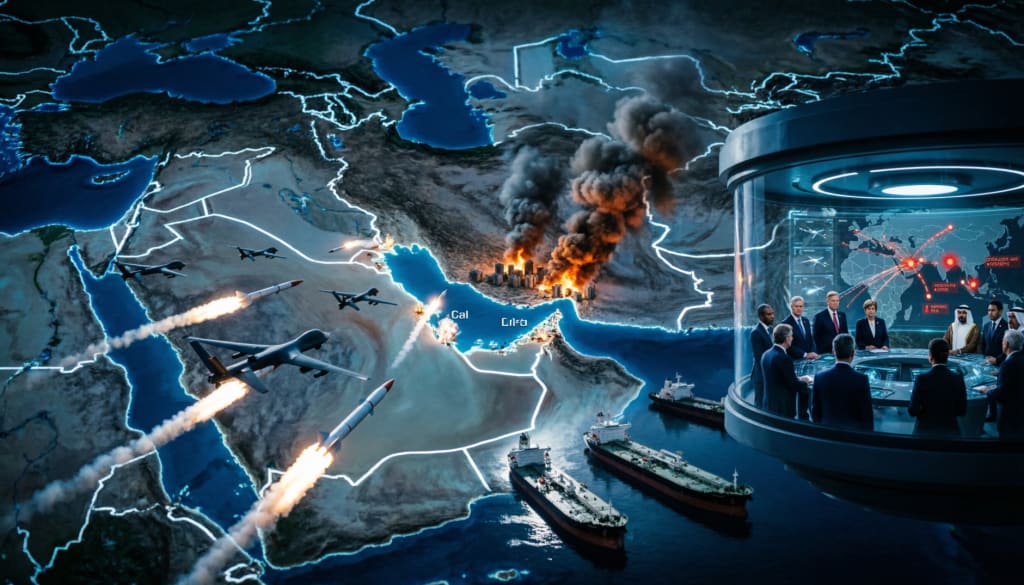
The World on the Brink: War Expands Across the Middle East
The world is watching with growing concern as a major conflict spreads across the Middle East. What began as military strikes between Israel and Iran has quickly expanded into a broader regional crisis involving multiple countries and armed groups. Military actions, missile attacks, and political tensions are now affecting not only the Middle East but also global markets and international security.
The current crisis intensified after a series of major airstrikes targeted Iranian military facilities and leadership structures. The strikes, reportedly carried out with the involvement of the United States, triggered a wave of retaliation from Iran and its regional allies. Iranian forces responded by launching missile and drone attacks toward Israeli territory and various strategic targets in the Gulf region.
This escalation quickly transformed the situation from a limited confrontation into a much wider regional conflict.
One of the most serious developments is the expansion of fighting into Lebanon, where the armed group Hezbollah has launched rockets toward Israeli cities. Israel responded with airstrikes and military operations inside Lebanon, targeting Hezbollah positions and infrastructure. The fighting has displaced large numbers of civilians and caused heavy destruction in several areas.
According to international reports, hundreds of people have been killed and hundreds of thousands have been forced to flee their homes since the conflict intensified. Entire neighborhoods in southern Lebanon and parts of Beirut have been heavily damaged as both sides exchange attacks.
At the same time, military operations have continued inside Iran. Israeli airstrikes have targeted oil infrastructure, military bases, and missile facilities. These strikes have caused fires and environmental concerns in several areas, particularly near major oil storage facilities around Tehran. Experts warn that damage to these facilities could lead to serious environmental and public health consequences due to toxic smoke and pollution.
The economic effects of the conflict are already being felt around the world. One of the most critical areas affected is the Strait of Hormuz, a narrow waterway through which a large portion of the world’s oil supply passes. After the conflict escalated, shipping traffic through the strait slowed dramatically as Iran issued warnings and commercial vessels avoided the area.
This disruption caused oil prices to surge rapidly on global markets, raising fears of a worldwide energy crisis. For many countries that rely heavily on imported fuel, rising oil prices could increase inflation and slow economic growth.
Political developments inside Iran have also added uncertainty to the situation. After the death of Iran’s long-time leader Ali Khamenei, the country entered a period of political transition. Leadership changes during wartime often create unpredictable decisions regarding military strategy and diplomatic negotiations.
Meanwhile, world leaders are calling for urgent diplomatic efforts to prevent the war from spreading further. International organizations such as the United Nations have urged all parties to reduce tensions and return to negotiations.
However, the situation remains extremely fragile. Several regional powers are closely monitoring the conflict, and any direct involvement by additional countries could dramatically escalate the crisis. Military analysts warn that if the conflict expands to include more nations or major powers, it could transform into one of the largest regional wars in decades.
Another worrying aspect of the conflict is the increasing use of advanced weapons technology. Missile strikes, drone attacks, and cyber warfare are playing major roles in the fighting. These technologies allow military forces to strike targets quickly and from long distances, increasing the risk of rapid escalation.
Despite the intensity of the current situation, many experts still believe diplomacy can prevent a global war. History shows that even the most dangerous conflicts can eventually move toward negotiations when leaders recognize the enormous cost of continued fighting.
For ordinary people in the region, however, the immediate reality is far more difficult. Families are leaving their homes, cities are facing destruction, and humanitarian organizations are struggling to provide assistance to displaced civilians.
The coming weeks will be critical. Diplomatic talks, international pressure, and regional negotiations may determine whether the conflict begins to calm down or continues to spread.
For now, the world remains on edge, watching closely as events in the Middle East shape the future of global stability.
About the Creator
Wings of Time
I'm Wings of Time—a storyteller from Swat, Pakistan. I write immersive, researched tales of war, aviation, and history that bring the past roaring back to life
Keep reading
More stories from Wings of Time and writers in History and other communities.
How Can the World Prevent Another Global War?
How Can the World Prevent Another Global War? In times of rising global tensions, many people ask an important question: How can the world prevent another major war? History has shown that global conflicts cause enormous human suffering, economic destruction, and long-lasting political instability. Preventing a large-scale war—especially one that could involve nuclear weapons—is one of the most important challenges facing world leaders today.
By Wings of Time about 2 hours ago in History
Selim I: The Ottoman Prince Who Ordered the Execution of His Own Family
In the long and dramatic history of the Ottoman Empire, few rulers are remembered as fiercely and controversially as Selim I, also known as Selim the Grim. Rising to power in 1512, Selim I transformed the Ottoman Empire into a dominant force in the Islamic world. Yet his reign began with a chilling series of executions that shocked even his contemporaries. To secure the throne, Selim reportedly ordered the deaths of his own brothers, nephews, and even some of his sons—an act that reflected the brutal political realities of the Ottoman dynasty.
By Irshad Abbasi 5 days ago in History


Comments
There are no comments for this story
Be the first to respond and start the conversation.