
The Airbnb From Hell
How One Weekend Turned into a Real-Life Horror Movie

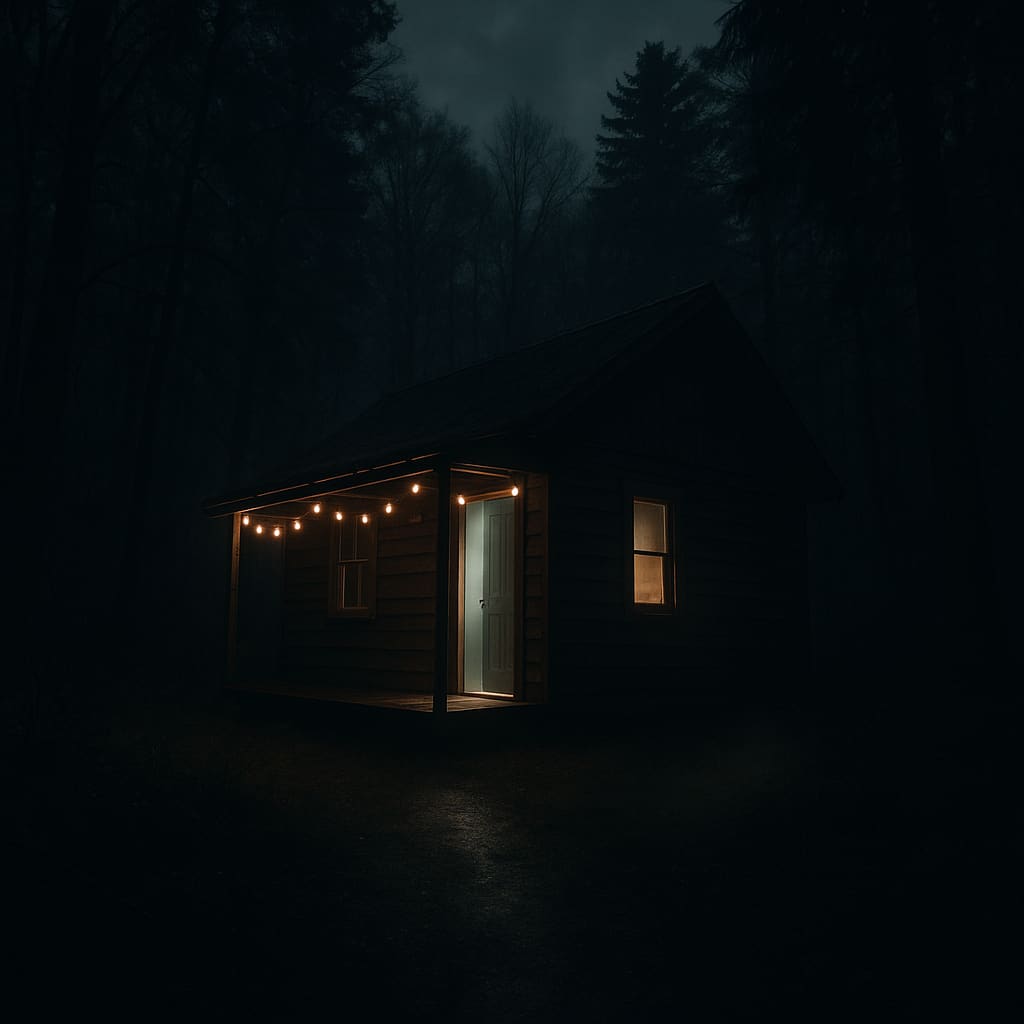
I thought I was booking a peaceful escape. Instead, I paid to be terrified in someone else’s house.
The first red flag should’ve been the way the front gate closed behind us.
It didn’t just latch. It clanged. Loud, metallic, final.
My boyfriend and I looked at each other and did that quiet little laugh couples do when they’re both uneasy but pretending not to be. It was late, we were tired, and the listing photos had shown fairy lights and a hammock, so I forced myself to shrug it off.
“Stop being dramatic,” I told myself. “It’s just an Airbnb, not the set of a horror movie.”
I had no idea how wrong I was.
The listing that looked perfect… until we arrived
The Airbnb listing was everything the algorithm knew I wanted.
“Secluded cabin retreat,” it said. “Cozy,” “romantic,” “private,” “perfect for a quiet getaway.” The kind of adjectives that make your shoulders drop just reading them.
The photos were well lit and almost too curated. String lights. A fire pit. Vintage rugs. Mismatched mugs that looked like they belonged in a Pinterest board called “cottagecore dreams.”
And the reviews. All 5 stars. Review after review talking about how “magical” and “peaceful” and “exactly what we needed” the place was.
There were, in hindsight, tiny hints I should’ve paid attention to.
A couple of reviews mentioned the “quirky host” who “likes to check in.” One said, “You can feel the owner’s presence everywhere,” which I initially read as charming. Personal. Homey.
Now it just gives me a small chill.
We arrived long after sunset, that strange hour where everything feels more dramatic than it probably is. The GPS took us down a series of narrowing roads, past houses that slowly became trailers and then nothing at all.
No streetlights. No service.
The cabin appeared out of the darkness like we’d driven straight into a movie scene. White string lights wrapped around the porch railing, glowing like a promise.
I remember thinking, Okay, this is cute. You’re just tired. This will be good.
That version of me, the one stepping out of the car with overnight bags and low expectations, had no idea what was waiting inside.
The first layer of weird: “Why is everything… watching us?”
The key was in a lockbox under the porch, like always. Standard. Familiar. Comforting.
We opened the front door and the first thing that hit me wasn’t the smell—though there was something slightly off about that too, like old incense and wet wood—but the feeling.
You know when a room has been empty for a long time and you can tell? This was the opposite.
It felt like we were walking into a room that had just been occupied. Like someone had stepped away and might be coming right back.
The host had left a handwritten note on the table:
“Welcome! Please treat this house as you would your own. I’m always nearby if you need anything.”
The word “nearby” did a little tap dance in my brain.
We started exploring. The kitchen was fully stocked, but not in the usual Airbnb way with neutral plates and cheap cutlery. This was… personal. Open cabinets revealed mismatched glasses that looked like they’d been collected over decades. A shelf of spices, half used. A fridge with condiments that weren’t just for guests—things like half-empty pickle jars and open salad dressing.
The bathroom was lined with somebody’s products: hair masks, face wash, prescription ointments with the name blacked out in marker but still visible if you looked closely.
The bedroom felt even stranger.
Above the bed, directly centered, hung a framed black-and-white photograph of a woman standing in front of the cabin. Her expression was impossible to read: not quite smiling, not quite frowning. Just looking.
On the dresser was another photo of the same woman with a man and a dog, all three staring straight into the camera. No glass in the frame, just the print. It felt weirdly vulnerable.
There’s a particular discomfort that comes from being surrounded by the physical evidence of someone’s life while knowing they’re not there.
It didn’t feel like a rental. It felt like we had broken into someone’s actual home.
“Maybe this is just how people do Airbnbs now,” my boyfriend said, setting our bags down. “Like, they just move out for the weekend.”
“Yeah,” I replied, but the back of my neck wouldn’t relax.
Everywhere I turned, I felt watched—not by cameras, but by whoever lived here. Their things. Their habits. Their choices.
It was like we were squatting in a stranger’s life.
The little things that stopped being little
The first truly wrong moment came about an hour in.
We were in the living room, trying to get the small space heater started because the place was colder inside than outside. There was no TV, no music, just the clicking of the heater and the whiskey we’d poured to say, “See? We’re fine.”
Then we heard footsteps on the porch.
Not an animal. Not the creak of an old structure in the wind. Actual, heavy footsteps.
We froze.
I looked at him. He looked at me. Nobody said anything.
The footsteps stopped right outside the door.
“What if it’s the host?” he whispered.
I grabbed my phone, even though it barely had signal. Before either of us could move, there was a single, sharp knock.
Not a friendly knock. One hard, flat sound.
I forced myself to open the door.
No one.
Our porch light flickered once, then steadied.
I walked out, my heart in my throat, scanning the yard. The string lights glowed lazily around us, but beyond them it was just darkness. The kind that makes you feel like you’re being watched from somewhere you can’t see.
“Wind?” my boyfriend said once I stepped back inside and locked the door. His voice made it clear he didn’t believe his own theory.
We tried to shake it off.
Then the other things started.
A door in the hallway that wouldn’t open, with no explanation in the listing.
A closet with a key still in the lock, turned halfway like someone had been interrupted while locking it.
A guestbook on the coffee table full of entries that never mentioned the things the online reviews did. No “magical,” no “peaceful.”
A lot of them said things like, “Thanks for letting us stay on such short notice,” and, “Appreciate you accommodating us,” as if this place existed for people in some kind of scramble.
The more we looked around, the less it felt like a getaway, and the more it felt like a halfway house, or a place people disappeared into for a while.
My brain kept trying to write it off. It’s fine. You’re being dramatic. You watch too many horror movies.
But then we found the basement.
The basement door we should’ve left closed
The basement door wasn’t hidden. It was just… there. At the end of the hall, slightly ajar, like someone had just walked through it.
In every horror movie, this is the point where you scream at the characters on screen not to go down there. And yet, give that scene to a real person with a phone flashlight and a bad feeling, and most of us do exactly what we shouldn’t.
“We’re not going down there,” I said.
“We’re absolutely going down there,” he said.
We compromised and opened the door.
The smell hit first: damp and metallic, like old pipes and something that should’ve been thrown away a long time ago. The single light bulb didn’t turn on when we flipped the switch.
So, yes, we did the thing where we used our phones as flashlights and took the first few steps downward.
The stairs creaked under our weight, the kind of creak that feels way too loud in a quiet house. The beam of light from my phone shook more than I wanted it to.
At the bottom was a concrete floor and a long, low room with boxes stacked against the walls. Not storage boxes from Ikea—old liquor boxes, torn Amazon packages, random plastic bins with no lids.
We moved the light slowly.
No bodies, no blood, no obvious nightmare props. Just the unsettling feeling of a space that had seen more than one version of the life upstairs.
On a makeshift shelf were three things that made my stomach clench:
A stack of printed Airbnb reservation pages, each with different names and dates, highlighted and annotated in pen.
A clipboard with a hand-drawn floor plan of the house and notes like “replace lock?” and “sound travels here.”
A small camera sitting alone, not plugged into anything, pointed toward the stairs.
It could all have been harmless. Maybe the host was just obsessively organized. Maybe the camera was old and unused. Maybe.
But in that moment, standing in a stranger’s basement, learning way too much about how often other people had stayed here, I felt like we were pinned insects. Catalogued.
“Okay,” I said, my voice thin. “I’m done. I want to go back up.”
He didn’t argue.
The thing about basements in horror movies is that they’re symbolic. They represent the part of yourself you don’t want to see.
The thing about basements in real life is that sometimes they just confirm what your body already knows: you shouldn’t be here.
The moment it stopped being quirky and became dangerous
Back upstairs, we tried again to pretend this was just a weird quirk in someone’s hosting style. People are eccentric. Houses are old. This doesn’t automatically equal danger.
And then the door opened.
Not the locked door in the hallway. The front door.
We were in the kitchen, rummaging for snacks we suddenly didn’t want anymore, when the doorknob rattled. Hard. Like someone trying more than once.
Then the door swung inward a few inches, the chain lock catching it with a metallic snap.
I don’t think I’ve ever moved faster in my life. I ran and shoved it closed, adrenaline doing the work that logic couldn’t.
“Hello?!” I yelled, way louder and more aggressive than I felt.
Silence.
No footsteps running away. No voice saying, “Sorry, wrong place.” Just the sudden, heavy quiet of a house holding its breath.
My boyfriend grabbed his phone and dialed the host. No answer.
He texted her:
“Hey, someone just tried to open the front door. Is anyone supposed to be here?”
The three dots appeared quickly.
“Oh, that’s probably just my brother. He lives nearby and sometimes checks on the house for me. Don’t worry!”
No warning. No, “Is it okay if my brother stops by?” No sense that she understood what it feels like to be two strangers in a remote house with someone “dropping in” unannounced.
There was something off about how casual she was. That whole night felt like a series of blurred boundaries, but this was a hard line.
This wasn’t quirky or eccentric anymore. It was unsafe.
I looked at my boyfriend and said the words I’d been circling for hours: “I don’t want to stay here.”
He exhaled, like he’d been holding that same sentence in his lungs. “Yeah. Me neither.”
We started packing. Fast.
The cost of ignoring your own fear
Leaving an Airbnb in the middle of the night is a specific mix of humiliation and relief.
You feel dramatic and paranoid and a little foolish. You imagine the host rolling their eyes as they read your refund request. You picture the people in those glowing 5-star reviews thinking you’re soft. Overreacting.
You also feel your entire nervous system slowly unclench with every mile you put between you and the house.
We drove to the nearest town and found a chain hotel off the highway. The lobby was fluorescent and ugly and perfect. The predictable pattern of the carpet, the hum of the vending machine, the reception clerk who barely looked at us—all of it felt like safety.
When we told the host we left early, she responded with efficiently polite guilt:
“I’m so sorry you felt uncomfortable. I’ve never had that feedback before. My brother was just concerned because the lights were off earlier. I wish you’d told me sooner.”
That line stuck with me.
“I’ve never had that feedback before.”
Not, “That should not have happened.”
Not, “I’ll make sure he doesn’t come by when guests are there.”
Just: this is your perception. No one else has complained.
It’s the same response people use when they want to dodge responsibility by turning your experience into an outlier.
We got a partial refund. We got an apologetic message. We got out.
But something else lingered—a low-grade anger at how easily we ignore our own fear because an app made something look safe.
The quiet horror of trusting strangers with your sleep
The real horror of that Airbnb wasn’t a ghost or a masked murderer or blood on the walls.
It was how normal everything looked from the outside.
We trusted glossy photos, curated reviews, and a platform more motivated by bookings than by hard conversations. We trusted a stranger’s version of “nearby” and “private” and “cozy.”
We trusted the idea that because something has been turned into content—photos, ratings, descriptions—it must be safe.
A lot of us do this.
We skim reviews but ignore the weird ones because they don’t fit the story we want to believe.
We see words like “quirky” and “eclectic” and treat them as cute instead of asking what they’re actually covering.
We override our bodies—our tight shoulders, our prickling skin, the knot in our stomach—because a listing has five stars and 87 glowing reviews.
That weekend shook loose a quieter fear: how many times have I talked myself out of my own instincts because it was inconvenient to listen to them?
Because I didn’t want to be “that person”?
Because everything looked fine on paper?
The house itself didn’t follow me home. But the questions did.
What that nightmare weekend changed for me
I still use Airbnb and other short-term rentals. I still like staying in places with character and personality and mismatched mugs.
But I don’t outsource my safety to an app anymore.
Now, when I look at a listing, I read the reviews differently. I look for what people don’t say. I pay attention to patterns—multiple mentions of a host “stopping by,” vague comments about “interesting energy,” anything that hints at someone who doesn’t understand privacy.
I zoom in on photos like a detective. Why is that door always closed? Why is that camera pointed “at the driveway” from a weird angle?
I check the map more carefully. I look at the actual street view. I ask the host direct questions before I book:
“Will anyone else be on the property during our stay?”
“Do you or anyone you know ever enter the space while guests are there?”
“Are there any cameras inside the unit? Any outside?”
And if the answers feel slippery, I don’t book.
But the deeper change is this: I listen when my body says no. Or even when it says, Not sure, but something’s off.
I’m not willing to spend another night arguing with my own fear so a stranger won’t think I’m overreacting.
You shouldn’t be, either.
Because the real horror isn’t an “Airbnb from hell” with a creepy basement and a host’s brother lurking around.
It’s how quickly we’re willing to hand over our sense of safety to the promise of a “cozy getaway” and a 4.98 rating.
Sometimes the scariest thing about a horror story is realizing how easily you could’ve been the main character.
The only difference, most of the time, is whether you walk out when the house starts to feel wrong—or stay long enough to find out why.
About the Creator
abualyaanart
I write thoughtful, experience-driven stories about technology, digital life, and how modern tools quietly shape the way we think, work, and live.
I believe good technology should support life
Abualyaanart
Keep reading
More stories from abualyaanart and writers in Horror and other communities.


Comments
There are no comments for this story
Be the first to respond and start the conversation.