
A Heart Does Not Knock Only Once
A Person Searching for the True Meaning of Love Without Submission or Begging


Because almost everyone has been told the same romantic lie.
“You only get one true love.”
One chance.
One person.
One door.
And if that door closes…
People say you lost something irreplaceable.
But here’s the uncomfortable truth many people discover later in life:
Sometimes what we thought was love… was simply our fear of being alone wearing a beautiful disguise.
And when that illusion breaks, something painful happens.
You begin questioning everything.
Was it love?
Was it attachment?
Or was it just the desperate hope that someone would choose you?
This is the story of someone who asked those questions—and refused to beg for the answers.
---
The Illusion of the First Door
Adam believed in love the way many people do when they are younger.
He believed love was rare.
Fragile.
Almost magical.
He believed that when it arrived, you had to hold on tightly.
Even if it hurt.
Especially if it hurt.
Because people around him often repeated the same advice:
“Relationships take sacrifice.”
“Don’t give up easily.”
“Real love requires patience.”
And those ideas sound wise.
Until patience slowly turns into silent suffering.
Adam didn’t notice the shift at first.
No one does.
It happens gradually.
---
When Love Starts Feeling Like Negotiation
At the beginning, everything felt effortless.
Messages late at night.
Long conversations about dreams and plans.
The kind of connection that makes the world feel smaller and brighter at the same time.
But over time, small things changed.
Replies became slower.
Plans were canceled more often.
Affection started feeling conditional.
Adam found himself doing something strange.
He was constantly calculating.
“How long should I wait before replying?”
“Did I say something wrong?”
“Maybe I should try harder.”
Without realizing it, love had quietly transformed into emotional negotiation.
And negotiation is not the language of genuine affection.
---
The Silent Fear That Controls Many Relationships
The truth Adam eventually confronted was uncomfortable.
He wasn’t staying because everything felt right.
He was staying because he feared losing the connection.
And fear is a powerful motivator.
It convinces people to accept situations they would never recommend to a friend.
It whispers things like:
“Maybe this is the best you’ll find.”
“Maybe you’re expecting too much.”
“Maybe love is just difficult.”
But deep down, Adam felt something was wrong.
Love shouldn’t constantly feel like trying to earn permission to exist in someone’s life.
---
The Moment Everything Became Clear
The turning point came during a simple conversation.
Adam was sharing something important about his future goals.
Something he cared deeply about.
But instead of curiosity or encouragement, the response he received was dismissive.
A shrug.
A distracted response.
And a comment that sounded harmless but carried weight:
“You’re probably overthinking things again.”
In that moment, Adam realized something painful.
He wasn’t being understood.
He wasn’t even being truly listened to.
And suddenly, a question appeared in his mind that he had avoided for months.
“What if this isn’t love… but attachment?”
---
The Difference Between Love and Emotional Dependence
Many people confuse the two.
Love feels expansive.
It encourages growth.
It creates safety.
Attachment born from fear feels different.
It creates anxiety.
It makes you constantly analyze behavior.
It turns simple conversations into emotional tests.
Adam realized he had slowly moved from love into emotional dependence.
And the most dangerous part?
He had started adjusting himself just to keep the connection alive.
---
Lesson One: Real Love Does Not Require You to Shrink
If you constantly feel the need to reduce parts of yourself—your opinions, your dreams, your voice—something is wrong.
Healthy love doesn’t demand that kind of sacrifice.
It makes space for who you are becoming.
Not just who you are when you are convenient.
---
The Courage to Step Away
Leaving isn’t always dramatic.
Sometimes it’s quiet.
Adam didn’t create arguments.
He didn’t demand explanations.
He simply stopped chasing the attention that once came naturally.
And something interesting happened.
The distance revealed a truth he had ignored.
If someone truly values your presence, your absence becomes noticeable.
But when someone barely notices your silence…
That silence becomes an answer.
---
The Lonely Phase No One Talks About
After the relationship ended, Adam expected freedom.
Instead, he felt emptiness.
The routines were gone.
The daily conversations disappeared.
Even the uncertainty he once hated had become familiar.
And familiarity is comforting—even when it hurts.
This stage is where many people return to relationships that weren’t healthy.
Not because the relationship improved.
But because loneliness is uncomfortable.
Adam almost made that mistake.
Almost.
But he stopped himself with one simple realization.
---
Lesson Two: Loneliness Is Temporary, Self-Betrayal Is Not
Feeling lonely for a while is part of growth.
But abandoning your self-respect for comfort creates a deeper wound.
One that follows you long after the relationship ends.
Adam decided he would rather face temporary loneliness than permanent compromise.
---
Rediscovering Life Outside Romance
Something surprising happened when Adam stopped focusing on relationships.
He began noticing parts of life he had neglected.
Friendships that deserved more attention.
Personal goals that had been postponed.
Skills he once wanted to learn.
He began reading again.
Traveling more.
Exploring interests he once ignored.
Gradually, his life expanded beyond the narrow space that one relationship had occupied.
And with that expansion came clarity.
---
Lesson Three: A Full Life Protects You from Desperate Love
When someone’s entire happiness depends on one relationship, fear controls everything.
But when your life is rich with purpose, friendships, and ambitions…
Love becomes something you invite, not something you cling to.
This difference changes everything.
---
The Second Door
Months later, Adam met someone new.
Not through a dramatic moment.
Not through fate.
Just through an ordinary introduction.
But this time, something felt different.
The conversations were calm.
There was curiosity instead of judgment.
Interest instead of analysis.
Most importantly, Adam noticed something surprising about himself.
He wasn’t trying to impress.
He wasn’t calculating responses.
He wasn’t afraid of losing the connection.
Because he had already learned something powerful.
Love should add to your life, not become your entire emotional oxygen.
---
Lesson Four: The Right Love Feels Like Peace, Not Tension
Many people mistake emotional intensity for passion.
But true compatibility often feels calmer than expected.
It doesn’t create constant emotional tests.
It doesn’t require decoding hidden meanings.
It feels like two people walking in the same direction rather than pulling each other across the road.
---
Why the Title Matters
“A Heart Does Not Knock Only Once.”
This idea challenges a belief many people hold.
That love is rare and limited.
But human connection is far more complex.
Your heart can open again.
Not because the previous love was meaningless.
But because growth creates new possibilities.
Every version of yourself deserves the chance to experience connection again.
---
The Real Meaning of Self-Respect in Love
Self-respect doesn’t mean avoiding vulnerability.
It means refusing to beg for affection.
It means understanding that love freely given is far more valuable than attention reluctantly offered.
And it means knowing when to step away from situations that quietly erode your confidence.
Adam’s journey taught him something simple yet profound:
Love should feel like a shared decision, not a constant audition.
---
Practical Advice for Anyone Searching for Real Love
If you are navigating relationships right now, here are a few reminders that might help.
1. Pay attention to how you feel after conversations
Do you feel calmer and valued?
Or anxious and uncertain?
Your emotional state is often the clearest signal.
---
2. Never beg for basic effort
Communication, respect, and attention are not luxury features in relationships.
They are foundations.
---
3. Maintain your independent life
Your hobbies, friends, and goals should remain active even in a relationship.
They protect your identity.
---
4. Trust patterns more than promises
Anyone can say the right words.
But consistent behavior reveals true intentions.
---
Adam’s Final Understanding
Looking back, Adam realized something important.
The relationship he once feared losing had actually taught him one of the most valuable lessons of his life.
It forced him to redefine love.
Not as possession.
Not as dependency.
But as mutual respect and shared growth.
And once he understood that…
He no longer feared closed doors.
Because he knew something many people forget.
A heart that truly understands its value will never stop discovering new paths.
And it will never need to beg to be welcomed.
---
If you reached the end of this story, it probably means something inside it resonated with you.
Maybe a memory.
Maybe a lesson you learned the hard way.
Stories like this become more powerful when people share their perspectives.
So here’s something interesting to think about:
What’s one sign that made you realize a relationship was no longer healthy?
Your answer might help someone else recognize something they’re struggling to understand.
And if reflections like this—stories about growth, relationships, and self-respect—are the kind of ideas you enjoy exploring, you might want to stay around for more.
Not because the internet needs more noise.
But because sometimes one honest story can change how we see our own lives.
About the Creator
Ahmed aldeabella
A romance storyteller who believes words can awaken hearts and turn emotions into unforgettable moments. I write love stories filled with passion, longing, and the quiet beauty of human connection. Here, every story begins with a feeling.♥️
Keep reading
More stories from Ahmed aldeabella and writers in Humans and other communities.
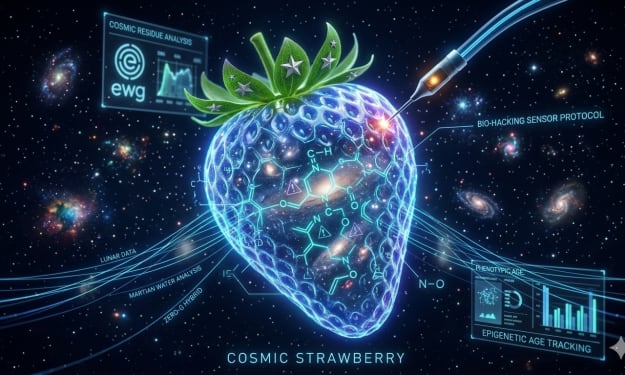
The "Dirty Dozen" 2026: Why Your Healthy Diet Might Be Secretly Aging You
It is March 2026, and the self-care world is obsessed with a single number: your cellular age. If you have been trading the processed burgers for vibrant salads, buying organic spinach, and snacking on fresh strawberries, you likely feel like a health saint. But according to a major, peer-reviewed study released just this month by the Environmental Working Group (EWG), that "healthy" diet might be loading your system with more dangerous chemical residues than you realize—and it’s accelerating your internal clock.
By Mohammad Hamida day ago in Humans
Review of 'Man on the Run'
My wife and I saw Man on the Run, a nearly 2-hour documentary on Amazon Prime, about Wings, Paul McCartney's group that flew around the world from shortly after The Beatles broke up in early 1970 to shortly after John Lennon was murdered at the end of 1980, making a Beatles reunion forever impossible.
By Paul Levinson6 days ago in Beat



Comments
There are no comments for this story
Be the first to respond and start the conversation.