
A System That Breaks You More
Living with a lifelong illness in America is a bitch.

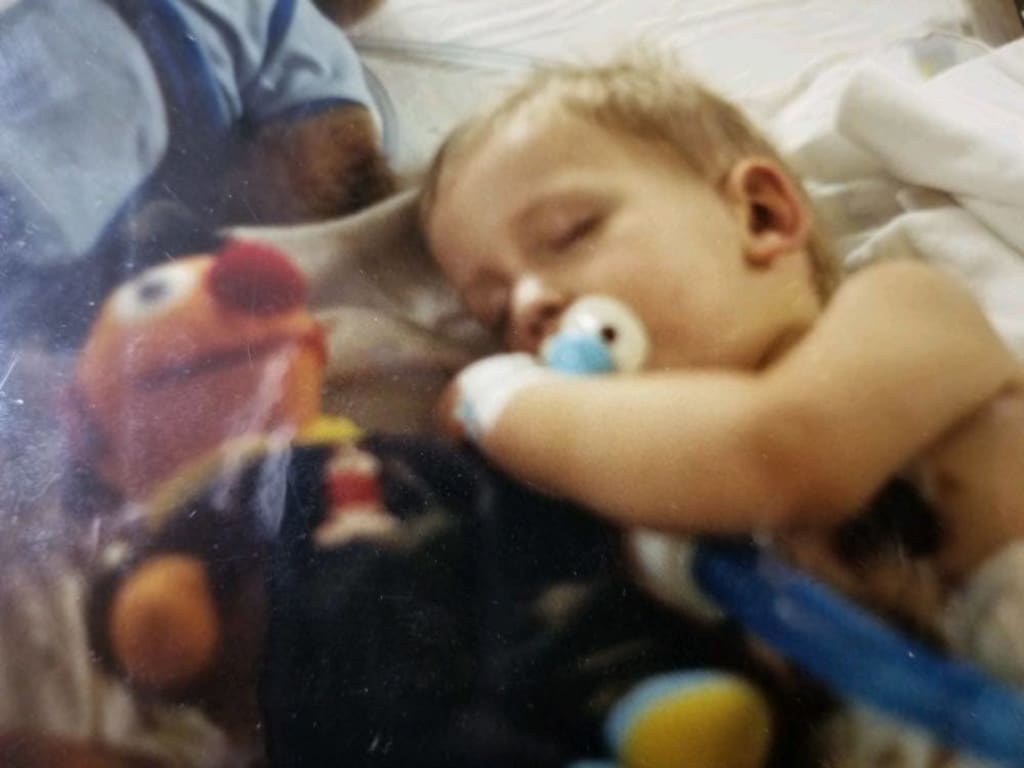
I feel that to explain this, it might be worth explaining who I am and my own predicament first, and why it is that I feel the urge to explain what it feels like to live with a life-long illness in America. The American healthcare system has long been criticized, but it goes beyond that, and I’d like to explain the completely failed system. A system that buries people in debt, pain, and a constant overwhelming feeling of being unwanted by society at large.
My name is Richard, and I was born with nearly a dozen cardiac conditions that have required several surgeries over the course of my life, along with constant daily handfuls of medicine and ongoing cardiological care. Surgeries, constant doctor’s visits, medicine, these things add up, financially, temporally, and emotionally.
That said, before we get going, I feel like you need to know completely what is wrong with my heart. So, let’s make this brief. Here is a short list of my conditions and what they affect:
- Double Outlet Right Ventricle (DORV) - A birth defect where both major arteries come from the right side of the heart instead of being split between both sides. Without surgery, it can cause blue skin, heart failure, and early death. With surgery, most people live into adulthood but need lifelong medical care.
- Transposition of the Great Arteries (L-loop) - The heart’s lower chambers and main arteries are switched in a way that still lets blood circulate, but the right side of the heart has to do the harder job long term. Most people live into adulthood, but many develop heart failure, irregular heartbeats, or heart block (a slow or skipped heartbeat).
- Dextrocardia / Situs Inversus - My organs are basically flipped to the opposite side. By itself, it’s usually not a big problem, but it can make heart issues and surgeries more complicated.
- Ebstein’s Anomaly (with mild tricuspid regurgitation) - The tricuspid valve sits lower than normal in the right side of the heart. Many people stay stable for years, but severe cases can cause heart failure or irregular heart rhythms.
- Aortic Stenosis: a narrowing of the aortic valve, which causes increased pressure on the ventricle. This is an easy one, relatively. For most, it requires monitoring, at worst, surgery, and ventricular hypertrophy.
Let’s just fire through these last ones real quick here, shall we?
I also have Mild Tricuspid Regurgitation, which is typically benign but, due to my other complications, creates a greater failure risk; Sick Sinus Syndrome (CMS/HCC), a defect that causes problems with the electrical rhythms in my heart; Supraventricular tachycardia (SVT), painful (for me), uncontrollable heart rates that go over 200 bpm. In most cases, SVTs are 10 minutes to over an hour of feeling like I’m running at top speed, wanting to stop, but unable to. In other words, it feels like an elephant is standing on my chest, and it’s incredibly scary and incredibly painful.
I have had SVTs since I was little. In the early days, I blew on a medicine plunger, had buckets of freezing water dumped on me (mid 200+ bpms no less), and when I was really little was held upside down. Put simply, imagine having dozens of heart attack-like cardiac events starting from when you’re very little and continuing throughout adulthood. Each is scary on its own. Together, it’s a lifetime of pain and horror that has inevitably made me hypervigilant.
I wanted to explain all of this because, to be honest, had I not told you, I fear you might judge me for some of what I’m about to tell you. Maybe it’s because I grew up in a conservative home, in a conservative, rural area, in a conservative state, with a conservative family, and a conservative parent who listened to Rush Limbaugh, and regurgitated the dog-whistle bullshit that putz and those like him spewed.
Things like how people who are on government aid are lazy. How people take advantage of the system while the working class suffers. The type of messaging that harms people of color, and people with disabilities or life-long illnesses. I’m still not sure which of those categories I fit into, possibly the fault of a lot of unnecessary guilt and shame felt because I saw myself for the first half of my adult life as subhuman. After all, I needed government help.
But we’ll get back to that. For now, I’d like to explain to you how much having a lifelong illness can cost.
In total, I owe hospitals well over $15,000, much of it from a single cardiac ablation last summer. I also owe the U.S. government $25,000, and have a college loan of over $40,000, something I took on to open myself up to less strenuous jobs–something that is rather hard to find without a degree, no matter what the federal government might tell you.
Currently, I make a meager sum writing for a small, local newspaper, because I don’t want to write ad copy that tricks people into buying shit they don’t need. Instead, I took a job out of college that allows me to use my abilities to do things that might actually help people.
I have an intimate knowledge of the reality at the end of the road, and in the years I have left, I want to work a job that serves people, not one that tricks them. Plus, they let me work from home 2-3 days a week, which is kind of imperative, lest I wear my heart out.
That said, healthcare is incredibly expensive, even with job-provided healthcare. An ambulance without insurance costs about $500 and $3,500. A stay in a hospital bed costs about $2,600 and $3,000 or more per day. With insurance, the costs still add up, even if all they did was give you adenosine, an IV, and take down your info. Trust me, from experience.
Before school, I was working retail or in daycares, but I decided to take on school loans to get a degree that would allow me to stop working retail and other physically demanding jobs. Throughout years of schooling, while trying to juggle work (I was the editor for my college’s newspaper) and school, I had at least four SVTs, at least two trips to the emergency room, and one ambulance ride. I should have taken more ambulance rides, but sometimes you drive yourself to skip out on the $800 van ride.
Shortly after the pandemic, and while I was finishing up my schooling, I found myself living alone in an apartment. I found a job working for a program with the local YMCA, which had us tutoring and looking after school-age kids in their own schools before and after school. I would spend most of my days waking at 5 a.m., spending time in between my shifts either looking after preschool kids (also a part of the Y program), delivering groceries, or in class.
Most nights, I would get off work at 6 p.m. and spend another three hours delivering groceries because I was falling behind financially and struggling to keep my head above water. And at some point, I had to get my homework done, find time to relax, and wind down enough to sleep.
I did all of this not because I wanted to or even because I was able to, but because my rent was nearly $900 (one of the lowest at the time I could find that allowed a dog), and between all of my other bills, I was barely treading water. Which, I know, is a part of being a college student, but I was in my late thirties, dealing with lifelong heart defects. In short, I was killing myself so I could stop killing myself.
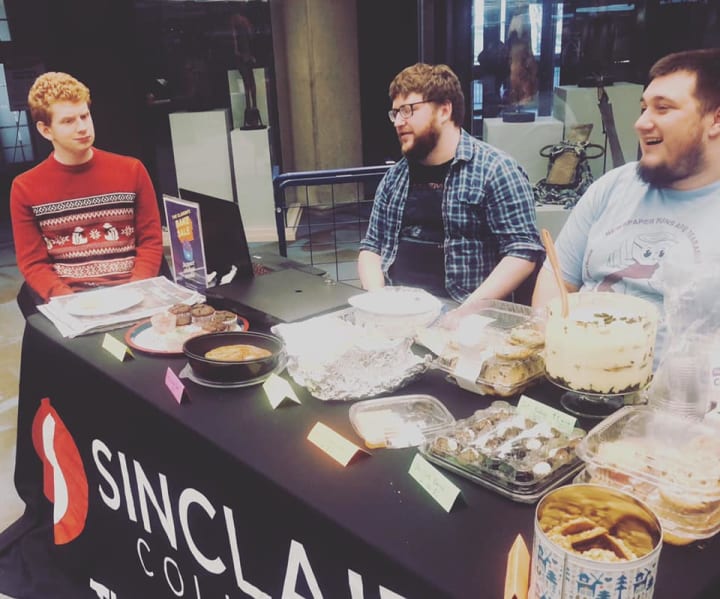
That said, I did have financial help. I had SSDI, which I was encouraged to get by my mother in my twenties, and government healthcare through Medicaid, because I was dropped from my father’s insurance because the company deemed me “too healthy” to remain on it.
It was embarrassing. I was in my twenties, looking like a normal twenty-something, living off the government dime, something that I grew up hearing was subhuman and worthy of mocking. Acquiring it, this thing I didn’t even want, was degrading and essentially boiled down to me repeatedly asking for help and trying to explain the severity of my conditions, despite feeling ashamed for needing it.
I hid the fact that I was aided by the government from nearly everyone, and had near panic attacks if it was ever mentioned around the uninitiated. I grew up in a house that bought into the whole lie that millions took from the system, and though my family maintained that I needed it, I didn’t know how others would feel, and I lived with an extreme fear of judgment from everyone.
So, in 2021, trying to finish school, trying to keep a roof over my head, trying to maintain my sanity after everything from the prior year, I went over the limit one fateful November.
You see, in order to receive government aid, you have to have an income under a certain amount, and if you go over it, even a little bit, you can lose that aid, and in my case, my insurance, whether the government deems you “disabled” or not. I know because that factoid was explained to me multiple times, over tear-filled phone conversations in which I begged for at least my insurance back.
In my state, in 2021, the threshold was $1,310 per month. The SSDI payments were just over $800. Meaning, in total, I was allowed to make just over $2,000 a month, with which I was supposed to pay for everything. If I went over, which I did, I was shit out of luck.
So, while living by myself, trying to finish school, trying to get a job that might allow me to work a job that would sustain my health for the longterm, I returned home from work one morning to my apartment to find that the power had been shut off. It was mid-Winter, so I immediately called and spent the last little bit of money I had to turn my heat back on. Shortly thereafter, I upped my grocery delivery work to keep myself above the flood. Which, in effect, triggered my losing my aid…but we’ll come back to that.
At this point, you might be tempted to say: “Yeah, well, that’s just the reality of going to college.” But I’d like to again remind you that even after I graduated, I either had to decide if my body could hold up a fulltime gig, that would cost me my guaranteed healthcare and a monthly stipend should I need if something were to happen to my heart, or if I wanted to spend the rest of my life making sure I was under an income line that made it impossible to save, to pay for emergencies, to pay for medical bills, and made affording daily living expenses nearly impossible to maintain.
Unfortunately, the decision was made for me.
Two years later, while sitting in a parking lot, checking my bank account, I noticed that the normal deposit hadn’t gone through. I called Social Security immediately and found out that two years prior, I had gone over the limit and had been cut off. Within months, I lost my insurance, and shortly thereafter, I was told that I owed the government $25,000 in back payments.
You see, when I emptied my bank account to pay for my apartment’s past due utilities and took on more delivery work to make up for it, I had accidentally gone over the allotted amount.
It didn’t matter what my cardiologist said. It didn’t matter that the government still determined that I was disabled. I went over. Game over.
Even as I type this, I can hear the person out there reading this, applauding. I can hear them calling me a freeloader or worse. And I feel the guilt from feeling as if maybe they’re right. Maybe I didn’t deserve help, even though I have nine heart-related conditions, even though I spent my childhood in and out of hospitals. Even though I visit a cardiologist every year. Even though I take half a handful of meds every morning that control my heart rate, the muscle itself keeps my body clear of excess liquid around my heart, and keeps my blood thin to keep it from clotting, especially during an SVT, wherein my heart beats 200 times per minute or more. Even though I’ve had too many surgeries to count, and my body is covered with so many scars–two from heart surgeries, and several more from tubes that were inserted to drain blood, fluid, or air accumulated after surgery.
There’s always the voice inside me saying that I got what I deserve. And I hear it every time and feel it every time I hear somebody rail against the so-called “freeloaders” who need government help. Still, I feel guilty, and defeated, and like a freeloader. The system is designed to keep the sick in debt and perpetually in poverty. Between medical bills and limits on income for government aid, it’s a double-sided ouroboros, eating us at both ends.
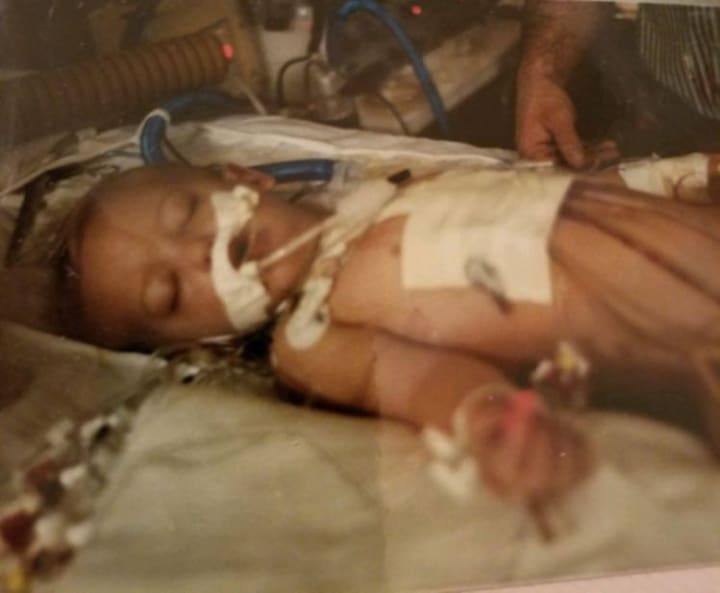
According to KFF, formerly known as The Kaiser Family Foundation, adults with disabilities in the United States face significantly higher poverty rates, with about one in four (24-27%) living below the Federal Poverty Level (FPL). In contrast, approximately 10-12% of non-disabled adults live below the FPL.
Add to this, that according to the U.S. Census Bureau, median annual earnings for workers with disabilities are roughly 30–40% lower than for workers without disabilities, and households with a person with a disability report significantly lower median incomes, which means that not only are people living with long-term disabilities a drain on their own lives, we’re also a drain on our loved ones.
Per person, people with disabilities spent $13,395 in 2003 on healthcare, a number that jumped up to $17,431 in 2015, whereas nondisability per-person spending remained constant at about $6,700, according to the CDC. That was a decade ago.
I guess I should mention now that I see a therapist. Finally convinced to find a way to swing it financially (insurance helps) by my partner, I see a therapist once or twice a month, and among our topics, we usually talk about guilt, about feeling like a weight on people, and about how guilt has shaped my relationships with loved ones and continues to.
We also talk a lot about death. Not the idea in abstract, but in the knowledge of it. In coming into a world wherein I was told by parents and doctors that my surgeries were only supposed to last a decade. In distancing myself from the people I love because it’s sometimes really hard to look at the people you love, when in the back of your mind, you know that death is coming, that tragedy is a skipped heartbeat away, and your nervous system is programmed to keep a constant eye out for the next great tragedy.
And yeah, we’re all dealing with that. We’ve all had our brushes with death. And frankly, I’m far from the person most intimately acquainted with it. But I know it, and I have since I could walk and talk, since I could think and understand why my chest hurt, why I spent so much time in the hospital in my youth, or why I get tired faster than other kids.
Death is a part of everyone’s life, eventually. For me, death was my neighbor from the start, that shitty friend at the party that you hate but have to deal with because they’re there. And I’m far from the only person who feels that way and far from the only person who deals with a lifelong illness or a disability, while struggling to fight for independence and keep from putting a strain on their loved ones.
Yes, having a lifelong illness or a disability is expensive, and no, we don’t expect average people, “normal” people, to pay more taxes to make sure that we can live a life without making everyone around us miserable, too. But there has to be a way.
Personally, I would recommend that we take a page from most of the rest of the developed world and we provide all citizens with government-funded healthcare. I would also argue that we spend more on our social safety net programs, so that people don’t have to live in poverty just because they’re deemed “disabled”.
And before you again start crying communist, let me explain how it makes zero sense that we claim to not have the money to do so.
For one, we spent $997 billion in 2024 on our military, more than the next ten countries combined. We also have more billionaires than any other country, 900, according to Forbes’ recent reporting, a number that dwarfs the amount in other countries, including India and China (which are two and three, respectively), despite having populations four times larger than ours.
Add to that the fact that the top 400 billionaires pay an effective tax rate lower than the average U.S. citizen, sometimes paying an effective tax rate between 8.2% to 24% compared to the average taxpayer’s 13% to 30%.
I’m sorry, we have the money, it’s just being hoarded by the wealthy. We have more money than any country in the history of the world, and countries with far less wealth can find ways to make sure that the most vulnerable are protected. Why can’t the U.S.? I’m not asking that average people pay more, just that the rich pay their fair share as well.
About the Creator
Richard Foltz
Hey, my name is Richard Foltz. I refuse to use my first name because it is the name of frat guys and surfers, so...
I've written for years and currently work as an editor for my university's newspaper.
Keep reading
More stories from Richard Foltz and writers in Humans and other communities.
Picking the 2024 College Football Season — The Power Four
The 2024 season is a season of change, this goes without saying. With SMU in Texas, Cal and Stanford both in California now playing in a conference based on the Atlantic Coast, Oregon, Washington, USC, and UCLA playing on a conference littered with East Coast and Midwest schools, and Oklahoma and Texas joining the SEC, we have officially entered the post-geographic era of college football.
By Richard Foltz2 years ago in Unbalanced
Problem-Solving Advice To Strengthen Communication Skills In Love
The issue of communication within relationships is commonly based on the misinterpretation, assumptions, or the undisclosed feelings. Frustration may build up when partners are unable to express themselves. The initial step to solving communication breakdowns is the need to identify the underlying causes of the conflict. Be it due to past experiences affecting current behavior or individual insecurities it is when one is aware that it will enable them to solve problems instead of sweeping them under the carpet. By making time to think about what causes miscommunication, couples will be able to be more empathetic and constructive when talking to each other. It is imperative to learn the background of these factors in order to establish a platform of trust and honesty in a relationship.
By Steve Waugh7 days ago in Humans



Comments
There are no comments for this story
Be the first to respond and start the conversation.