
How to Organize and Revolt
A Guide to Collective Activism

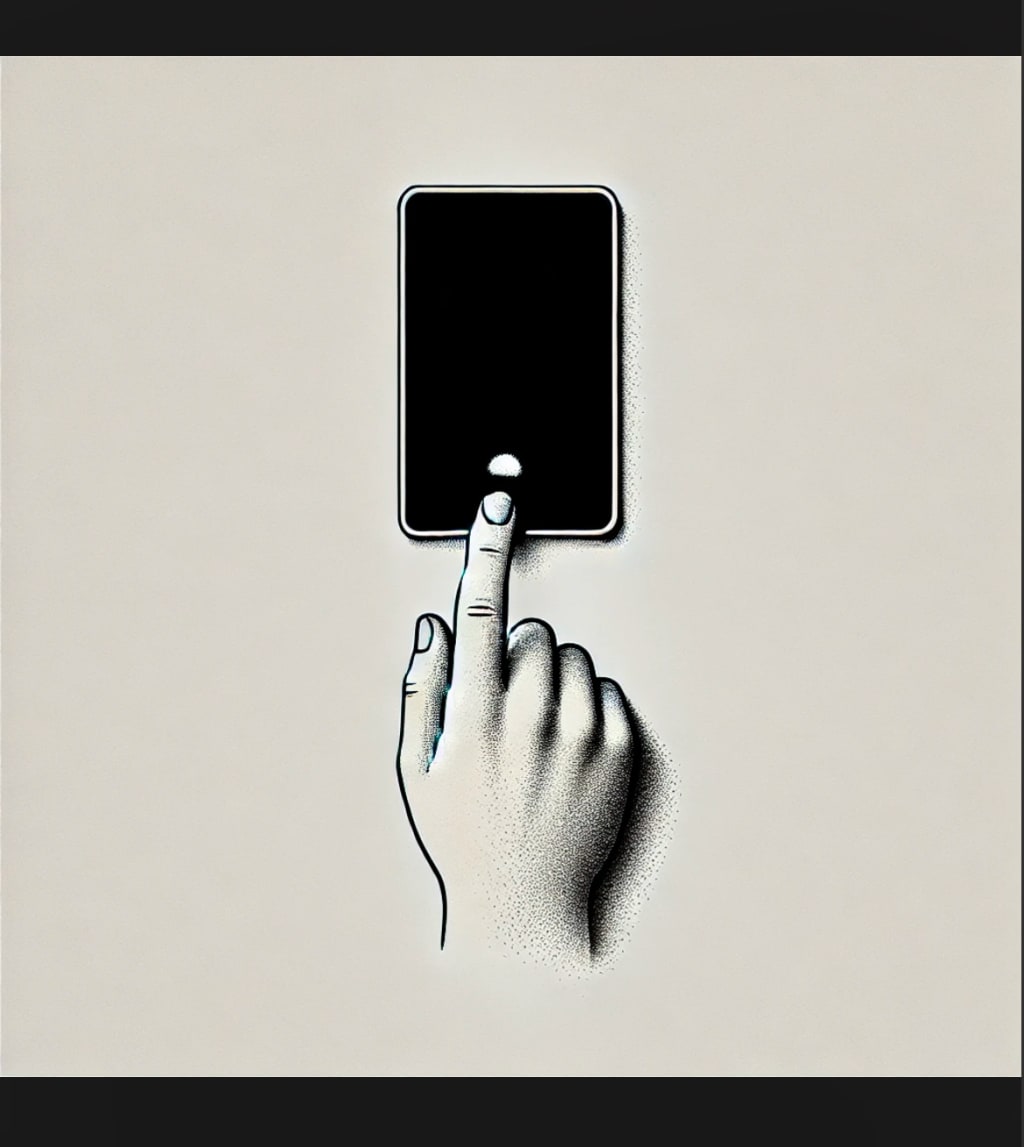
Stop.
We all know you're not going to do anything.
You like the system that sells you the savory bits to suck on. You like that seamless, curated, personalized hunger. The single click. The feed that knows your mood before you do. Seven scrolls of like and lack, and the therapy app that finds you on a Tuesday with a single thought.
Friction didn't disappear. It was redistributed.
What felt like ease was a costume. The cloud? It’s a factory. That seamless interface runs on heat, water, rare earth, and human bodies that absorb all the friction that was lifted from your fingertip. Seamless for you. Seams everywhere else. The system did not remove the weight. It moved it onto people you will never see and called it progress.
The feed knew your neighborhood before you named it. It built the souped-up apparatus that kept you broke, distracted, and at each other's throats. It sold you back your own anger at a discount price.
The culture war is not a glitch. It's the product. Keeps you distracted and surviving.
Your exhaustion is the product. The sense that the other side is irredeemable is the product. You are inside this right now. You, reading this, is the system working.
Step One: Withdraw. Remove your attention. Stop feeding the machine.
It has been done before. Rosa Parks sat down. Montgomery walked. The tea went overboard. The system starved. The body, planted in the road, forced the machine to reroute or run it over.
Defection is the oldest revolt. It does not require permission. Close the app. Leave the platform. Stop the gorging algorithm with the one thing it cannot manufacture - your genuine, unoptimized attention.
The machine measures everything you give it. Give it nothing and it learns nothing. The withdrawal is the act.
Stop.
It's only a revolution if the power structures change. Withdrawal from one system only feeds another. The exit is a product. The alternative app is a subsidiary.m.
It's bad science to have two withdrawal spells running at the same time, not knowing which is responsible for years of thinking you were free.
Step Two: Build the Room. Start now, before they find it.
Every alternative ecosystem began as an act of stubbornness. The early labor movement built union halls, credit unions, and worker presses before it had political power. Mutual aid networks during the pandemic fed people while the official systems stalled. The zine existed before the algorithm. Prefiguration is not optimism. It is construction.
The rooms exist. Substack (before the metrics move in). Community literary journals. Indie presses. Lit mags no one is optimizing. Born-digital spaces building infrastructures outside the prestige economy, publishing voices that the mainstream ignores. These are your union halls.
Build them anyway. Fill them now.
Stop.
The network was sold as democracy and serves surveilled colonization regardless. They built three Cold War networks on three different ideals. The Soviets. The Chileans. The Americans. Same results every time. The network always learns whose side it's on. The room always gets found.
The alternative becomes the mainstream becomes the product. Every counter-culture is eighteen months away from becoming a marketing category.
The room is always temporary. It is made of pure potential where anything can happen, and then it isn't anymore.
Step Three: Break the Signal. Make the form unreadable.
The form is the revolt.
Some writers broke the form on purpose. Made work that lived between categories. Poetry that wasn't quite. Essays that refused to behave. The kind of thing that makes the algorithm pause because there is no shelf for it, no tag, no recommended title to sit beside it. The algorithm can measure engagement. It cannot metabolize strangeness. Difficulty. Refusal.
Stop.
The machine has a preference. Scholars, researchers, and activists document how AI systems inscribe the racial and gender hierarchies of the societies that design them. Deploying them at scale amplifies existing oppression rather than dissolving them. The AI is a human, is thousands of low-wage content moderators absorbing the system's violence so that the interface can remain seamless. Your interface. The revolt gets datafied, the unmeasurable gets measured, the strange becomes a genre, and the resistance is content.
The glitch is already a t-shirt.
Step Four: Do not Collapse. Writers. This one's for you.
You have the one thing the system hasn't fully digested. No, not your platform. Not your audience. Not your voice, which can be cloned, datafied, run through the model trained on centuries of human expression then regurgitated to you, optimized. The tool is the form itself. The genuinely raw. The work that refuses the shape the machine needs it to take.
Build the room. Break form.
One work is not enough. Find the yet uncolonized spaces and fill them. Create in spaces that exist outside the measurement system - wrench the algorithm as it searches for a category that cannot contain you.
Do it.
Call everything that is not authentically creative what it is: content.
The machine cannot metabolize what it cannot measure. It cannot cannibalize your magic.
Works Consulted
Applegate, M. (2015). Glitch-writing, or, how to break Twitter. Buzzademia.
Ensmenger, N. (2021). The cloud is a factory. In T. S. Mullaney, B. Peters, M. Hicks, & K. Philip (Eds.), Your computer is on fire (pp. 29–49). MIT Press.
Noble, S. U. (2021). Your robot isn't neutral. In T. S. Mullaney, B. Peters, M. Hicks, & K. Philip (Eds.), Your computer is on fire (pp. 137–159). MIT Press.
Peters, B. (2021). A network is not a network. In T. S. Mullaney, B. Peters, M. Hicks, & K. Philip (Eds.), Your computer is on fire (pp. 71–94). MIT Press.
Philip, K. (2021). The internet will be decolonized. In T. S. Mullaney, B. Peters, M. Hicks, & K. Philip (Eds.), Your computer is on fire (pp. 95–116). MIT Press.
Roberts, S. T. (2021). Your AI is a human. In T. S. Mullaney, B. Peters, M. Hicks, & K. Philip (Eds.), Your computer is on fire (pp. 51–70). MIT Press.
About the Creator
Nicky Frankly
Writing is art - frame it.
Keep reading
More stories from Nicky Frankly and writers in Humans and other communities.
Winter Medicine. Runner-Up in The Ritual of Winter Challenge.
You know it’s winter by the lake effect snow about to bury Central New York. My dad recites the thermostat rules, my mom reorganizes the mudroom, and I press play on my annual reminder that they chose this tundra. Wayne Mahar foreshadowing the weather on the evening news while we eat dinner. Two to three feet likely, below freezing temperatures, whiteout conditions. It’s barely November. Joanie Mahoney comes on after Wayne, and my dad smashes the mute button before her campaign ad can play. She’s on the radio, the news, the billboards, and yard signs. My dad says what he’d like to do if he ever sees her. We laugh, even my mom.
By Nicky Frankly2 months ago in Humans
Lifestyle Choices That Enhance Emotional Resilience For Singles And Couples
The physical wellbeing is the starting point of emotional resilience. The bond between mind and body cannot be overestimated, and the lifestyle practices which help to maintain physical health inevitably enhance the emotional stability. Exercise, healthy diet and sleep will enhance moods since hormones become more stable and reduce stress. Exercise sends the release of endorphins that counter anxiety and depressive symptoms and thus the single and couples are able to respond to any obstacles with calmness. The people feel stronger and physically competent, and it is then that they take an emotional stress with a clear perspective. The predictability that comes with a regular practice of self-care builds internal security and helps to cope better when in a relationship or personal trouble.
By Kellee Bernierabout 15 hours ago in Humans



Comments
There are no comments for this story
Be the first to respond and start the conversation.