
How to Study Wildlife Conservation Abroad.
Practical Steps to Gain Global Experience in Protecting Nature.


Wildlife conservation has become one of the most important fields in environmental science. Species loss, habitat destruction, and climate change threaten ecosystems across the world. Many students choose to study wildlife conservation abroad in order to gain practical experience in diverse environments.
Studying conservation in another country exposes you to new ecosystems, research methods, and conservation policies. Field work in forests, oceans, grasslands, and wetlands provides valuable insight into the complex relationship between humans and nature.
With careful planning, you build strong academic and professional experience in global conservation efforts.
Understand What Wildlife Conservation Involves
Wildlife conservation focuses on protecting animal species and their habitats. Conservationists study ecosystems, monitor wildlife populations, and design strategies to prevent extinction.
Students in this field learn subjects such as:
• ecology and biodiversity
• environmental policy
• wildlife management
• habitat restoration
• conservation biology
• climate change impact on ecosystems
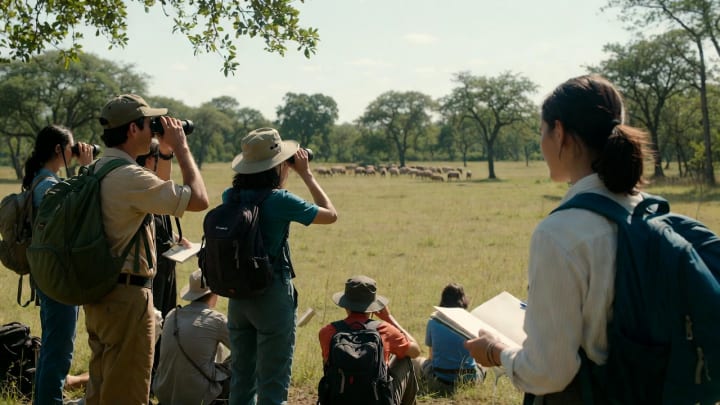
Field work forms a large part of conservation education. Many programs require students to participate in wildlife surveys, habitat monitoring, and environmental research projects.
Choose the Right Country for Field Experience
Different countries offer unique ecosystems and wildlife research opportunities.
Tropical regions often attract conservation students because of their high biodiversity. Rainforests, coral reefs, and savannas host thousands of species studied by scientists.
Countries such as Costa Rica have become global centers for conservation research. National parks and biological reserves provide protected areas where students observe species in natural habitats.
African countries also offer strong field research opportunities. In Kenya, conservation programs allow students to study animals such as elephants, lions, and giraffes in protected ecosystems like Maasai Mara National Reserve.
Choosing a country with active conservation projects increases your opportunities for hands on learning.
Select Universities with Conservation Programs
Many universities offer degrees in conservation biology and wildlife management.
When searching for programs abroad, evaluate factors such as research facilities, field training opportunities, and partnerships with conservation organizations.
One respected institution is University of Cape Town in South Africa. The university offers programs focused on biodiversity research and environmental sustainability.
Another well known institution is University of Queensland in Australia, where students study conservation science within one of the most biologically diverse regions of the world.
Strong academic programs combine classroom learning with practical conservation projects.
Participate in Field Research Programs
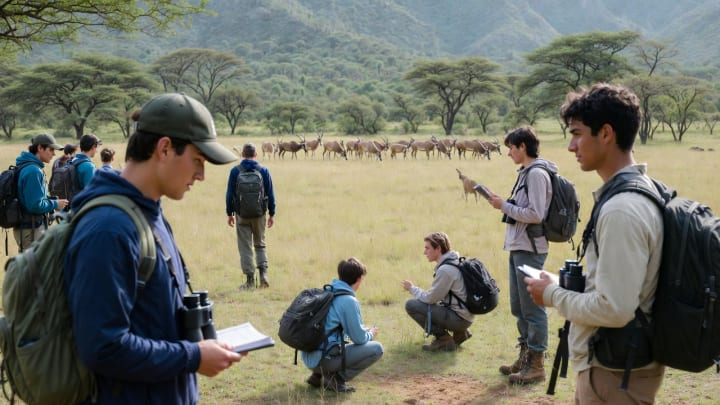
Field research provides essential experience for conservation students. Many universities and environmental organizations run research stations in protected natural areas.
Students assist researchers with activities such as:
• wildlife population surveys
• tracking animal movements
• habitat mapping
• camera trap monitoring
• ecological data collection
Field work teaches practical scientific methods and improves observation skills.
For example, research programs near Great Barrier Reef allow students to study coral ecosystems and marine biodiversity.
These experiences help students understand how ecosystems function in real environments.
Volunteer with Conservation Organizations
Volunteering represents another path to studying wildlife conservation abroad. Many organizations welcome international students who want to assist with conservation projects.
Groups such as World Wildlife Fund support projects in many countries that protect endangered species and restore natural habitats.
Volunteer programs may involve activities such as wildlife monitoring, habitat restoration, environmental education, and community outreach.
These programs offer valuable field exposure while supporting real conservation initiatives.
Learn Local Conservation Policies
Conservation success depends on environmental policies and community involvement. Studying abroad allows students to observe how different countries manage wildlife protection.
Some nations rely on national parks and wildlife reserves. Others combine conservation efforts with community based programs that involve local residents.
Understanding local environmental policies helps students see how conservation science connects with politics, economics, and social development.
This knowledge prepares future conservationists for leadership roles in environmental management.
Develop Research and Technical Skills
Wildlife conservation requires strong scientific and analytical skills.
Students studying abroad often learn advanced research tools such as:
• geographic information systems for habitat mapping
• drone monitoring of wildlife populations
• satellite tracking of animal migration
• statistical analysis of ecological data
These technologies help scientists monitor biodiversity and evaluate conservation strategies.
International programs often provide access to specialized equipment and research laboratories.
Build an International Network
Studying wildlife conservation abroad also expands professional networks. Students meet researchers, environmental activists, park rangers, and policy experts.
These connections often lead to internships, graduate research opportunities, and long term collaborations.
International collaboration remains essential because wildlife migration and ecosystem health often cross national borders.
Networking with experts across countries strengthens the global conservation movement.
Conclusion
Studying wildlife conservation abroad provides powerful learning opportunities for students who care about protecting nature. Through international programs, field research, and volunteer work, students gain practical knowledge about ecosystems and biodiversity.
Countries such as Costa Rica and Kenya offer rich environments for conservation research, while universities like University of Queensland provide strong academic training.
These experiences prepare students to contribute to global efforts aimed at preserving wildlife and protecting the natural world for future generations.
About the Creator
Wilson Igbasi
Hi, I'm Wilson Igbasi — a passionate writer, researcher, and tech enthusiast. I love exploring topics at the intersection of technology, personal growth, and spirituality.
Keep reading
More stories from Wilson Igbasi and writers in Humans and other communities.
How to Learn to Cook Regional Cuisine.
Regional cuisine reflects the history, climate, agriculture, and traditions of a place. Every region develops unique flavors, cooking techniques, and ingredients shaped by local culture. Learning to cook regional dishes allows you to experience the identity of a community through food.
By Wilson Igbasiabout 6 hours ago in Humans
I wanted to title this something different, but worried that my chosen title might cause problems entering the United States in the future so this is the new title. It's the greatest title. No one has ever written a title better than this. (All titles unrelated to content).
Let me be honest. I am finding this difficult. Now, I like a challenge, a stretch, a bit of an obstacle course. “Write about the decline of the British Empire in the form of a narrative poem in which your protagonist is an artichoke” I read, and flex my fingers. “Write a haiku to evoke the sensation of sibilance using only the first half of the alphabet.” “Well”, I think to myself, “this should be fun.” But “write about a system that isn’t working”? A system that isn’t working? Now? In 2026? ONE system? My favourite system that isn’t working? The sexiest system that isn’t working? The one giving me the most angst day to day? The one giving me the most existential dread? I am, as I say, finding this difficult. I will own that I have contemplated writing a thousand words on why the steady “all on” setting on my fairy lights is the EIGHTH of seven options which must be sequentially activated to get there, because that is a system that some fool came up with and it definitely doesn’t work, and now who is paying the price, eh? But how can I write about my fairy lights when…. When…. When….
By Hannah Moore7 days ago in Humans




Comments
There are no comments for this story
Be the first to respond and start the conversation.