interview
Interviews with lovers, fighters and the various professionals who deal with our dysfunction.
Roots and Fruit
Roots and Fruit Photo by Lukáš Kulla on Unsplash Most people evaluate life by what shows. Results, behavior, success, failure, growth, collapse. Fruit is easier to measure than roots, so it becomes the focus almost by default. When something goes wrong, attention rushes to what is visible and immediate. When something goes right, credit is assigned to the most recent action. But this way of seeing consistently misreads causality. Fruit is never the beginning of the story. It is the result of something that has been growing quietly, often unnoticed, for a long time.
By Peter Thwing - Host of the FST Podcast6 days ago in Humans
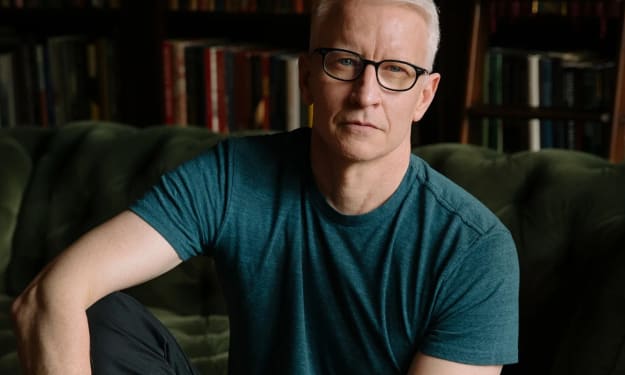
Anderson Cooper: Grief, Truth, and a Life on Air
Some journalists report the news. Others carry it in their voices long after the camera turns off. Anderson Cooper belongs to the second group. For decades, he has appeared on screens during wars, disasters, elections, and moments of national grief. His calm tone often hides the emotional weight behind the stories he tells. Viewers trust him not because he is loud, but because he listens. There is something steady about the way Anderson Cooper speaks, especially when the world feels uncertain. Yet behind the anchor desk is a man shaped by personal loss, complicated family history, and a deep search for meaning. To understand Anderson Cooper fully, we have to look beyond headlines and into the life that shaped him.
By Muqadas khan9 days ago in Humans
What the System Forces You to Become
The Question the System Replaces By the time a person has passed through employment law, healthcare coverage rules, unemployment insurance, disability determination, and benefit eligibility, the relevant question has already shifted without ever being stated out loud. It is no longer whether the system helped or failed them. It is whether they managed to remain legible long enough to survive it. Each institutional layer imposes requirements that appear reasonable when viewed in isolation, yet become coercive when experienced sequentially:
By Peter Thwing - Host of the FST Podcast15 days ago in Humans
Hey, God
“Dear God, Spirit, Protector, Infinite Mind, Source, I am really in need of a friend." "In need? You really need?" "Yes... I see your point. You want me to be self-sufficient, strong internally, able to withstand anything. But I am saying: I miss having a friend, someone to rely on, someone to play with."
By Heather Scott16 days ago in Humans
Blake Garrett: Searching for Meaning Behind a Familiar Name
Some names echo softly but stay with us. You hear them once, maybe twice, and later they return in a quiet moment of recognition. Blake Garrett is one of those names. People search it not always knowing why. Sometimes it feels connected to a memory, a headline, a face, or a story that never fully settled. This kind of curiosity is deeply human. We look for clarity, for connection, for context. This article explores why the name Blake Garrett draws attention, how shared names live complicated lives online, and what it means when a name becomes searchable without belonging to just one clear story.
By Muqadas khan16 days ago in Humans
Rabbi Rachel Rosenbluth: Reimagining Jewish Ritual, Kehilla, and Communal Covenant in Modern Life
Rabbi Rachel Rosenbluth is the founder of Bluth’s Ritual Studio, a Toronto-based practice that works globally, and is devoted to reimagining Jewish ritual for modern life. Ordained by Beit Midrash Har El, an Orthodox yeshiva that ordains women, she works largely in a Conservative-inflected mode as a rabbi, educator, wedding officiant, and artist. Her work blends pastoral care, theology, and aesthetic craft, including Hebrew calligraphy and ceremony design. She is developing a stunning coffee-table book to help people build community around the rituals that matter most. She collaborates with couples and communities to make belonging resilient.
By Scott Douglas Jacobsen16 days ago in Humans
Gen Z Is No Longer Getting their Driver’s License
For decades, learning how to drive was a rite of passage. Turning 16 meant freedom, independence, and your first taste of adulthood behind the wheel. But something has shifted. A growing number of young people — especially Gen Z — are delaying getting their driver’s licenses or skipping it entirely. Instead, they’re tapping a screen, booking an Uber, and letting someone else handle the road.
By AnthonyBTV17 days ago in Humans