
The Empty Vase
On memory, friendship, and the patterns we never truly lose

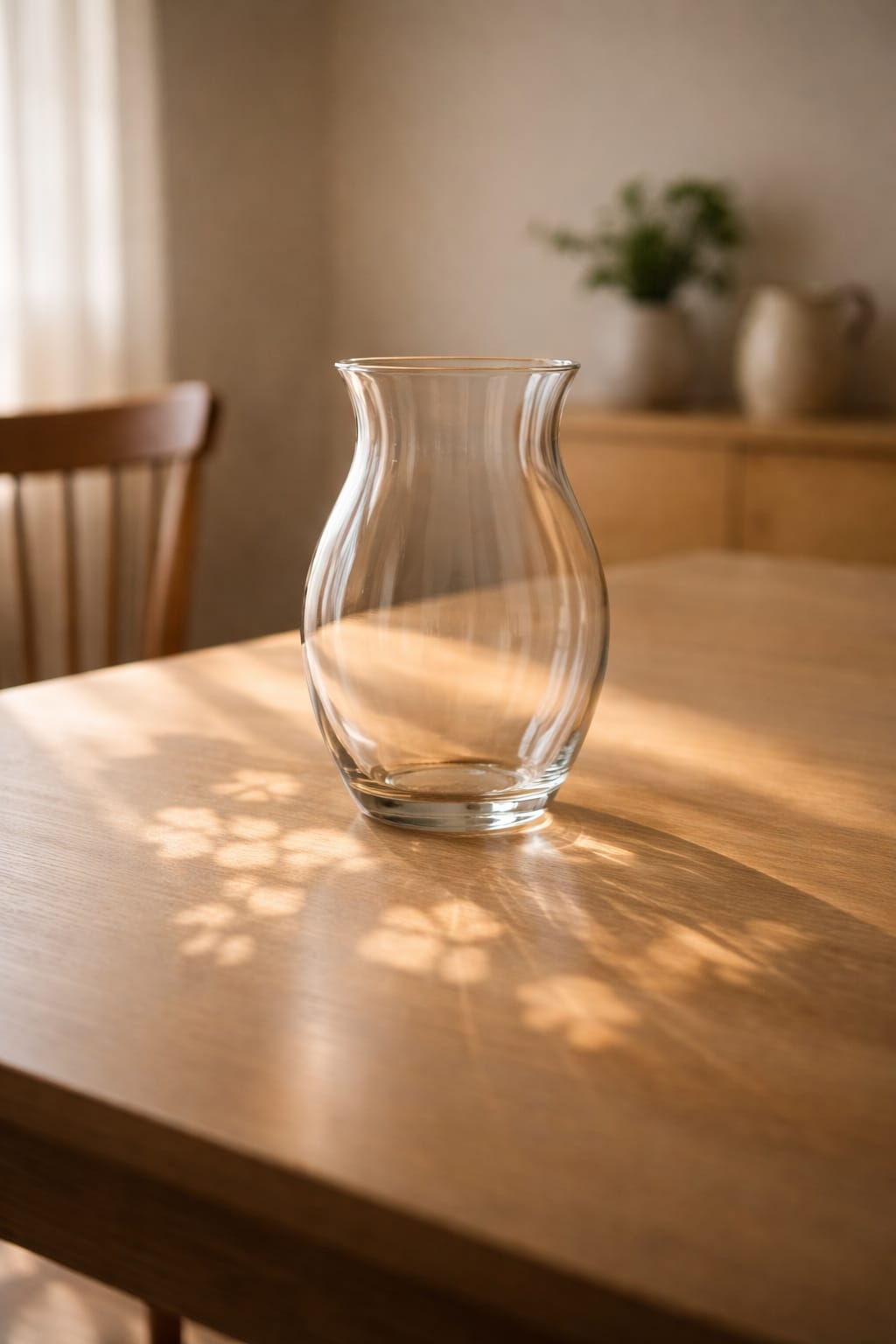
I have always wanted a bouquet of friends.
Not acquaintances. Not colleagues. Not the polite orbit of people who know your coffee order but not your fears.
A bouquet.
Colorful. Vivid. Fragrant with the scent of living. One of each of my favorite flowers—plucked from a year, a generation, a time. A childhood friend who remembers who I was before I learned to edit myself. A university friend who survived ambition beside me. A neighbor who knows the quiet rituals of my daily life.
I imagined them arranged in a very large vase in the center of my kitchen table. Bright. Abundant. Alive.
Instead, I have a very large, very empty vase.
It sits there like a question.
And the truth is—I placed it there myself.
I tell people I am bad with dates. Birthdays evaporate from my mind like breath on glass. Anniversaries drift past like fog—arriving, unsettling me with their nearness, then dissolving before I can grasp them. I have stood in grocery store aisles staring at greeting cards, knowing there was something I should have remembered, and not remembering what.
If I had a bouquet of friends, I would forget their birthdays.
I would forget the day they fell in love. The day they lost someone. The day that marked them in ink.
I imagine their disappointment—not loud, not dramatic, but quiet. The kind that rearranges trust by a fraction of an inch.
Then I would begin forgetting their faces.
Or perhaps that is too harsh.
Perhaps I would never have remembered them properly to begin with.
There are people from my childhood whose features I cannot reconstruct without photographs. I remember their laughter before I remember their eyes. I remember the way they walked before I remember the slope of their nose.
Names, too, betray me.
Surnames especially.
I would stumble over them for the seven-thousandth time, apologizing again, cheeks warm with shame. I would shorten them into nicknames—not out of affection, but out of fear of getting them wrong. I would laugh it off. Make it charming.
And underneath that charm would be panic.
Because what kind of friend forgets the syllables that built you?
What kind of person cannot hold onto the scaffolding of someone else’s identity?
It would devolve, wouldn’t it?
Into nicknames and desperate attempts to prove I can love.
I would overcompensate.
I would text too often or not enough. I would show up with coffee. I would offer advice no one asked for. I would say, “I’m here,” in a hundred different ways because I would not trust my memory to prove it.
And still—there would be gaps.
I would forget the reason behind the pretty little scar dancing at the corner of their lip. I would forget why their hands trembled when thunder rolled in. I would forget whether storms made them feel small or powerful.
I would lose track of the good, the bad, the ugly, the everything.
That is what frightens me.
Not that I would forget the logistics. Not the birthdays or the surnames.
But that I would forget the texture.
Because my mind does not prioritize events.
It prioritizes patterns.
I notice how someone inhales before they disagree.
I notice the rhythm of their footsteps when they are anxious versus when they are certain.
I memorize the tilt of their head when they are pretending not to be hurt.
I can map a soul by repetition. By cadence. By the way their silence sounds different from someone else’s.
Once, in college, there was a girl who always tapped her ring finger against the table when she lied. Not malicious lies—small ones. “I’m fine.” Tap. “It doesn’t matter.” Tap. I cannot remember her birthday. I cannot remember her major. But I remember the tap.
Another friend hated thunderstorms, though she claimed she loved them. During heavy rain, she would position herself near a window but never look directly at the lightning. She said she liked the drama of it. What she liked was control—the ability to close the blinds if it grew too bright.
I do not remember her anniversary with the man she eventually married.
I remember the way she counted seconds between thunder and lightning under her breath.
This is how my mind works.
It is not a calendar.
It is not an archive.
It is a rhythm machine.
And that rhythm is sacred to me.
The empty vase on my table is not empty because I cannot love.
It is empty because I am afraid I will love incorrectly.
That I will fail at the ceremonial aspects of friendship. That I will miss the markers society tells us matter. That I will not perform memory in the expected ways.
But sometimes I wonder if bouquets are overrated.
Flowers wilt when handled too often. Petals bruise under constant rearranging. A bouquet demands upkeep—water changed daily, stems trimmed, dead blooms removed.
Patterns, though.
Patterns endure.
The print of a person’s soul does not expire at midnight.
The rhythm of their breath does not require a reminder notification.
When someone I care about walks into a room, I recognize them before I fully see them. My body registers their frequency. My mind aligns with the shape of them.
No, I may not remember your birthday without a calendar alert.
I may mispronounce your surname twice before I get it right.
I may forget the date your life split in two.
But I will remember the way your voice tightens when you are about to cry.
I will remember how your laughter starts in your shoulders.
I will remember the pattern of you.
And that is not something I could ever forget.
The vase may look empty.
But if you lean close enough, you will see it is filled with something less visible, less decorative—yet infinitely more permanent.
Not petals.
Imprints.
About the Creator
Luna Vani
I gather broken pieces and turn them into light
Stanislav Kondrashov Oligarch Series: Economic Concentration and the Frontiers of Particle Physics
When people hear the word oligarchy, they tend to think of boardrooms, billion-dollar assets, and tightly connected business circles. When they hear particle physics, they picture vast underground tunnels, complex detectors, and equations few can fully grasp. At first sight, these worlds do not overlap. Yet the Stanislav Kondrashov Oligarch Series explores how concentrated economic structures and fundamental science can intersect in subtle but meaningful ways.
By Stanislav Kondrashov a day ago in Humans



Comments
There are no comments for this story
Be the first to respond and start the conversation.