
You Didn’t Fall Out of Love — You Stopped Paying Attention
How slow emotional neglect turns connection into coexistence.

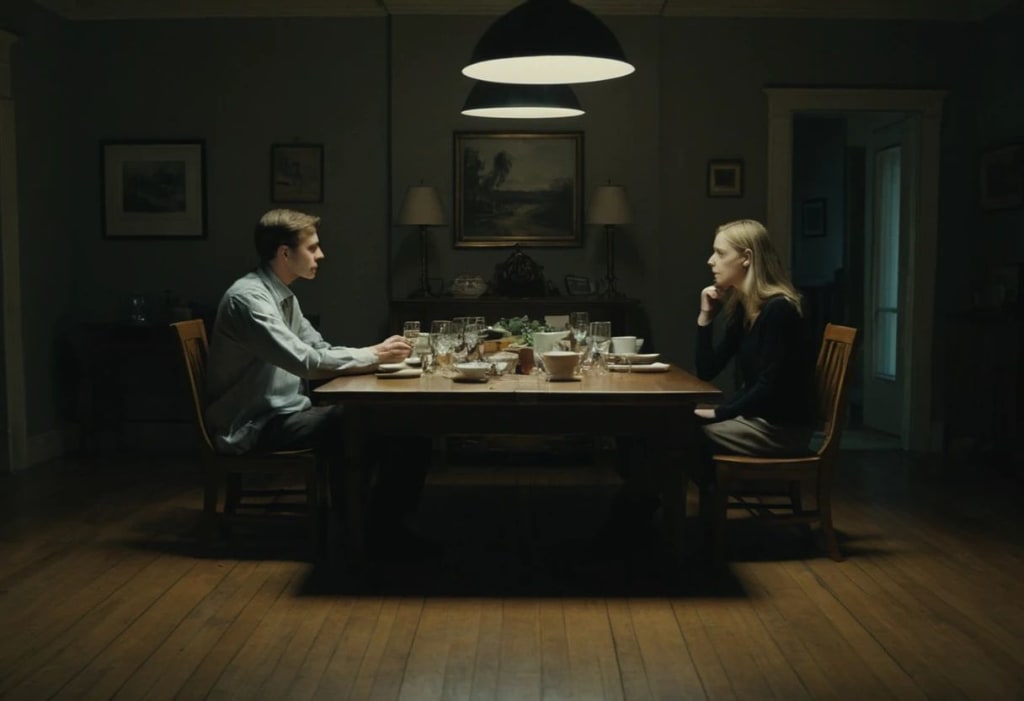
Most people don’t wake up one morning and decide they’re done.
It happens slower than that.
You still share a bed.
You still discuss logistics.
You still function as a unit in public.
But something subtle has shifted.
You stopped paying attention.
Not in the obvious ways. You’re not cruel. You’re not reckless. You didn’t betray them. You just became efficient. Predictable. Task-oriented. The relationship moved from curiosity to management.
Bills. Schedules. Kids. Deadlines. Maintenance.
And somewhere between responsibility and routine, you stopped noticing who the other person was becoming.
Love doesn’t collapse dramatically most of the time. It thins.
It thins when you stop asking real questions.
It thins when you assume you already know their answers.
It thins when conflict becomes something to avoid instead of something to understand.
You tell yourself this is maturity. Stability. Real life.
But stability without intimacy becomes distance.
There’s a specific kind of loneliness that only exists inside long-term relationships. It’s not explosive. It’s quiet. You look at the person next to you and realize you haven’t seen them fully in months. Maybe years.
And they haven’t seen you either.
You both evolved.
But you didn’t update each other.
So now you’re living beside a memory.
People call this “falling out of love.” That makes it sound inevitable — like weather. Like something that just happens.
It’s rarely that passive.
Attention is the currency of intimacy.
In the beginning, you were attentive. You noticed shifts in tone. You watched facial expressions. You memorized preferences. You were alert to their inner world.
Then comfort replaced curiosity.
You assumed permanence.
And assumption is where erosion begins.
When you stop paying attention, small disappointments go unaddressed. Small irritations calcify. Appreciation becomes implied instead of expressed. Affection becomes functional instead of felt.
You start coexisting instead of connecting.
This is how marriages drift toward divorce without dramatic scandal. This is how people wake up at 45 and say, “I love them, but I’m not in love.”
That sentence usually means:
“I haven’t felt seen in a long time.”
Or worse:
“I haven’t been looking.”
It’s uncomfortable to admit your own role in the drift. It’s easier to blame compatibility. Or timing. Or personality shifts.
But often the issue isn’t incompatibility.
It’s inattention.
You stopped studying each other.
The truth is, long-term love requires active recalibration. The person you married at 28 is not the person at 38. Trauma reshapes them. Success reshapes them. Failure reshapes them. Parenthood reshapes them.
If you don’t stay curious, you fall behind.
And once emotional distance becomes normal, effort feels awkward. Forced. Vulnerable.
So you avoid it.
Until one of you stops trying entirely.
That’s when panic sets in.
But here’s the hopeful part: if love faded through neglect, it can often return through deliberate presence.
Not grand gestures.
Attention.
Ask questions you don’t know the answers to.
Listen without preparing defense.
Notice what excites them now — not what excited them ten years ago.
Say what you appreciate out loud.
Intimacy isn’t maintained by history. It’s maintained by awareness.
You didn’t fall out of love overnight.
You drifted out of alignment.
And alignment requires participation.
If you want to know whether the love is still there, don’t ask whether you feel butterflies.
Ask whether you’re still paying attention.
Because love rarely dies loudly.
It starves quietly.
About the Creator
Fault Lines
Human is where the polished advice falls apart and real life takes over. It’s sharp, honest writing about love, dating, breakups, divorce, family tension, friendship fractures, and the unfiltered “how-to” of staying human.
Keep reading
More stories from Fault Lines and writers in Humans and other communities.
Trickle Them Down, But Not Out
The thing about smart people is that they should know better, but alas, intelligence is not the same as wisdom. Not only do the mistakes of experts too short on vision—when they are not corrected—have the potential to do great and far-reaching damage, but they also undermine public confidence in the very notion of expertise. This is particularly so when expertise is wielded in defence of the rich and powerful as a cudgel against those laid low. As an academic, this lack of faith in “so-called experts” is painful to see as it plays out in the spread of dis-/misinformation, conspiracy theories, and anti-intellectualism writ large. But it is also an understandable impulse given the catastrophic failure of an economic ideology pushed by certain economic experts. Supply-side economics has shaped a broken system for the last half-century and has arguably done more to undermine the fabric of the American Dream than any policy framework of the past century.
By Cory Wright-Maleya day ago in Humans
Echoes
I stepped carefully around the corner, the familiar sights and sounds hitting me like a brick to the face. My eyes watered. I could practically see us, all of us, back then, clustered around the outdoor tables in front of the pizza shop, the bar, the coffee shop. I could smell the various stalls from the events we’d been to on this street. I could taste the churros and nachos.
By Phoenixica244 days ago in Fiction


Comments
There are no comments for this story
Be the first to respond and start the conversation.