
How to Visit Universities Around the World.
A Practical Guide for Students, Researchers, and Curious Travelers.


Universities rank among the most influential places in society. They shape knowledge, research, culture, and innovation. Many universities also hold long histories, stunning architecture, and active intellectual communities. Visiting universities across the world gives you insight into global education systems and academic life.
You might plan such visits for research, academic collaboration, study abroad decisions, or personal curiosity. With clear planning, you gain valuable experiences from each campus.
Why Visiting Universities Matters
Visiting universities offers direct exposure to academic environments.
You gain several advantages.
• You observe teaching styles and learning spaces
• You explore research laboratories and libraries
• You connect with faculty members and students
• You learn about admission opportunities
• You experience campus culture and student life
A campus visit reveals far more than websites or brochures. You see how the institution operates in daily life.
Step 1. Identify Universities to Visit
Begin with a clear list of universities. Your goal determines the institutions you choose.
Examples include:
• Universities with strong programs in your academic field
• Universities known for research output
• Universities offering scholarships or exchange programs
• Universities with historic or cultural significance
Students interested in technology often visit places such as Massachusetts Institute of Technology or Stanford University. Those interested in historic universities often explore University of Oxford or University of Cambridge.
Create a shortlist of five to ten universities before planning travel.
Step 2. Research Each Campus
Detailed research improves your visit.
Look for:
• Campus tour availability
• Visitor access policies
• Academic departments relevant to your interests
• Public lectures or seminars
• Library access rules
Many universities provide visitor information on their websites. Some campuses offer guided tours led by students. Others provide self guided tours with maps and digital guides.
Studying the campus layout also saves time during the visit.
Step 3. Contact the University
Direct communication improves the value of your visit.
Email departments or faculty members before arrival. Introduce yourself clearly.
Your message should include:
• Your academic interest
• Your purpose for visiting
• Possible meeting dates
• Questions about facilities or programs
Many professors welcome visitors interested in research collaboration or graduate study.
If you plan an academic visit, request permission to observe lectures or seminars.
Step 4. Plan Your Travel Logistics
Travel planning ensures smooth visits.
Focus on these factors.
Transportation
Identify airports, train stations, or bus routes near the university. Many campuses sit close to public transportation systems.
Accommodation
Look for student hostels, budget hotels, or guest houses near campus areas. Universities sometimes operate visitor accommodation for scholars.
Timing
Visit during the academic term. Campuses feel active during lectures and student activities. Visiting during holidays often results in empty facilities.
Step 5. Join Campus Tours
Guided tours provide structured insights.
Student guides explain:
• Campus history
• Major academic departments
• Student facilities
• Housing options
• Research centers
Campus tours often include libraries, laboratories, lecture halls, and historical buildings.
For example, the campus of Harvard University includes museums, historic libraries, and iconic academic buildings. A guided tour helps visitors understand these landmarks.
Step 6. Attend Public Academic Events
Universities host frequent public events.
These events include:
• Guest lectures
• Research presentations
• academic conferences
• cultural exhibitions
Attending such events introduces you to current research trends and academic debates.
Many universities publish event calendars online. These calendars help you schedule visits around interesting activities.
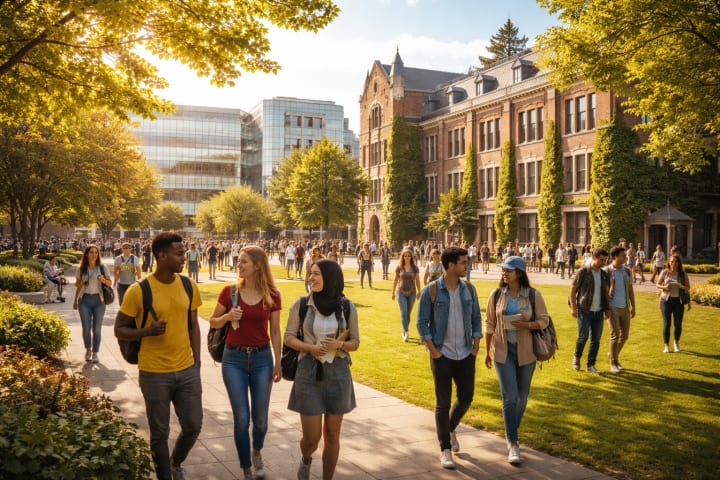
Step 7. Explore the Campus Environment
A university campus represents more than classrooms.
Take time to explore:
• Libraries and study halls
• Cafeterias and student centers
• research laboratories
• sports facilities
• art galleries and museums
These spaces show how students interact, collaborate, and relax.
You also observe the diversity of student populations and academic disciplines.
Step 8. Speak with Students
Students provide the most honest information about university life.
Ask questions about:
• teaching quality
• workload expectations
• campus support services
• research opportunities
• career outcomes
Students often share experiences about housing, campus culture, and academic challenges.
These conversations offer insights unavailable in official promotional materials.
Step 9. Visit Libraries and Research Centers
Libraries reveal the academic strength of an institution.
Observe:
• digital resources
• research databases
• study environments
• archival collections
Many leading universities hold rare manuscripts, research datasets, and specialized collections.
Research centers also demonstrate the focus areas of the university. For example, engineering universities often display robotics labs, AI centers, and innovation hubs.
Step 10. Document Your Visits
Record your experiences after each visit.
Useful methods include:
• taking photographs
• writing travel notes
• recording academic impressions
• collecting brochures and campus maps
These records help you compare universities later. They also support academic writing or research projects about higher education systems.
Conclusion
Visiting universities around the world offers educational, cultural, and intellectual value. You gain insight into global research practices, teaching methods, and student communities.
Clear planning improves the experience. Select universities carefully. Communicate with faculty members. Attend academic events. Explore campus environments. Speak with students.
Each university visit expands your understanding of education beyond national boundaries. For students, researchers, and educators, such experiences contribute to global academic awareness and collaboration.
About the Creator
Wilson Igbasi
Hi, I'm Wilson Igbasi — a passionate writer, researcher, and tech enthusiast. I love exploring topics at the intersection of technology, personal growth, and spirituality.
Keep reading
More stories from Wilson Igbasi and writers in Journal and other communities.
Traveling to 5 Countries on a Single Budget:
The Journey Begins Traveling has always been a source of inspiration for me, filled with tales of diverse cultures, cuisine, and breathtaking landscapes. Recently, I embarked on an adventurous journey to five different countries, navigating the complexities of travel on a tight budget. My motivations for this trip stemmed from a strong desire to experience firsthand the vibrant life stories that each destination holds, as well as the thrill of budget traveling itself.
By Wilson Igbasiabout 3 hours ago in Journal
The Boys' Love at the Heart of Heated Rivalry Is a Familiar Tale in Asia
Romance stories have existed for centuries, but some narrative patterns continue to resonate across cultures and generations. One of the most beloved and enduring storytelling formats in Asia is the rivals-to-lovers romance, particularly within the genre known as Boys’ Love (BL). The intense emotional relationship at the center of the novel Heated Rivalry fits squarely into this tradition. Although the novel gained popularity among Western audiences, the themes that drive its story are deeply familiar to fans of Asian BL media. From Japanese manga to Thai television dramas and Korean web novels, the idea that fierce rivals gradually discover love for each other has long captivated audiences. The emotional tension, hidden vulnerability, and slow evolution from competition to intimacy are core elements of the genre. In many ways, the romance portrayed in Heated Rivalry mirrors a storytelling pattern that has been thriving across Asia for decades. Understanding the Boys’ Love Genre Boys’ Love, often abbreviated as BL, is a genre of media that focuses on romantic relationships between male characters. While it originated in Japan, it has spread widely throughout Asia and beyond. The genre first gained popularity through Japanese manga in the 1970s. These stories were often created by female authors and targeted female audiences, offering emotionally intense relationships and character-driven narratives. Over time, BL expanded into many different formats: Manga and graphic novels Television dramas Films Web novels Online comics (webtoons) Today, BL is a major entertainment industry across several Asian countries, particularly Japan, Thailand, South Korea, and China. Streaming platforms and social media have helped these stories reach international audiences. Despite cultural differences, most BL stories share certain common themes. Emotional vulnerability, personal growth, and the gradual development of trust between characters are often central to the narrative. Rivalry as the Beginning of Love One of the most recognizable BL storytelling tropes is the enemies-to-lovers or rivals-to-lovers dynamic. This trope builds emotional tension by placing two characters in direct competition before allowing their relationship to evolve into something deeper. In Heated Rivalry, the protagonists are elite athletes competing at the highest level of professional sports. Their rivalry fuels ambition, frustration, and obsession, creating the perfect conditions for a complex emotional connection. This narrative structure is extremely common in Asian BL stories. Rival characters often begin with intense dislike or jealousy, only to gradually develop mutual respect and attraction. The emotional transformation from hostility to affection creates a powerful dramatic arc. Readers and viewers are drawn into the gradual breakdown of barriers between the characters. Competition becomes the catalyst for intimacy. Why the Rivalry Trope Works So Well There are several reasons why rivalry-based romances resonate strongly with audiences. First, rivalry naturally creates tension. When two characters constantly challenge each other, their interactions are filled with emotional energy. That tension keeps audiences engaged and curious about how the relationship will evolve. Second, rivalry often hides admiration. Characters who compete intensely frequently recognize each other's strengths. Over time, respect can replace hostility. Third, rivalry allows for character growth. As characters confront their own pride, jealousy, or insecurity, they learn to understand themselves and each other more deeply. In BL stories, this growth is often portrayed through moments of vulnerability. Characters reveal fears, dreams, and personal struggles that were hidden behind their competitive exterior. These emotional revelations transform rivalry into connection. The Cultural Roots of BL Storytelling To understand why Heated Rivalry feels so familiar to Asian audiences, it helps to look at the cultural history of BL storytelling. Japanese manga played a key role in shaping the genre. Early BL stories explored emotional relationships between male characters in ways that were rarely seen in mainstream media. Rather than focusing on traditional gender roles, these stories emphasized emotional equality between partners. Relationships were built on shared experiences, emotional tension, and mutual discovery. As the genre spread across Asia, each country adapted it to its own cultural context. Thai television dramas, for example, often focus on university settings or professional environments where rivalries naturally develop. Korean web novels frequently explore workplace dynamics and competitive industries. Chinese web fiction often blends historical or fantasy settings with BL romance. Despite these differences, the core themes remain consistent: emotional connection, gradual trust, and transformative love. Sports Rivalries and Emotional Intensity Sports provide an especially powerful setting for rivals-to-lovers stories. Athletes operate in high-pressure environments where competition is constant. Success requires discipline, determination, and emotional resilience. When two athletes become rivals, their lives naturally intersect in intense ways. They study each other’s strategies, analyze each other’s strengths, and measure their progress against one another. This constant comparison creates psychological intimacy. In Heated Rivalry, the protagonists are deeply aware of each other's presence and performance. Their rivalry pushes them to become better players while simultaneously binding their identities together. Over time, the boundary between competition and connection begins to blur. This emotional complexity is one of the reasons sports-based BL stories are so compelling. The Rise of BL in Global Popular Culture Over the past decade, BL stories have moved from niche audiences to global popularity. Streaming platforms have played a major role in this shift. Thai BL dramas, Korean web series, and Japanese adaptations are now accessible to viewers around the world. Social media communities have also helped BL fandom grow internationally. Fans share translations, reviews, and recommendations, creating a global network of readers and viewers. Western audiences who discover BL often notice how different it feels from traditional romance storytelling. Rather than focusing solely on romantic attraction, many BL stories emphasize emotional intimacy and personal growth. Relationships develop slowly, often through shared challenges and internal struggles. This emphasis on emotional storytelling is one of the reasons BL narratives resonate so strongly across cultures. Breaking Traditional Romance Expectations BL stories also challenge traditional expectations about romance. In many conventional romance narratives, characters fall into clearly defined roles based on gender stereotypes. BL stories often reject those rigid roles. Instead, both characters are given emotional depth and complexity. Each partner may struggle with vulnerability, pride, or insecurity. Their relationship becomes a process of mutual understanding rather than dominance or submission. In Heated Rivalry, both protagonists are ambitious, competitive individuals. Their relationship evolves through moments of tension, reconciliation, and emotional honesty. This balanced dynamic reflects a storytelling style that has been popular in Asian BL media for decades. Emotional Vulnerability at the Center At the heart of most BL narratives lies emotional vulnerability. Characters who initially hide their feelings gradually learn to express them. Rivalry, competition, or misunderstanding often act as barriers that must be overcome. The emotional payoff occurs when those barriers finally break down. In Heated Rivalry, the characters must confront their own fears about identity, ambition, and connection. Their relationship develops through years of encounters shaped by both competition and attraction. This slow emotional evolution mirrors the storytelling rhythm of many Asian BL narratives. The journey toward honesty becomes the most powerful part of the story. Why These Stories Continue to Resonate The enduring popularity of rivals-to-lovers stories suggests that audiences are drawn to emotional transformation. Watching characters evolve from conflict to connection offers a sense of narrative satisfaction. It reflects the idea that relationships can grow stronger through understanding and shared experiences. BL stories in particular often emphasize empathy and emotional discovery. Characters learn not only to accept each other but also to accept themselves. This message resonates with audiences around the world who value stories about personal growth, identity, and love. A Familiar Tale with Global Appeal Although Heated Rivalry was written for a Western audience, its emotional structure reflects storytelling traditions that have long flourished in Asia. The intense rivalry, slow emotional evolution, and eventual romantic connection follow a narrative pattern that BL fans know well. What makes the story compelling is not simply the romance itself but the journey that leads to it. Competition becomes admiration. Rivalry becomes understanding. And conflict becomes love. In that sense, the story of Heated Rivalry is not just a modern romance—it is part of a much larger tradition of storytelling that continues to captivate audiences around the world. Conclusion The love story at the center of Heated Rivalry may feel fresh to some readers, but for fans of Asian Boys’ Love narratives, it follows a familiar and beloved path. Rivalry turning into romance, emotional vulnerability emerging from competition, and characters discovering themselves through each other are all hallmarks of the genre. As BL storytelling continues to expand globally, stories like this demonstrate how powerful and universal these themes can be. Whether set in sports arenas, universities, workplaces, or fictional worlds, the emotional journey from rivalry to love remains one of the most compelling narratives ever told. And as audiences continue to embrace these stories, the influence of Asian BL storytelling traditions will likely continue to shape romance narratives across the world.
By Zahid Hussain5 days ago in Journal
me, me, me
when i read back my poetry it screams “me, me, me” on my screen in bold letters and i can’t shut it up — most days, i cannot make any other words out; i want to throttle a thousand versions of the me gone by, i want to throw myself from a figurative balcony, i want to sink a sword into every pen i’ve held
By angela hepworth7 days ago in Poets




Comments
There are no comments for this story
Be the first to respond and start the conversation.