
Paradise
How humanity’s oldest dream of heaven continues to shape our stories, beliefs, and inner lives

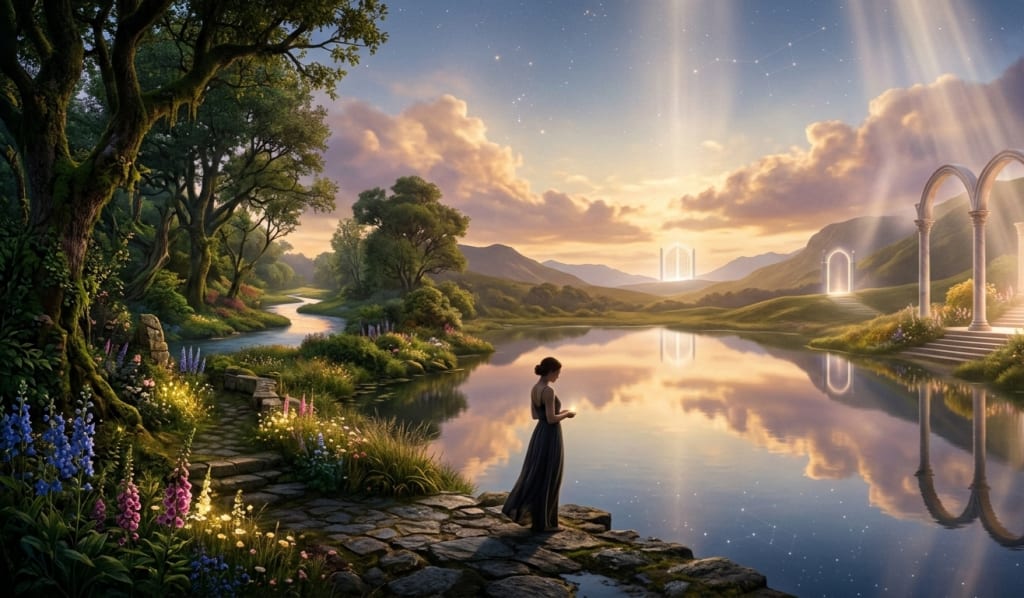
Long before cities rose from stone and glass, before ink dried on parchment or light flickered from screens, humanity imagined a place beyond struggle—a realm of harmony, abundance, and peace. Around fires in the quiet dark, our ancestors spoke of it. They described gardens untouched by sorrow, rivers that shimmered with clarity, and skies unmarred by fear. Paradise was not merely a location in their stories; it was a promise, a memory, and a longing woven into the earliest rhythms of human speech.
Like folklore and poetry, paradise was first carried not by books, but by breath. It lived in the cadence of voices and the rise and fall of chants. Rhythm made it memorable; repetition made it eternal. The idea endured because it was spoken aloud, passed from elder to child, from one generation to the next. In a world where survival demanded resilience, paradise offered hope—a vision of what lay beyond hardship.
The Shape of Heaven Across Cultures
Every culture imagined paradise in its own image, shaped by landscape and belief. In the ancient Mediterranean world, the Greeks envisioned the Elysian Fields—sunlit meadows where heroes found rest after mortal trials. Norse mythology described Valhalla, a majestic hall where warriors feasted in eternal glory. In Islamic tradition, Jannah blooms with gardens beneath which rivers flow, a symbol of divine mercy and reward. In Christian thought, Heaven shines as a realm of light and reunion. In Hindu cosmology, Svarga offers celestial joy, while Buddhist teachings speak of Pure Lands—realms of awakening and peace.
Though details differ, the core remains strikingly similar: paradise is wholeness. It is freedom from suffering, reunion with what was lost, and harmony restored. Whether depicted as a garden, a palace, or a luminous expanse beyond earthly pain, it reflects humanity’s deepest desires—to belong, to be safe, to find meaning beyond mortality.
A Reflection of Human Longing
Paradise reveals more about humanity than about the afterlife. It is a mirror reflecting what each society treasures most. For agrarian communities, it is fertile land without drought. For desert dwellers, it is flowing water and shade. For those familiar with war, it is eternal peace. For the oppressed, it is justice fulfilled.
In this way, paradise becomes less a distant destination and more a psychological truth. It embodies our collective yearning for completion. When life feels fractured, we imagine unity. When loss overwhelms us, we envision reunion. Paradise gathers these longings into a single image and gives them form.
The Poet as Architect of Eden
Throughout history, poets have been architects of paradise. They shape its landscapes with language, constructing gardens of metaphor and skies of luminous imagery. Through verse, they remind us that paradise is not always beyond reach—it can flicker within a moment.
A poet may describe paradise as a childhood memory untouched by regret, or as a lover’s gaze that quiets the world. Sometimes it appears in nature: sunlight pouring over a field, waves whispering at twilight, snow falling without sound. These glimpses do not claim to be eternal heavens, yet they carry the essence of paradise—stillness, beauty, and presence.
In this sense, poetry brings heaven closer. It suggests that paradise is not solely a future promise, but also a present possibility. The sacred may dwell in ordinary moments if we pause long enough to recognize it.
The Inner Garden
Modern life often feels far removed from ancient firesides. Skyscrapers replace mountains, and notifications interrupt reflection. Yet the longing for paradise persists. It surfaces in our pursuit of balance, in wellness movements, in our desire to “escape” into nature or silence. We search for spaces where the noise subsides and something gentler can be heard.
Perhaps paradise is not only a place but a state of alignment—a harmony between the self and the world. When compassion replaces conflict, when gratitude outweighs fear, when we act with love rather than ego, we cultivate an inner garden. That garden may not erase suffering, but it transforms how we move through it.
Many spiritual traditions echo this idea: the kingdom of heaven is within; enlightenment arises from awareness; peace begins in the heart. These teachings suggest that paradise is not exclusively beyond death. It can be nurtured here, in the soil of daily living.
A Bridge Between Earth and Eternity
Paradise also functions as a bridge between what is and what could be. It challenges injustice by presenting a vision of ultimate fairness. It softens grief by promising reunion. It tempers despair by insisting that darkness is not the final word.
In literature and myth, paradise is rarely static. It is often lost, sought, or regained. From the Garden of Eden to modern tales of utopian worlds, humanity revisits the theme again and again. This repetition reveals something essential: paradise is not a finished picture but an evolving aspiration. Each generation reimagines it according to its struggles and hopes.
Why the Vision Endures
In an age defined by speed and information, the idea of paradise slows us down. It invites reflection. It asks us to consider what we truly value. Is paradise wealth, power, and endless pleasure? Or is it connection, peace, and belonging?
The endurance of paradise across civilizations suggests that beneath cultural differences lies a shared human pulse. We all seek a place—or a state—where fear loosens its grip and love becomes the prevailing force. The language may differ, but the yearning is universal.
Conclusion: The Paradise We Create
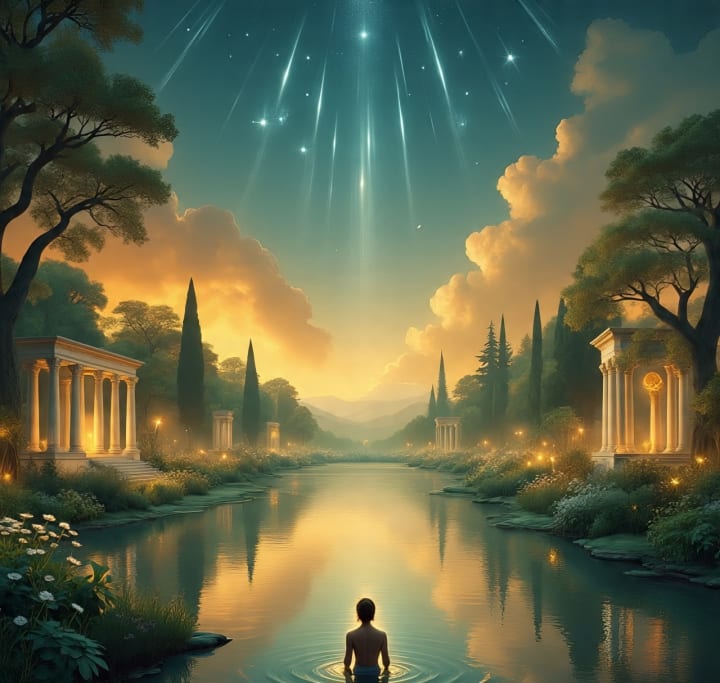
Paradise is not merely a distant heaven awaiting the faithful. It is a living idea that travels through myth, faith, and poetry. It is the dream of restoration that accompanies every hardship. It is the garden we remember and the future we imagine.
As long as humanity continues to hope, paradise will remain alive in our stories. It will shimmer in our prayers, echo in our poems, and quietly guide our choices. Whether envisioned beyond the stars or cultivated within the heart, paradise endures as a testament to our refusal to surrender to despair.
In the end, perhaps paradise is not only something we await—but something we are called to build, word by word, act by act, until the vision we carry begins to bloom in the world around us.
About the Creator
Cassie and Johnny
I’m the kind of dame you notice. I’m no femme fatale, but you can’t ignore me, at least not until I warn you about what’s coming, then everybody ignores me. Hell, they usually blame me afterwards and give Johnny all the credit for saving the day, but my Johnny couldn’t save a seat at the movies without my help. Sure, he’s brawny, but brainy? Not so much. Like that time I asked him to spot me five bucks, and he said he didn’t see it anywhere on me, and believe you me, he looked but good.
By Harper Lewis5 days ago in Critique




Comments
There are no comments for this story
Be the first to respond and start the conversation.