
Which Countries Did Iran Target in Recent Attacks?”
World Wor

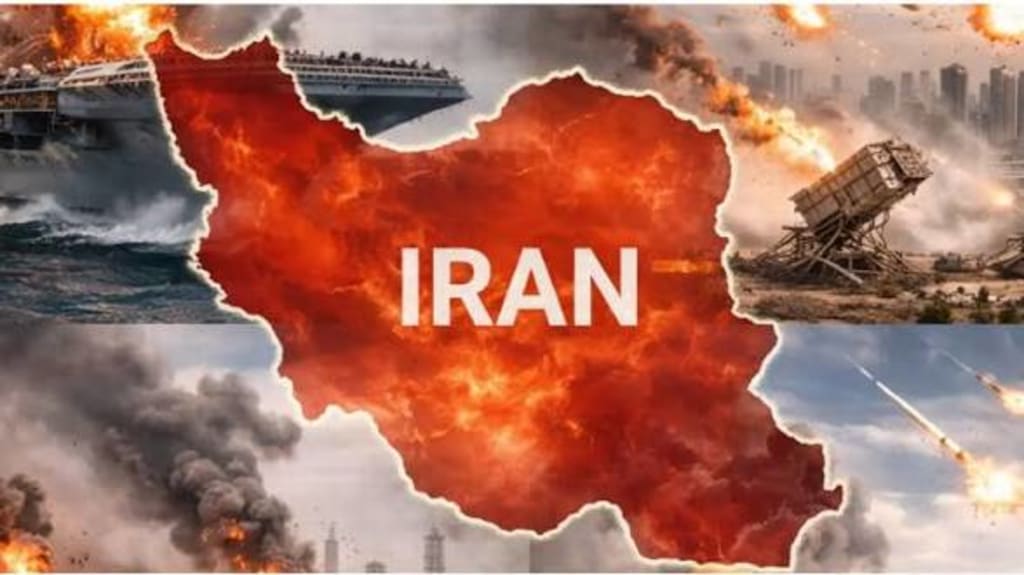
In recent days, tensions in the Middle East have escalated dramatically as Iran launched a series of missile and drone attacks across the region. These attacks were largely seen as retaliation following military strikes by the United States and Israel on Iranian targets. As a result, the conflict has spread beyond Iran and Israel, affecting several neighboring countries and raising fears of a wider regional war.
One of the primary targets of Iran’s attacks has been Israel. Iran fired large numbers of drones and missiles toward Israeli territory in response to Israeli and U.S. strikes on Iranian infrastructure and military sites. This marked one of the most direct confrontations between the two long-time rivals. Analysts note that such direct attacks represent a significant escalation, as Iran has often relied on proxy groups in the past rather than launching strikes itself. �
Council on Foreign Relations +1
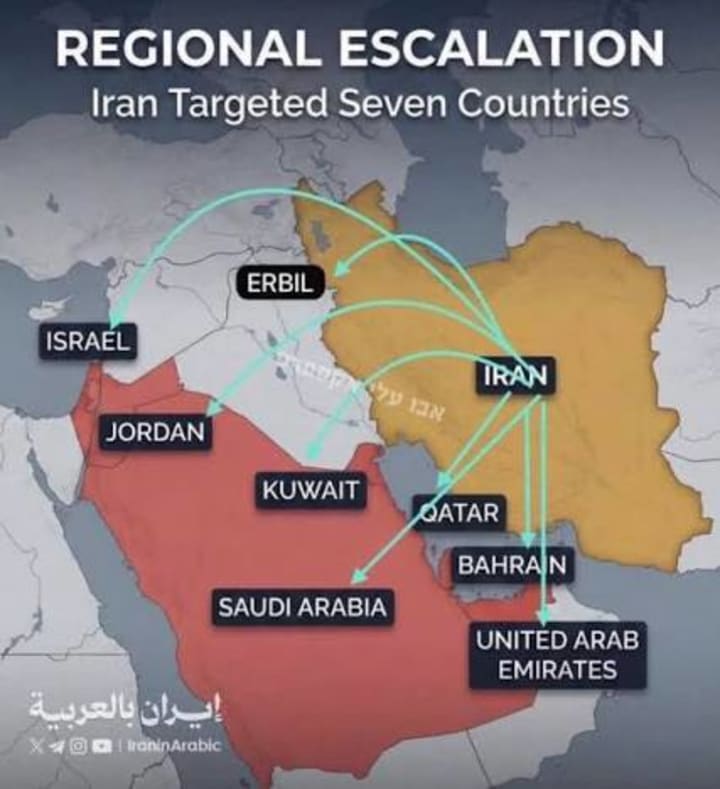
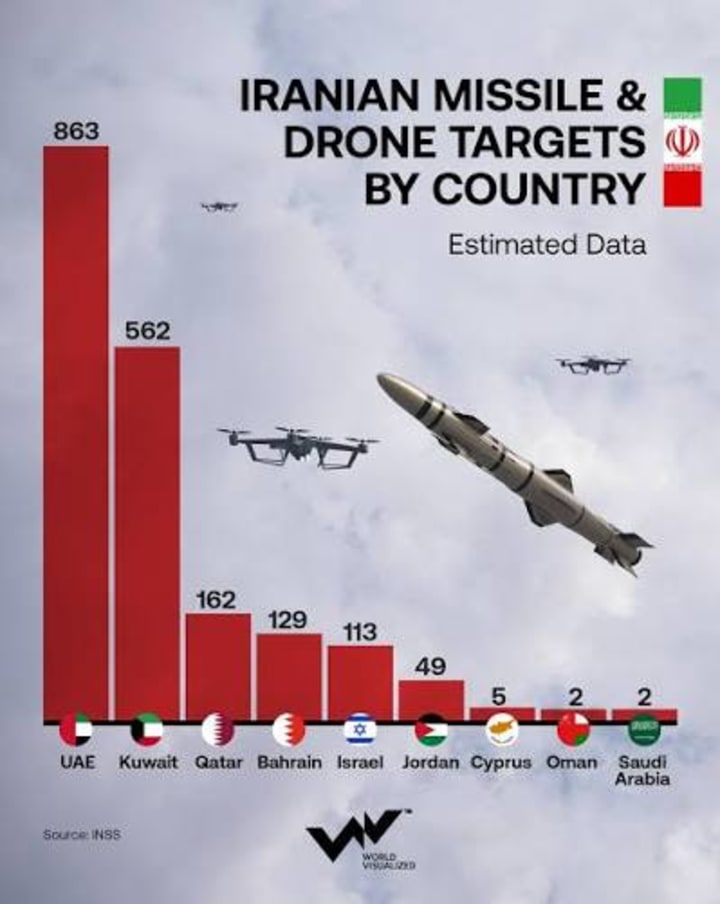
Beyond Israel, several Gulf countries have also been affected by Iranian strikes. These countries host U.S. military bases or strategic energy facilities, which Iran considers legitimate targets during the conflict. Reports indicate that Iran launched missiles and drones toward Bahrain, Saudi Arabia, Qatar, Iraq, and the United Arab Emirates (UAE), aiming at military installations and infrastructure connected to U.S. forces. �
Al Jazeera
In Saudi Arabia, Iranian drones and missiles targeted areas around the capital Riyadh and energy infrastructure such as oil refineries. Saudi air defenses intercepted several incoming drones and cruise missiles, preventing major damage, but the attacks demonstrated Iran’s ability to strike key economic facilities in the Gulf region. �
Wikipedia
Oman has also experienced attacks during the escalation. Iranian drones reportedly struck port facilities such as Duqm Port and targeted oil tankers near the coast. These strikes disrupted shipping routes and caused injuries among crew members, highlighting the vulnerability of maritime trade routes in the Gulf and the Strait of Hormuz. �
Wikipedia
Another country affected by the conflict is Kuwait, where drones and missiles were reportedly aimed at locations associated with U.S. military forces stationed there. Similar threats have also been reported in Bahrain, which hosts the headquarters of the U.S. Navy’s Fifth Fleet. The presence of American bases in these countries makes them strategic targets in Iran’s broader response to U.S. involvement in the conflict. �
The Indian Express +1
The conflict has even spread beyond the Gulf. Turkey, a member of NATO, narrowly avoided a direct strike when a ballistic missile believed to be launched from Iran was intercepted by NATO air-defense systems before reaching Turkish airspace. This incident raised concerns about the possibility of the conflict drawing NATO countries into the crisis if such attacks continue. �
New York Post
Additionally, there have been reports of missiles or drones landing near sensitive areas in Azerbaijan and debris falling in Syria, further demonstrating how widely the conflict’s effects are spreading. Even countries that are not direct participants in the war are feeling the consequences of the escalating military actions. �
AP News +1
Overall, the recent attacks show that the conflict involving Iran, Israel, and the United States is no longer limited to a single battlefield. Instead, it has expanded into a regional crisis involving multiple countries across the Middle East and beyond. Iran’s strategy appears to focus on targeting locations linked to U.S. military presence or strategic economic infrastructure, especially oil facilities and ports in Gulf nations.
The situation remains highly volatile, and international leaders have warned that further escalation could trigger a much larger regional war. Diplomatic efforts are ongoing, but as long as missile strikes and military responses continue, the risk of the conflict spreading to even more countries remains a serious concern.
In conclusion, Iran’s recent attacks have affected several countries, including Israel, Saudi Arabia, Bahrain, Qatar, Kuwait, the UAE, Iraq, Oman, and areas near Turkey and Azerbaijan. These developments highlight the growing complexity of the Middle East conflict and the urgent need for diplomatic solutions to prevent a wider war.
About the Creator
shaoor afridi
“I am a passionate writer dedicated to sharing informative, engaging, and well-researched articles. My goal is to provide valuable content that educates, inspires, and adds real value to readers.”
Keep reading
More stories from shaoor afridi and writers in Serve and other communities.
Who Has Suffered More Casualties in the Current Conflict: America, Israel, or Iran?"
The Middle East is once again the center of a major military conflict involving the United States, Israel, and Iran. What began with strikes on Iranian leadership and military infrastructure has rapidly escalated into full-scale hostilities, raising global alarm about regional stability and human cost.
By shaoor afridia day ago in Serve
Are there specific brands or websites recommended for wigs for trichotillomania?
There's a particular kind of exhaustion that comes with trichotillomania hair loss. Not just the physical part—though that's real too. I mean the mental load: planning your hair around light, weather, angles, social plans, photos, "wind days," and whether today is a good day or a don't-look-at-me day.
By Natalee Chand3 days ago in Serve




Comments
There are no comments for this story
Be the first to respond and start the conversation.