
Hong Kong Lodges ‘Strong Protest’ After Panama Takes Control of Canal Ports
Tensions rise over strategic infrastructure as Panama reasserts control of key canal ports, prompting Hong Kong to defend international investment protections.
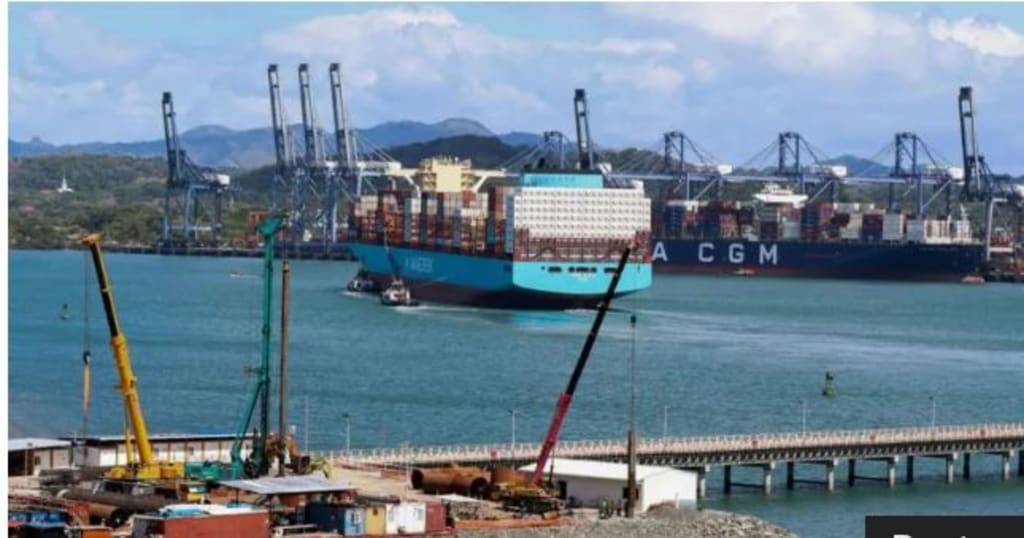
At the center of the dispute are port concessions long associated with the Hong Kong-based conglomerate CK Hutchison, which has operated major terminals near the canal for years. Panama’s decision to assert greater control over these facilities is being framed domestically as a move to protect national infrastructure. However, Hong Kong officials argue the action undermines legal agreements and risks damaging investor confidence.
A Strategic Flashpoint
The Panama Canal remains one of the world’s most critical trade routes, connecting the Atlantic and Pacific oceans and enabling billions of dollars in cargo to move efficiently across continents. Ports located at either end of the canal play an essential role in global logistics, handling container traffic, fuel shipments, and raw materials.
Because of this importance, any shift in management or ownership immediately draws international attention. Hong Kong’s protest reflects concerns that abrupt policy changes could disrupt supply chains and signal uncertainty for foreign companies operating in strategic sectors.
Panama’s government, meanwhile, has emphasized that its actions fall within its sovereign rights. Officials have pointed to the canal’s significance for national security and economic stability, arguing that closer oversight ensures long-term resilience in an increasingly volatile global trade environment.
Hong Kong’s Response
Authorities in Hong Kong described Panama’s move as a “strong cause for concern,” stating that the decision appears to bypass established procedures governing concessions and contractual protections. Officials stressed that international investors depend on predictable regulatory environments, particularly when infrastructure investments require decades of planning and billions in capital.
The protest also reflects Hong Kong’s broader identity as a global financial hub. The city’s leadership frequently highlights its role as a bridge between international capital and Asian markets. Any perceived risk to overseas business interests can therefore carry reputational consequences beyond a single dispute.
In statements to media, Hong Kong representatives called for dialogue and transparency, urging Panama to clarify how the transition will be implemented and whether compensation or renegotiation mechanisms will be offered.
Panama’s Perspective
Panama’s government has framed the move as part of a wider review of strategic assets. Officials argue that infrastructure tied directly to the canal must align with national priorities, including economic security, environmental management, and modernization.
The canal contributes a significant portion of Panama’s GDP, making port operations politically sensitive. Public debate within the country has increasingly focused on ensuring that profits from logistics and shipping remain beneficial to local development rather than flowing primarily to foreign operators.
Supporters of the decision say reclaiming operational authority allows Panama to strengthen oversight, invest in upgrades, and respond more quickly to changes in global shipping patterns.
Geopolitical Undertones
The dispute cannot be separated from wider geopolitical dynamics. Infrastructure linked to global trade routes has become a focal point of strategic competition, particularly as nations reassess supply chain vulnerabilities revealed by recent crises.
Hong Kong’s position also intersects with broader questions involving China, which views the stability of overseas investments as part of its international economic footprint. While the current disagreement is framed as a commercial and legal matter, analysts note that infrastructure disputes often carry diplomatic implications.
Experts say the situation highlights a growing global trend: countries seeking to balance openness to foreign investment with increased control over assets deemed critical to national interests.
Business and Market Implications
For multinational shipping companies, continuity is the primary concern. Even small disruptions at canal ports can create ripple effects across global trade networks, affecting delivery schedules, freight costs, and inventory planning.
Investors are also watching closely. Infrastructure projects rely heavily on long-term contracts and regulatory stability. Any perception that agreements can be reinterpreted or terminated may influence future investment decisions, not only in Panama but in other emerging logistics hubs.
Industry analysts note that disputes of this kind often lead to renegotiation rather than permanent rupture. Compensation frameworks, revised concession terms, or joint-management structures are common outcomes when governments seek greater oversight without discouraging foreign capital.
The Legal Dimension
At the heart of the conflict lies the legal framework governing concessions. Infrastructure deals typically include provisions addressing termination, renewal, dispute resolution, and arbitration.
If negotiations fail, the matter could move toward international arbitration, where questions of contract interpretation and sovereign authority are weighed. Such processes can take years, adding uncertainty for operators and customers alike.
Legal experts emphasize that both sides have incentives to avoid prolonged litigation. Panama benefits from maintaining its reputation as a reliable logistics hub, while Hong Kong-linked companies seek operational continuity in one of the world’s busiest maritime corridors.
What Comes Next
The immediate future will likely involve negotiations aimed at clarifying operational control and financial arrangements. Stakeholders across shipping, finance, and government will be looking for signals that cooperation remains possible.
Observers suggest several potential paths forward:
Partial government oversight combined with private management
Revised concession agreements with updated revenue sharing
Transitional arrangements allowing continued operation during renegotiation
International mediation to prevent escalation
Regardless of the outcome, the dispute underscores how strategic infrastructure has become a focal point where economics and geopolitics intersect.
A Broader Lesson
The confrontation between Hong Kong and Panama illustrates a broader shift in the global economy. Nations are increasingly reevaluating who controls critical infrastructure and how benefits are distributed. At the same time, businesses continue to rely on stable cross-border partnerships to keep trade flowing.
For the Panama Canal — a symbol of global connectivity — the episode serves as a reminder that even longstanding arrangements can face scrutiny in a changing world. Whether this dispute leads to tension or transformation will depend on the willingness of both sides to balance sovereignty with cooperation.
As negotiations unfold, the stakes extend beyond two governments or a single company. The outcome could shape how future infrastructure partnerships are structured, influencing the delicate relationship between national control and international investment in the decades ahead.
About the Creator
A Gathering of Evil Bosses
“I’m the queen of chin jutting while I smooth my hair, attacking, insulting, and deflecting to protect my appointer.” “Oh, please, Blondi, my hair is curled, highlighted, and longer than yours. I feature television commercials telling immigrants that we will give them a free plane ride home, and if they voluntarily turn themselves in, they will be allowed to legally apply for re-entry. It runs everywhere, and I look good in it! You can’t compete because of your blond hair. Mine is nicer, and my lips are prettier than yours.”
By Andrea Corwin 7 days ago in The Swamp




Comments
There are no comments for this story
Be the first to respond and start the conversation.