
Russia and Iran Slashing Prices to China as Oil Piles Up at Sea
A price war unfolds as oversupply, sanctions, and shifting demand reshape global energy trade
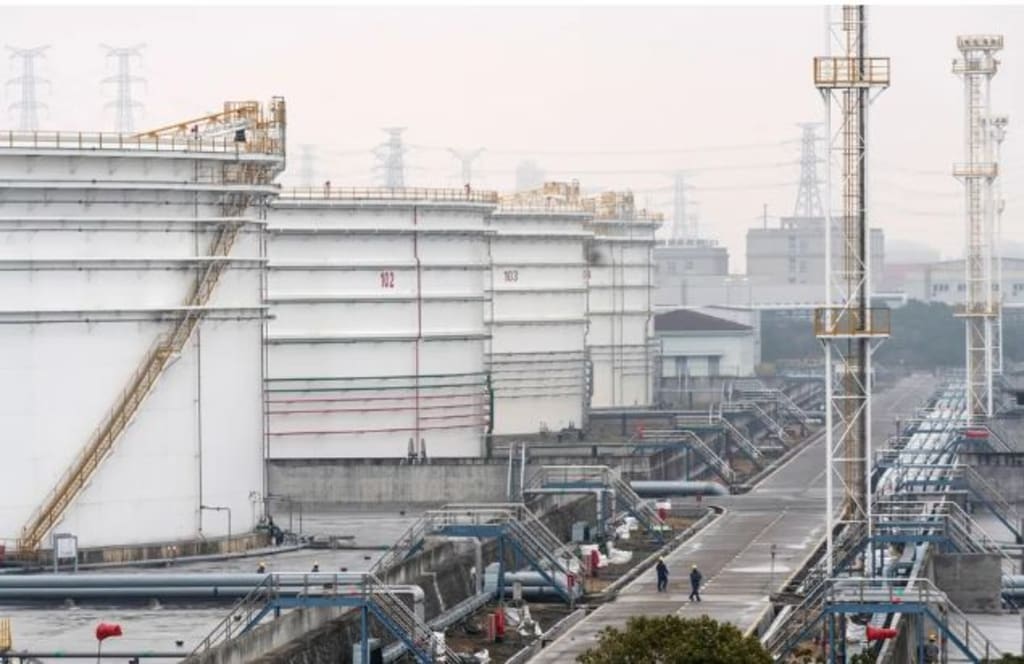
The global oil market is witnessing a dramatic shift as Russia and Iran slash crude prices to secure buyers in China. The move comes amid growing oversupply, weaker demand from some traditional customers, and a mounting backlog of oil cargoes waiting offshore.
Millions of barrels are now sitting on tankers at sea, turning vessels into floating storage units while traders negotiate sales. What might seem like a short-term pricing adjustment is actually a sign of deeper structural changes in global energy flows.
This blog explores why prices are falling, what floating oil storage means, and how this competition could reshape the oil market.
📉 Why Russia and Iran Are Cutting Prices
Both Russia and Iran face similar constraints. Western sanctions have limited access to some major markets, forcing producers to rely heavily on buyers willing to accept discounted crude. China — the world’s largest oil importer — has become the most important destination.
However, China’s refining sector cannot absorb unlimited supply. Independent refiners operate within quotas and capacity limits, meaning excess shipments often arrive faster than they can be processed.
To stay competitive, exporters are offering deep discounts below international benchmarks. These price cuts help secure sales but reduce revenue, creating a delicate balance between maintaining market share and protecting national income.
Another factor is shifting demand patterns. Some countries have reduced purchases due to compliance concerns or geopolitical risk, pushing more Russian and Iranian oil toward Asian markets — especially China.
🚢 Oil Piling Up at Sea: What It Means
One of the most visible consequences of this price battle is the rise of floating storage. Tankers loaded with crude are anchoring offshore instead of unloading immediately.
This happens for several reasons:
Refiners may lack immediate capacity
Buyers may wait for better prices
Traders may hold cargo as a strategic reserve
Shipping logistics or sanctions scrutiny can delay deliveries
Floating storage is often a signal of oversupply. When oil cannot move quickly into refineries, it indicates that supply is temporarily outpacing demand.
For Russia and Iran, this backlog reflects the challenge of selling large volumes while operating under restrictions.
🇨🇳 China’s Strategic Advantage
China occupies a powerful position in this situation. Access to heavily discounted crude can lower import costs and boost refining margins, especially for smaller independent refineries.
At the same time, Chinese state-owned energy companies tend to be more cautious due to regulatory and reputational risks associated with sanctioned oil. As a result, much of the discounted supply flows to private refiners.
This creates a dual system:
State refiners prioritize stable, traditional suppliers
Independent refiners capitalize on cheaper, riskier cargo
The arrangement allows China to benefit economically while managing geopolitical exposure.
⚖️ Revenue vs Market Share: A Difficult Trade-Off
For exporting countries, discounting oil is not ideal. Lower prices mean reduced government revenue, which can affect budgets, social spending, and investment in energy infrastructure.
Yet losing market share can be even more damaging. Once buyers switch suppliers, it can be difficult to win them back.
Russia and Iran therefore face a strategic choice:
Sell at lower prices and keep shipments flowing
Hold firm on pricing and risk unsold supply
So far, both appear to be prioritizing continuity of exports over short-term profits.
🌍 Geopolitics Behind the Price War
The competition is deeply tied to global politics. Sanctions, trade relationships, and regional tensions are reshaping where oil moves and how it is priced.
Energy trade is no longer driven purely by economics. Political alignment, shipping restrictions, insurance limitations, and enforcement actions all influence who buys what — and at what price.
This environment has encouraged alternative supply networks, sometimes referred to as “shadow fleets,” which transport sanctioned oil through complex routes. These networks add cost and uncertainty, further pressuring exporters to discount prices.
📊 Impact on Global Oil Prices
The presence of large volumes of discounted crude affects the broader market in subtle ways.
Cheap Russian and Iranian barrels can pull down regional physical prices, particularly in Asia. Other producers may need to adjust pricing to stay competitive, which can influence global benchmarks indirectly.
However, geopolitical risk still supports prices overall. Tensions in major producing regions, shipping disruptions, or policy changes can quickly tighten supply and push prices higher.
Floating storage adds another layer of complexity. These offshore reserves act like hidden inventory that can enter the market rapidly if demand rises.
🔮 What Happens Next?
Several factors will determine how this situation evolves:
China’s refining demand and import quotas
Enforcement intensity of sanctions
Global economic growth and fuel consumption
OPEC+ production decisions
Shipping capacity and logistics
If demand strengthens, the oil waiting at sea could be absorbed quickly, easing price pressure. If oversupply continues, deeper discounts may follow.
There is also the possibility of longer-term changes in trade routes, with Asia becoming even more central to global oil flows.
✍️ Final Thoughts
The decision by Russia and Iran to slash oil prices for China highlights a market in transition. Oversupply, sanctions, and shifting demand are creating new competitive dynamics that extend far beyond simple pricing.
Floating oil storage illustrates the imbalance between supply and refining capacity, while China’s position as the dominant buyer gives it significant leverage.
For exporters, the challenge is maintaining revenue while protecting market share. For the global market, the result is increased complexity — where geopolitics, logistics, and economics intersect.
This price war may not define the entire oil market, but it signals a future in which energy trade is more fragmented, more strategic, and more sensitive to political realities than ever before.
About the Creator
A Gathering of Evil Bosses
“I’m the queen of chin jutting while I smooth my hair, attacking, insulting, and deflecting to protect my appointer.” “Oh, please, Blondi, my hair is curled, highlighted, and longer than yours. I feature television commercials telling immigrants that we will give them a free plane ride home, and if they voluntarily turn themselves in, they will be allowed to legally apply for re-entry. It runs everywhere, and I look good in it! You can’t compete because of your blond hair. Mine is nicer, and my lips are prettier than yours.”
By Andrea Corwin 7 days ago in The Swamp
Japan’s New Direction: Why Rare Earth Cooperation with the United States Matters
In a time when the world feels uncertain and divided, economic security has become as important as military strength. After being reelected as Japan’s leader, Sanae Takaichi has made it clear that her government wants stronger cooperation with the United States on rare earth development. This decision may sound technical, but its impact could shape the future of technology, global trade, and international relations.
By dua fatima7 days ago in The Swamp



Comments
There are no comments for this story
Be the first to respond and start the conversation.