
Surgeon General Nominee Casey Means Grilled on Vaccines and Pesticides During Senate Hearing
Casey Means faces tough scrutiny as lawmakers debate science, safety, and transparency
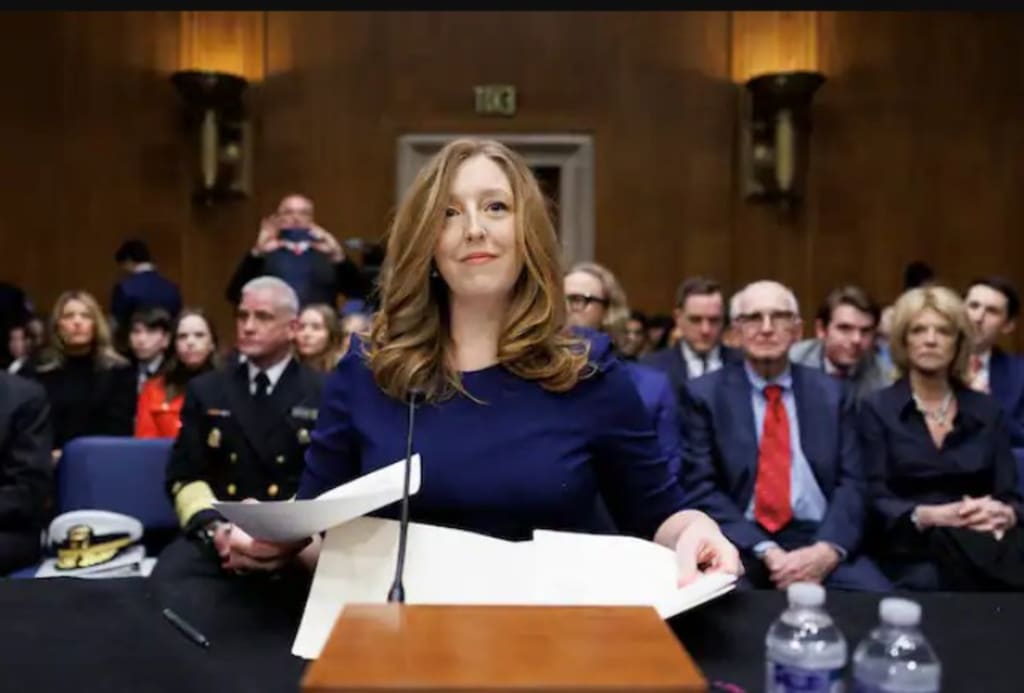
The confirmation hearing of Casey Means sparks national debate over science, public health policy, and the future direction of U.S. healthcare leadership
The nomination of Casey Means for U.S. Surgeon General has ignited intense scrutiny following a contentious Senate hearing focused on her views regarding vaccines, pesticides, and chronic disease. Lawmakers pressed Means on her public statements, scientific positions, and qualifications, highlighting deep divisions over the role of public health leadership in an era shaped by misinformation, environmental concerns, and declining trust in institutions.
As the nominee faced questions from members of the United States Senate, the hearing became more than a routine confirmation process. It evolved into a broader national conversation about science, safety, and how public officials should communicate with the American people during health crises.
---
The Role of the Surgeon General
The U.S. Surgeon General serves as the nation’s leading public health spokesperson, responsible for providing Americans with clear, science-based guidance on critical health issues. The position has historically played a key role in addressing public health emergencies, from tobacco use and HIV/AIDS to COVID-19 and mental health challenges.
Means’ nomination comes at a time when public confidence in health authorities has been strained. The next Surgeon General will face the difficult task of restoring trust while navigating politically sensitive topics such as vaccines, environmental health, and chronic disease prevention.
During the hearing, senators emphasized the importance of ensuring that the nominee would rely on established scientific evidence when communicating with the public.
---
Vaccine Views Take Center Stage
One of the most closely watched aspects of the hearing involved Means’ statements on vaccines. Vaccination remains one of the most effective tools for preventing infectious diseases, and federal agencies such as the Centers for Disease Control and Prevention and the Food and Drug Administration continue to emphasize their safety and effectiveness.
Several senators questioned Means about her past comments discussing vaccine safety, transparency, and pharmaceutical industry influence. Critics expressed concern that her statements could undermine public confidence in vaccines, while supporters argued that asking questions about safety and transparency is part of scientific inquiry.
Means responded by affirming that vaccines play an important role in public health. She emphasized that her goal as Surgeon General would be to ensure transparency, rebuild public trust, and improve communication between health institutions and the public.
She stated that restoring confidence requires acknowledging concerns openly while also clearly presenting scientific evidence.
---
Concerns About Pesticides and Environmental Health
In addition to vaccines, Means faced detailed questions about her views on pesticides and environmental toxins. She has previously spoken about the potential impact of environmental exposures on chronic disease, a topic that has gained increasing attention in public health discussions.
Some lawmakers supported her focus on environmental factors, pointing to growing research suggesting that pollution and chemical exposure may contribute to conditions such as obesity, diabetes, and cancer.
Others, however, questioned whether her statements might overstate risks or create unnecessary alarm among the public.
Means explained that addressing chronic illness requires a comprehensive approach that includes examining environmental influences alongside diet, lifestyle, and access to healthcare.
Her responses highlighted a broader shift in public health thinking, which increasingly recognizes the complex relationship between environmental factors and long-term health outcomes.
---
A Nation Facing a Chronic Disease Crisis
The hearing also touched on the rising rates of chronic disease in the United States. Conditions such as heart disease, diabetes, and obesity continue to affect millions of Americans, placing enormous strain on the healthcare system.
Means emphasized prevention as a central priority. She argued that improving nutrition, reducing environmental risks, and promoting healthier lifestyles could help address the root causes of disease rather than simply treating symptoms.
This prevention-focused approach aligns with growing efforts within the medical community to shift healthcare from reactive treatment to proactive wellness.
Many public health experts agree that addressing chronic disease will require coordinated action across multiple sectors, including healthcare, agriculture, environmental regulation, and education.
---
Political Divisions Reflect Broader Public Debate
The intensity of the hearing reflects larger political and cultural divisions surrounding science and public health in the United States.
Some senators expressed strong support for Means, praising her willingness to challenge established systems and bring fresh perspectives to public health leadership. They argued that Americans want greater transparency and accountability from health institutions.
Others raised concerns about whether her past statements could weaken confidence in proven medical interventions, particularly vaccines.
The hearing illustrated how public health has become deeply intertwined with politics, making the Surgeon General’s role more complex than ever before.
---
The Importance of Public Trust
At the heart of the debate lies a fundamental question: how can public health leaders rebuild trust in an era of widespread skepticism?
Trust is essential for effective public health action. When people trust health authorities, they are more likely to follow medical guidance, receive vaccinations, and adopt healthier behaviors.
Means acknowledged this challenge during the hearing, emphasizing that listening to public concerns and communicating honestly would be key priorities if confirmed.
She stressed that public health leadership must be rooted in both scientific evidence and empathy.
---
What Happens Next
The Senate will ultimately vote on whether to confirm Means as Surgeon General. The decision will shape the direction of federal public health messaging and priorities in the coming years.
If confirmed, she would assume responsibility for guiding the nation through ongoing health challenges, including chronic disease, mental health issues, and future public health emergencies.
Her leadership could influence how health information is communicated, how prevention strategies are implemented, and how Americans view the institutions designed to protect their well-being.
---
A Defining Moment for Public Health Leadership
The confirmation hearing of Casey Means represents a pivotal moment in American public health. It highlights the growing importance of transparency, scientific integrity, and effective communication in restoring public confidence.
Regardless of the outcome, the debate surrounding her nomination underscores a broader reality: public health leadership today requires navigating complex scientific, political, and social challenges.
The next Surgeon General will not only shape health policy but also help determine how Americans understand and respond to the most critical health issues of their time.
About the Creator
Keep reading
More stories from Jameel Jamali and writers in The Swamp and other communities.
Today’s Wordle Sunday February 8 – Hints, Clues, and Answer for #1695
Wordle has become more than just a word game — it’s a daily ritual for millions of players across the globe. Every morning, people grab their phones, open the New York Times Wordle page, and take on the challenge of solving a five-letter mystery in six tries or less. If you’re here searching for today’s Wordle Sunday February 8, you’re in the right place. In this blog, we’ll walk through Wordle #1695 step by step. You’ll find gentle hints, clever clues, and — if you scroll far enough — the final answer. Whether you’re stuck on your last guess or just want to confirm your win, this guide has you covered. What Is Today’s Wordle? For those new to the game, Wordle is a daily word puzzle where players must guess a secret five-letter word. After each guess, tiles change color to show how close you are: Green means the letter is correct and in the right spot Yellow means the letter is in the word but in the wrong position Gray means the letter is not in the word at all On Sunday, February 8, Wordle puzzle #1695 presents a word that’s deceptively simple yet tricky enough to trip up players who overlook repeated letters. Today’s Wordle #1695 – Hints Without Spoilers If you’re not ready to see the answer yet, start with these spoiler-free hints. They’re designed to guide you without giving everything away. General Hints The word contains five letters It starts with the letter “E” There are two vowels in the word One letter appears twice The word is commonly used as both a verb and a noun Meaning-Based Clue The word means to fix something firmly into a surrounding surface or to place something deeply within something else. If you’re still guessing, think about words related to inserting, planting, or attaching something securely. Strategy Tips for Solving Today’s Puzzle Sunday Wordles can feel slightly more challenging, especially if the solution includes repeated letters. Many players subconsciously avoid guessing words with double letters early on, which can slow progress. Here’s how you could logically approach Wordle #1695: Start with a vowel-heavy word to identify common letters early Pay attention to tile feedback — yellow letters often give away the structure Don’t rule out repeated letters just because they didn’t appear in earlier guesses Think about word usage, not just spelling — Wordle often favors common everyday words If you noticed an early “E” showing up in green or yellow, that’s a strong signal in today’s puzzle.
By Jameel Jamali18 days ago in The Swamp
A Gathering of Evil Bosses
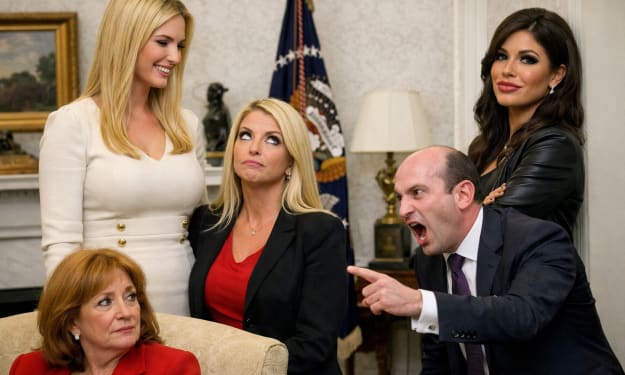
“I’m the queen of chin jutting while I smooth my hair, attacking, insulting, and deflecting to protect my appointer.” “Oh, please, Blondi, my hair is curled, highlighted, and longer than yours. I feature television commercials telling immigrants that we will give them a free plane ride home, and if they voluntarily turn themselves in, they will be allowed to legally apply for re-entry. It runs everywhere, and I look good in it! You can’t compete because of your blond hair. Mine is nicer, and my lips are prettier than yours.”
By Andrea Corwin 8 days ago in The Swamp



Comments
There are no comments for this story
Be the first to respond and start the conversation.