
They Start the Wars. We Die in Them.
How War Is Decided by the Few and Paid for by the Many

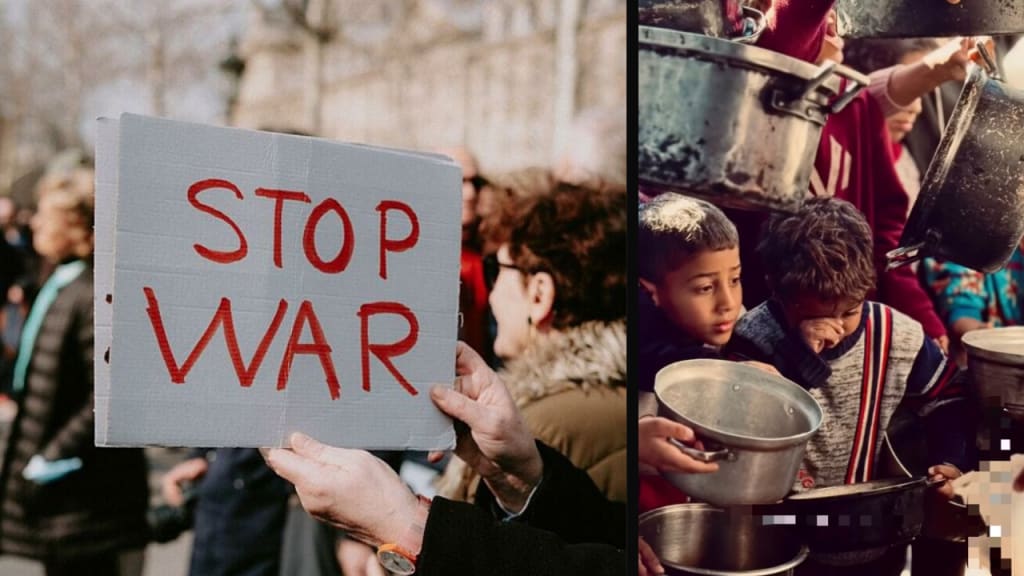
Is war even necessary? Do world leaders start wars for fun — as if ordinary people's lives are pieces on a chessboard? Do they actually know, or even care, that every missile they authorize is landing on someone's mother, someone's child, someone's home? Because from where the rest of us are standing, it really does not look like they do.
It is March 2026. The US and Israel launched nearly 900 airstrikes on Iran in 12 hours. Iran responded with 500 ballistic missiles and 2,000 drones across the Middle East. Over 1,255 civilians are already confirmed dead. The leaders who gave the orders are safe in secured bunkers. The people paying the price are in the rubble.
This is not new. This is how war has always worked. The powerful decide. The powerless die.
They Turned Years of Work Into Ashes
Think about what it takes to build something. An architect spending months on blueprints. An engineer calculating every beam. Workers pouring years of their lives into walls meant to stand for generations. Then a missile falls and it is gone in under a second.
On February 28, 2026, one of the opening US-Israeli strikes hit a girls' school in Minab, Iran, killing over 160 people. Not a military base. A school. In Gaza, the UN described the scale of destruction as among the worst since World War II. In Ukraine, the World Bank estimates $524 billion is needed just to rebuild nearly three times its pre-war GDP. Not to grow. Just to get back to zero.
Children Who Went to School and Never Came Home
On March 10, 2026, a Hezbollah rocket damaged a daycare centre in northern Israel. A daycare centre. In 2023, a single airstrike on a refugee camp killed 69 children in one day — the stated target was one militant commander. UNICEF has called the pattern across conflict zones a war on children. The UN documented over 33,000 civilian deaths in armed conflicts in 2023 alone.
Every one of those children had a parent who kissed them goodbye that morning. The leaders who signed the orders did not.
The Economy Collapses and Ordinary People Foot the Bill
Wars do not just kill people. They bankrupt nations and impoverish families for decades. Oil surged past $100 per barrel the moment this conflict escalated. Iran closed the Strait of Hormuz — 20% of the world's oil supply. Global markets shook. And the pain spread far beyond the Middle East.
Across Africa — Nigeria, South Africa, Egypt, Ethiopia, Ghana, Sudan — fuel prices are rising, transport costs are climbing, and food prices are following. Nine African central banks had only just begun cutting interest rates after years of brutal inflation. That hard-won progress is now at risk because of a war they had no part in starting. Egypt's president has warned his economy is in a state of near-emergency. Research across 135 wars shows conflict reduces GDP by 13% on average with no recovery even a decade later.
The woman selling tomatoes in Lagos, the truck driver in Cairo, the family in Nairobi trying to fill a tank, they are all paying for a war they had absolutely no say in.
Why Does Removing One Person Require Ten Thousand Deaths?
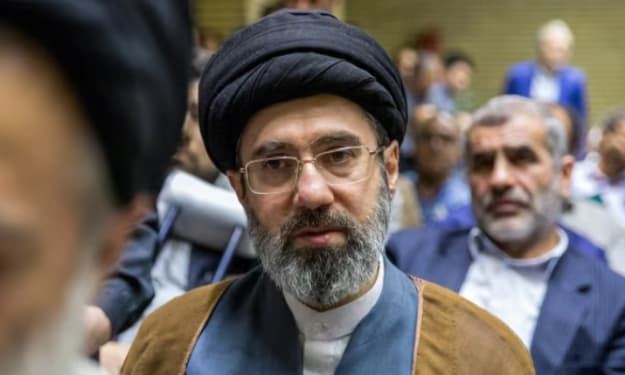
To remove Iran's supreme leader, nearly 900 strikes were launched. Over 1,255 civilians are dead. And Iran elected his son as the new supreme leader within 8 days. The regime is still standing. The missiles are still flying. The ordinary people are still dying.
What was the point?
The Omani foreign minister had reported significant progress in nuclear negotiations with Iran just weeks before the strikes. Diplomacy was not exhausted. It was abandoned. Bombs were chosen over a deal and ordinary people on every continent are now living with that choice.
The people being bombed are never in the room where these decisions are made. The engineers, the teachers, the parents, the children — they are never in that room. And yet they are always the ones who pay.
About the Creator
Parallel Protests
I haven't written for quite some time, but I have A LOT of thoughts about yesterday's protest rally against our government's involvement and complicity in America's war on Iran, on the harbourside of my home city Bristol, and I need to put them somewhere. My gorgeous girlfriend is always a loving and listening ear and sharing it all with her will always be a healthy and happy way of processing the mental and emotional weight, but getting it straight in my brain to share means writing it all down in straight lines, so, here we are and thanks for being here.
By Steph Cole9 days ago in The Swamp



Comments
There are no comments for this story
Be the first to respond and start the conversation.