
“Wait, This Again?
How Apple’s 2026 Release Broke My Upgrade Habit

The year the keynote felt different—and why I’m still thinking about it
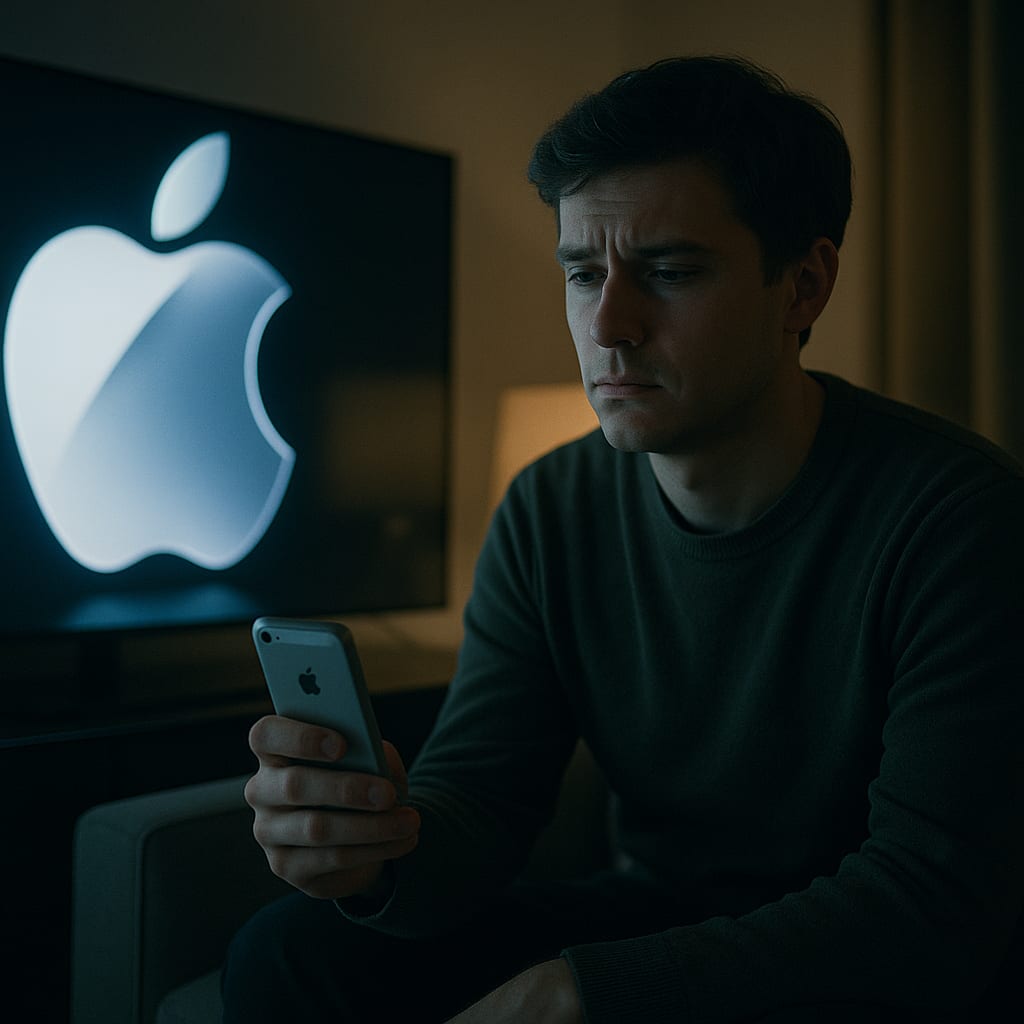
I remember exactly where I was during Apple’s 2026 event.
Not because it was mind‑blowing, but because for the first time in a decade, I genuinely wasn’t sure if I cared.
I was on my couch, half‑watching the livestream, half‑scrolling resale prices for my current iPhone. The familiar choreography was all there: the glossy product shots, the impossibly clean animations, executives in perfect denim talking about “breakthrough” this and “magical” that.
But somewhere between “our most powerful chip ever” and “our thinnest design yet,” I caught myself thinking:
Do I actually need any of this anymore? Or am I just… conditioned?
That question hit harder than the spec sheet.
Because Apple’s 2026 releases weren’t just about new hardware.
They quietly forced a lot of us to confront something more uncomfortable:
Are we buying innovation—or are we buying the feeling of not being left behind?
The quiet tension under every Apple launch
Apple launches have always felt a bit like tech Christmas.
Except by 2026, Christmas had started arriving every year with the same sweater in a slightly different color.
Friends used to text during events:
“Dude, did you see that camera?”
“Okay I’m upgrading. Take my money.”
This time, the chat was… quiet.
A couple of “Nice” messages.
A “meh” from someone who always upgrades.
And from my most devoted Apple friend, the one who used to line up outside stores at 4AM:
“Looks good. I’ll probably skip this one.”
That felt bigger than any spec bump on the screen.
Apple’s 2026 lineup—new iPhone, updated Apple Watch, a refined Vision product, quieter Mac refreshes—was polished, impressive, and very Apple.
But here’s the thing no keynote can really frame:
The more mature a product line gets, the harder it becomes to make normal people feel the difference.
And yet, the pressure to stay on the treadmill?
That hasn’t slowed down at all.
The 2026 iPhone: when “better” stopped feeling like “new”
The 2026 iPhone (whatever naming convention they stuck with in your region) is, objectively, a beast.
Battery improvements that finally make “all‑day” feel real.
Cameras that humiliate the DSLR I bought five years ago.
On‑device AI that quietly fixes your photos and suggests replies before you even unlock the screen.
In isolation, each change is huge.
Stacked onto last year’s model? It becomes one more incremental hill on top of an already tall mountain.
I looked at my current phone—two years old, a little scratched, still fast enough that I never really wait for anything.
Then I looked at the keynote bluffing emotional urgency into 15% better this and 20% faster that.
There it was again: that subtle guilt.
The unspoken suggestion that if you don’t upgrade, you’re lagging behind some invisible curve.
Except in 2026, that feeling finally started to crack.
Because the “new” iPhone didn’t feel like a ticket into the future anymore.
It felt like a slightly nicer version of the future I already had.
Apple Watch and Vision: the quiet reshaping of “normal”
While the iPhone conversation felt tired, Apple’s other 2026 moves were more insidious in a different way.
The Apple Watch update leaned harder into health—blood markers, heart data, subtle warnings before your body even knows what it’s doing. The language shifted from “fun fitness tracker” to “quiet guardian on your wrist.”
If you’ve ever had a health scare—or watched someone you love unravel without warning—that pitch lands differently.
One friend said it out loud on FaceTime after the event:
“It’s like they turned FOMO into fear of missing early warning signs.”
On the Vision side, Apple’s 2026 release wasn’t the awkward first step anymore.
It was smoother, less bulky, less obviously “look at me, I’m in early access to the future.” The apps got better. The use cases less cringe.
Remote workspaces that actually felt usable.
Family sharing moments that looked less like tech demos and more like real life.
Subtitles floating naturally in a room without screaming “sci‑fi movie.”
It wasn’t perfect, but it crossed a quiet threshold:
Not do I want this?
But how soon will this become normal?
That’s Apple’s real talent in 2026.
Not blowing us away.
Just gently, persistently shifting the baseline of what “normal” looks like.
The unspoken cost of “just one more upgrade”
I used to treat Apple events like seasonal rituals.
Upgrade, trade in, repeat. It was almost automatic.
But at some point, “just one more upgrade” starts to add up in ways that aren’t on the receipt.
There’s the obvious cost.
A thousand here, a couple hundred there. Payments you barely feel if you spread them out, until you look back and realize your “phone habit” is basically a small used car.
But there’s also the mental cost.
The way your perfectly good device suddenly looks obsolete after one keynote.
The quiet sense that your tools say something about your status, your competence, your place in the social tech hierarchy.
None of that shows up on Apple’s slides.
No one gets on stage and says, “And this year, we’ve increased your upgrade anxiety by 37%.”
But we feel it.
Especially in 2026, when the tech curve is flattening for most normal users.
We’re no longer upgrading because our phones are failing us.
We’re upgrading because we’re afraid of what it means if we don’t.
The moment I almost pre‑ordered—and didn’t
During the 2026 keynote, there was one moment where they nearly got me.
Apple showed a short film shot entirely on the new phone.
You know the ones—moody lighting, slow pans, strangers’ faces lit like movie posters, tiny human details in shallow focus.
I felt that familiar pull:
Imagine what you could shoot if you had this.
Except I knew the truth.
My current phone has had a cinema mode for two generations now. I used it exactly three times. All for the same dog.
The bottleneck isn’t my camera.
It’s the fact that I don’t actually go out and film things.
That realization did more than save me money.
It forced me to admit something I’d been avoiding:
I was treating upgrades as a shortcut to a version of myself I never actually show up for.
The kind of person who edits beautiful travel films but doesn’t organize their photo library.
The kind of person who “needs” the new health features but sleeps 5 hours a night and ignores their existing alerts.
That stung a little.
But it also felt honest.
So I closed the Apple Store tab.
For the first time in years, I decided to sit out an iPhone cycle not because I couldn’t, but because I truly didn’t need to.
Where Apple actually did change my mind in 2026
Skipping the phone didn’t mean I dismissed the entire 2026 Apple lineup.
There was one shift that felt quietly massive: how everything started talking to each other with fewer friction points and more intention.
Not in the flashy “ecosystem” way we’ve heard for years, but in small moments:
Your watch nudging your phone to adjust notification intensity based on stress patterns.
Your Mac recognizing that you’ve been at it for six hours and dimming things down, offering a break—not as a dramatic pop‑up, but as a gentle suggestion.
With the updated software across Apple’s 2026 releases, the experience moved from “these products work together” to “these products are paying attention to you, whether you like it or not.”
That’s both comforting and unnerving.
On one hand, it’s useful.
On the other, it forces a new question:
At what point does convenience become surrender?
Who decides which habits get gently reinforced?
Which nudges are neutral, and which ones slowly reshape how you live?
We’ve spent years obsessing over megapixels and refresh rates.
2026 is the year those specs matter less than the invisible systems quietly studying you in the background.
The story we’ve been sold about “the future”
I grew up with this idea that every new Apple release was a step forward, a necessary rung on the ladder toward “the future.”
But standing in 2026, that story feels different.
The future isn’t this single, shiny destination you unlock by buying enough devices.
It’s a thousand tiny negotiations you make with yourself:
What do I trade for convenience?
What do I outsource to algorithms?
How much do I let a private company’s design decisions shape how I work, rest, connect, even move?
Apple’s 2026 release didn’t really answer those questions.
If anything, it made them harder to ignore.
Because the products themselves are good.
That’s the problem.
When something works this well, it becomes easy to accept every new feature as inevitable.
Of course your glasses should know what you’re looking at.
Of course your watch should flag health anomalies years before you’d notice them.
Of course, of course, of course.
Until one day you look around and realize your entire daily rhythm is co‑authored by people you’ve never met and systems you don’t really understand.
What I’m actually doing differently after 2026
I didn’t walk away from the 2026 Apple event and become a minimalist who swears off tech and buys a flip phone.
That’s not my life.
I still rely on Apple products every day. I still appreciate the care in the design. I will probably upgrade something in the next cycle, because that’s how life and wear and tear work.
What changed was my posture toward the whole thing.
Instead of asking, “Is the new thing better?” I started asking:
Will this actually change how I live, or just how I feel for the first week?
Am I fixing a real problem, or trying to buy my way out of discomfort?
If I already owned this feature, would I bother using it?
For the 2026 iPhone, my answers were: not really, yes, and probably not.
For some of the health features and ecosystem tweaks, the answers were less clear.
Which, honestly, is where things get interesting.
Because the question isn’t simply “Should you upgrade?”
It’s “What version of yourself are you trying to justify with this purchase?”
The responsible professional who “needs” the new camera for work?
The health‑conscious person who “needs” that ECG feature because “you never know”?
The creative who “needs” more power to finally start that project they’ve been avoiding for years?
I’ve been all three.
Sometimes it was true.
Sometimes it was just a story I told myself so I didn’t have to admit I was scared to start with what I already had.
The real takeaway from Apple’s 2026 release
If you strip away the marketing, the leaks, the speculation threads, the arguing in comment sections, Apple’s 2026 launch did something subtle but important:
It exposed how much of our relationship with tech isn’t about tech at all.
It’s about identity, anxiety, status, and the quiet fear of falling behind.
It’s about using hardware refreshes as emotional resets.
It’s about confusing capability with change.
The devices keep getting better.
That’s almost a given.
The harder question—the one only you can answer—is this:
What if the next real upgrade isn’t in your pocket, or on your wrist, or on your face… but in the way you decide when enough is enough?
Apple will keep releasing something new in 2027, 2028, 2029.
The treadmill isn’t going anywhere.
But you get to choose how fast you run on it.
Or if you step off for a while and see what your “old” tech can still do when paired with a version of you that actually shows up.
Maybe that’s the quiet revolution hiding inside the 2026 release cycle:
Not that Apple changed everything.
But that it gave a lot of us just enough distance to finally ask why we’re still chasing “new” in the first place.
And whether the future we’re upgrading toward is actually one we want to live in.
About the Creator
abualyaanart
I write thoughtful, experience-driven stories about technology, digital life, and how modern tools quietly shape the way we think, work, and live.
I believe good technology should support life
Abualyaanart
Keep reading
More stories from abualyaanart and writers in The Swamp and other communities.
Why Black History Matters in America?
The United States of America is celebrating their 250th anniversary in 2026. I'm proud to be an American and as someone who was born here, I wouldn't imagine myself living anywhere else. This is a country where opportunities are possible. Where anyone can be successful in anything they desire to do. Equality, community, and togetherness are the backbones of what America is and should be about. However, we have an administration who wants to erase and disregard those who have made positive, meaningful impacts in our country, specifically Black figures, such as Martin Luther King, Jr., Rosa Parks, and Maya Angelou. President Trump and his administration have been constantly complaining and fighting against what they call the "Woke agenda". They use this excuse as a distraction from other issues they refuse to address, such as the high cost of living, climate change, and inflation. That equality is dividing America, when in reality, it's bringing us together. Being woke is not tied to a specific political party. No matter where you stand on the political spectrum, you can still care about other people and their plights. Compassion and empathy for others isn't tied to a political party, either. We were taught as children to treat others the way we want to be treated and not judge others because they're different from us. Caring about others isn't a personal attack on your beliefs. It doesn't make you any less of a person. People who are easily offended over African American figures, past or present, or anything related to it, are grasping at straws. Current and future generations need to know who people like Harriet Tubman and Shirley Chisholm were, especially in the classroom. Black History is part of American History. It should be recognized, not hidden or forgotten. Besides, you can't shield children from everything, just because your feelings are easily hurt.
By Mark Wesley Pritchard 26 days ago in The Swamp

Comments
There are no comments for this story
Be the first to respond and start the conversation.