
Autoimmune Disease Diagnostics Market Size and Forecast 2026–2034
Rising Disease Burden, Technological Breakthroughs, and Early Detection Strategies Fuel Global Growth

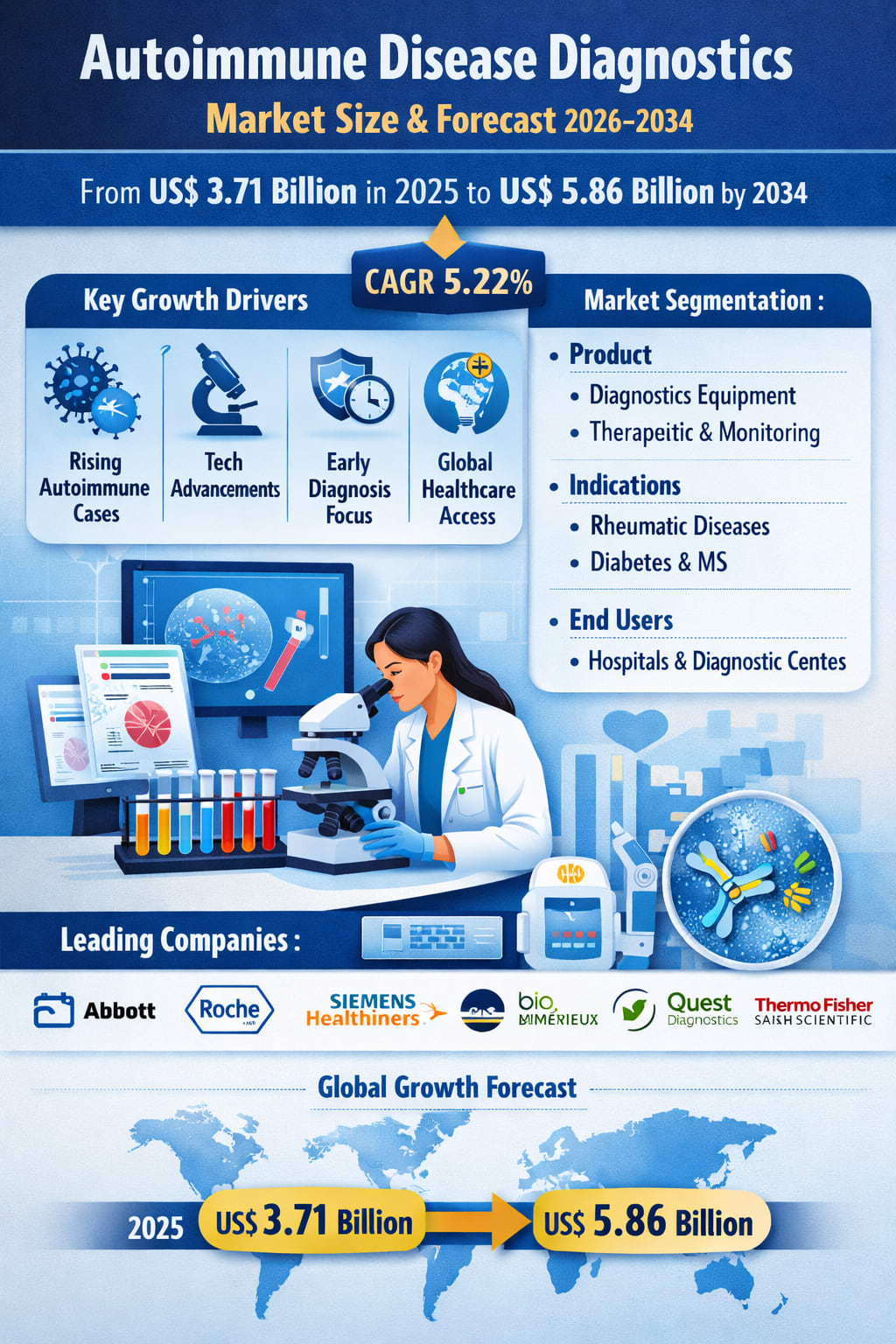
The global autoimmune disease diagnostics market is poised for steady and sustained expansion over the coming decade. Driven by the rising prevalence of autoimmune disorders, expanding patient pools, improved awareness of early detection, and rapid technological innovations in laboratory medicine, the sector continues to gain momentum across both developed and emerging economies.
According to Renub Research, the global autoimmune disease diagnostics market is projected to grow from US$ 3.71 Billion in 2025 to US$ 5.86 Billion by 2034, registering a Compound Annual Growth Rate (CAGR) of 5.22% during 2026–2034. This consistent growth reflects the increasing complexity of autoimmune disorders and the urgent need for accurate, timely, and personalized diagnostic solutions worldwide.
Autoimmune Disease Diagnostics Market Overview
Autoimmune disease diagnostics encompass a wide range of medical investigations designed to detect and monitor conditions in which the immune system mistakenly attacks healthy tissues. Common autoimmune diseases include rheumatoid arthritis, systemic lupus erythematosus, multiple sclerosis, type 1 diabetes, autoimmune thyroid disorders, and inflammatory bowel disease.
Diagnostic testing typically includes:
Antinuclear antibody (ANA) assays
Enzyme-linked immunosorbent assays (ELISA)
Chemiluminescence immunoassays
Indirect immunofluorescence assays
Autoantibody profiling panels
Because autoimmune conditions often present with overlapping and nonspecific symptoms—such as fatigue, joint pain, and inflammation—diagnostics play a crucial role in differentiating diseases and enabling targeted treatment strategies.
Improved laboratory automation, digital imaging, and advanced biomarker detection platforms are transforming the diagnostic landscape. At the same time, growing healthcare advocacy, funding initiatives, and personalized care approaches are accelerating market adoption globally.
Growth Drivers of the Autoimmune Disease Diagnostics Market
1. Rising Prevalence of Autoimmune Disorders Worldwide
One of the strongest growth catalysts is the escalating global incidence of autoimmune diseases. Conditions such as rheumatoid arthritis, lupus, multiple sclerosis, and autoimmune diabetes are becoming increasingly prevalent due to genetic susceptibility, environmental triggers, lifestyle factors, and improved detection rates.
According to recent data cited by healthcare organizations in 2024, approximately 50 million Americans are affected by autoimmune diseases, with women representing nearly 80% of cases. Globally, autoimmune diseases are showing annual growth rates ranging between 3% and 12%.
Given their chronic and progressive nature, these conditions require accurate, repeat, and often lifelong diagnostic monitoring—creating sustained demand for high-precision laboratory testing solutions.
2. Advancements in Diagnostic Technologies and Test Accuracy
Technological innovation is reshaping autoimmune diagnostics. Modern platforms now offer:
Higher sensitivity and specificity
Automated processing to reduce human error
Multiplex testing for simultaneous biomarker detection
Improved data integration and digital record systems
Advanced diagnostic techniques such as ELISA, chemiluminescence assays, and fluorescence-based detection are enabling earlier disease detection and better clinical decision-making.
In January 2025, OMNY Health partnered with Scipher Medicine to integrate electronic health records with transcriptomic data from the PrismRA test, demonstrating how molecular diagnostics and digital healthcare integration are converging to enhance autoimmune treatment pathways.
Such collaborations highlight the industry’s shift toward precision medicine and personalized diagnostics.
3. Growing Focus on Early Diagnosis and Preventive Healthcare
Healthcare systems worldwide are emphasizing preventive care and early intervention. Early diagnosis of autoimmune diseases significantly reduces long-term complications, prevents organ damage, and improves quality of life.
Public health campaigns and digital tools are strengthening awareness. For instance, in August 2024, Progentec Diagnostics introduced the “CareMGMT” app to help patients track symptoms and navigate disease management.
As preventive healthcare models gain prominence, demand for early-stage autoimmune screening and monitoring tests continues to rise.
Challenges in the Autoimmune Disease Diagnostics Market
Diagnostic Complexity and Symptom Overlap
Autoimmune diseases often share similar clinical features, making diagnosis challenging. Cross-reactivity of autoantibodies and nonspecific symptoms can lead to misdiagnosis or delayed treatment.
Accurate interpretation requires specialized expertise and advanced laboratory infrastructure. Multiple confirmatory tests may be necessary, increasing both time and costs.
High Cost of Advanced Testing and Limited Access
Sophisticated immunopathology and molecular diagnostic technologies require expensive equipment and skilled professionals. In low- and middle-income countries, limited infrastructure and reimbursement challenges restrict accessibility.
Addressing affordability through local manufacturing, public-private partnerships, and scalable testing platforms remains critical for long-term growth.
Segment Insights
Autoimmune Disease Diagnostics Equipment Market
This segment includes immunological analyzers, ELISA readers, chemiluminescence systems, fluorescence microscopes, and automated laboratory instruments.
With autoimmune diseases often requiring repeated testing, demand for high-throughput, precise, and digitally integrated equipment is rising. Investments in laboratory infrastructure—particularly in emerging markets—are accelerating equipment adoption.
Systemic Autoimmune Disease Diagnostics
Systemic conditions such as systemic lupus erythematosus, systemic sclerosis, and Sjögren’s syndrome require comprehensive autoantibody testing panels.
Antinuclear antibody tests and extractable nuclear antigen assays are essential tools. As awareness improves among clinicians and patients, testing volumes for systemic diseases are increasing globally.
Autoimmune Diabetes Diagnostics
Type 1 diabetes and latent autoimmune diabetes in adults (LADA) rely on detection of autoantibodies such as GAD, IA-2, insulin autoantibodies, and ZnT8.
Rising pediatric incidence and improved differentiation between autoimmune and type 2 diabetes are driving this segment’s expansion. Early detection ensures timely insulin therapy and better disease management outcomes.
Multiple Sclerosis Diagnostics
Multiple sclerosis (MS), an autoimmune disorder affecting the central nervous system, requires a combination of immunological and neurological assessments.
Advancements in biomarker detection and neuroimaging technologies are supporting earlier and more accurate MS diagnosis. Given its progressive nature, timely identification significantly influences patient outcomes.
Hospitals as Leading End-Users
Hospitals remain the dominant end-user segment due to:
Advanced laboratory facilities
Specialized medical expertise
Capacity to manage complex autoimmune cases
Integrated patient monitoring systems
Large hospital networks continue to invest heavily in diagnostic upgrades, contributing significantly to market revenue.
Regional Market Insights
United States
The United States represents one of the largest markets globally due to a high disease burden, advanced healthcare infrastructure, and strong regulatory frameworks.
In March 2025, Savara Inc. commercialized the aPAP ClearPath Dried Blood Spot Test, enabling diagnosis of Autoimmune Pulmonary Alveolar Proteinosis via a simple finger-prick method. Such innovations reinforce the U.S. market’s leadership position.
United Kingdom
The UK market benefits from the National Health System’s emphasis on standardized diagnostic protocols. Increased clinician awareness and adoption of advanced immunoassays are boosting testing volumes, despite public healthcare budget constraints.
India
India’s market is expanding rapidly due to rising disease awareness, urbanization, private laboratory investments, and government health initiatives.
In November 2025, Dr. Lal PathLabs launched India’s first dedicated advanced autoimmune diagnostics laboratory for complex inflammatory diseases, introducing specialized complement assays to the domestic market.
Cost-effective testing solutions and local manufacturing are improving accessibility in this price-sensitive market.
Saudi Arabia
Saudi Arabia’s market is supported by government-led healthcare modernization initiatives under Vision 2030. Expansion of private healthcare and partnerships with global healthcare companies are strengthening diagnostic capabilities.
In April 2025, Fakeeh Care Group partnered with Fosun Pharma to enhance healthcare innovation in alignment with national healthcare transformation goals.
Market Segmentation
By Product:
Therapeutic & Monitoring Equipment
Diagnostics Equipment
Drugs
By Type:
Systemic
Localized
By Indication:
Rheumatic Disease
Diabetes
Multiple Sclerosis
Inflammatory Bowel Disease
Others
By End-User:
Hospitals
Diagnostic Centers
Others
By Region:
North America, Europe, Asia Pacific, Latin America, Middle East & Africa
Key Players
Leading companies shaping the autoimmune disease diagnostics market include:
Abbott Laboratories
Bio-Rad Laboratories
Roche Diagnostics
Siemens Healthineers
bioMérieux SA
Myriad Genetics, Inc.
Quest Diagnostics Incorporated
Thermo Fisher Scientific Inc.
These companies are actively investing in R&D, expanding test portfolios, enhancing automation capabilities, and forming strategic collaborations to strengthen their global footprint.
Final Thoughts
The autoimmune disease diagnostics market stands at the intersection of rising disease prevalence, technological innovation, and evolving healthcare models focused on prevention and personalization.
With the market expected to grow from US$ 3.71 Billion in 2025 to US$ 5.86 Billion by 2034 at a CAGR of 5.22%, the coming years will witness increasing investments in advanced laboratory infrastructure, digital integration, biomarker research, and patient-centric diagnostic solutions.
While challenges related to cost, accessibility, and diagnostic complexity persist, ongoing technological breakthroughs and public-private collaborations are paving the way for more accurate, accessible, and affordable autoimmune disease diagnostics worldwide.
About the Creator
FTSE 250 Today: Market Movements, Sector Insights, and Investor Trends
What FTSE 250 Represents The FTSE 250 index includes the 101st to 350th largest companies listed on the London Stock Exchange. Unlike the FTSE 100, which is dominated by global giants, FTSE 250 focuses on mid-cap companies that are more closely tied to the UK economy. This makes it a strong indicator of domestic economic health and investor confidence.
By Hammad Nawaz7 days ago in Trader
The Rise of Fintech Platforms in the Modern Economy
Financial technology, commonly referred to as Fintech, has rapidly transformed the global financial landscape over the past decade. The integration of digital technology with financial services has reshaped how individuals, businesses, and institutions manage money, conduct transactions, and access financial solutions. What once required visiting physical bank branches, filling out paperwork, and waiting days for processing can now be completed within seconds through digital platforms.
By Backlinks Cart3 days ago in Trader
Top tipple tricks
Been thinking a lot about drinking, lately. Not least because of a recent episode of over-indulgence and the inevitable after effects. Some readers may recall the earlier articles I wrote about beating the booze. Here I set out an experiment in techniques for cutting down on my alcohol intake. The experiment was successful, the techniques worked, and I have armed myself with an arsenal of weapons in the war against the demon drink. I have yet to fire the first round however. It's all a question of timing (perhaps procrastination).
By Raymond G. Taylorabout 16 hours ago in Psyche




Comments
There are no comments for this story
Be the first to respond and start the conversation.