
Leather Goods Market Size and Forecast 2026–2034
Luxury, Sustainability, and Digital Retail Reshape a US$ 600+ Billion Global Industry

Introduction
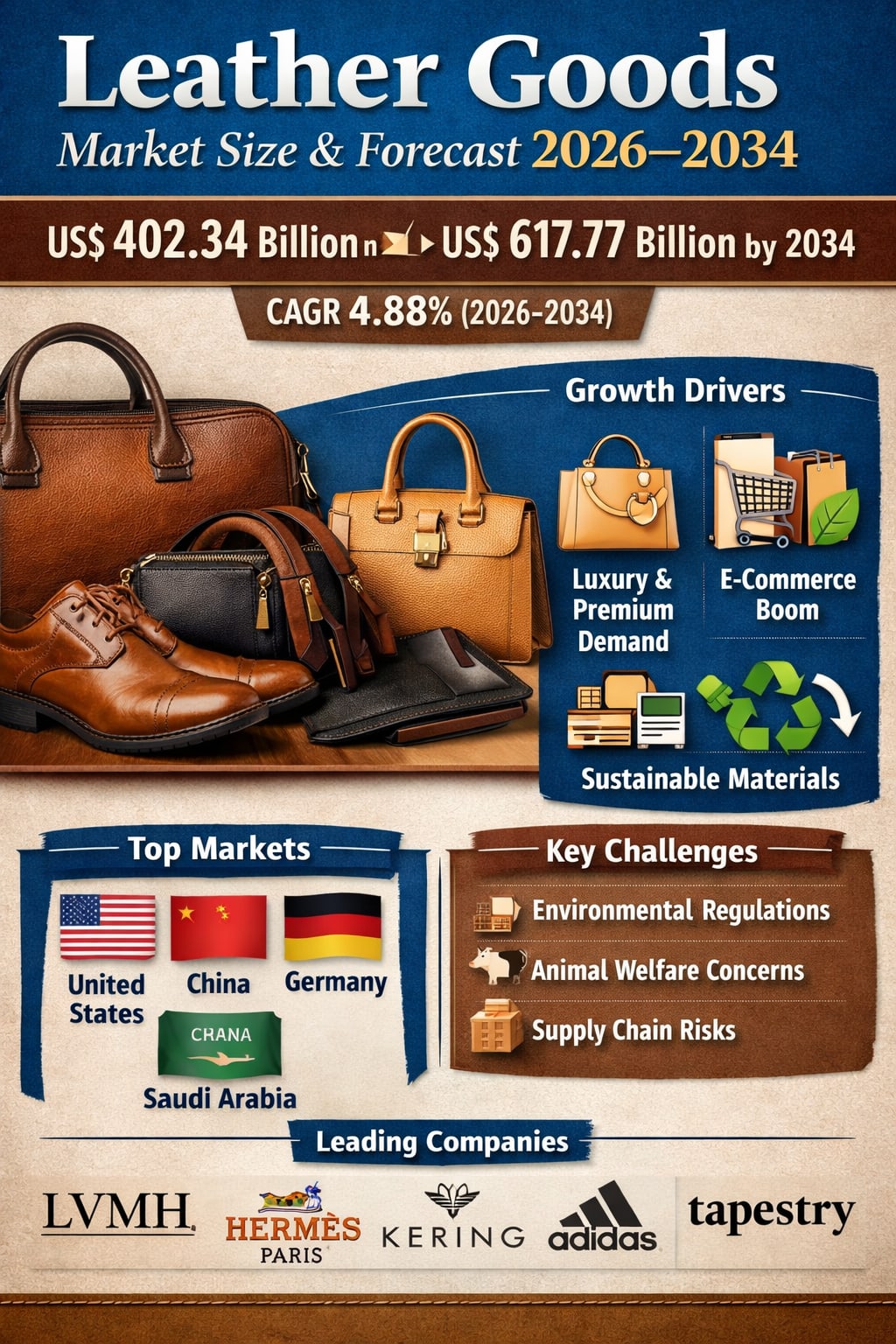
The global leather goods market is entering a new phase of steady and resilient growth, driven by evolving fashion preferences, rising disposable incomes, and rapid digital transformation across retail channels. According to Renub Research, the leather goods market is expected to expand from US$ 402.34 billion in 2025 to US$ 617.77 billion by 2034, registering a compound annual growth rate (CAGR) of 4.88% from 2026 to 2034. This growth reflects not only increasing consumer demand for premium and durable products, but also the industry’s ability to adapt to sustainability expectations, technological innovation, and changing lifestyle patterns.
Leather goods have long occupied a unique position in global consumer markets. They combine functionality with fashion, durability with aesthetics, and tradition with modern design. From handbags, footwear, wallets, and belts to luggage, apparel, and specialized accessories, leather products continue to serve both practical and aspirational needs. At the same time, the industry is undergoing a meaningful transformation, with the rise of vegan and bio-based materials, advanced manufacturing techniques, and omnichannel retail strategies redefining how products are made, marketed, and sold.
As consumers become more brand-conscious, environmentally aware, and digitally connected, the leather goods market is no longer just about craftsmanship—it is about innovation, transparency, and experience. These forces are shaping a competitive yet opportunity-rich landscape that is set to grow steadily through 2034.
Leather Goods Industry Overview
Leather goods refer to items made from natural hides or synthetic leather substitutes that are designed for durability, long-term use, and style. These products include handbags, shoes, wallets, belts, luggage, clothing, and various specialty accessories. Traditional leather is processed through tanning and finishing methods to enhance strength, texture, and visual appeal, while newer bio-based and synthetic alternatives aim to reduce environmental impact without compromising performance.
Leather goods are widely used across fashion, business, and travel segments due to their versatility and premium appearance. They occupy a strong position in both luxury and mass markets, appealing to consumers who seek a balance between elegance, functionality, and longevity. Whether in the form of a luxury designer handbag, a professional briefcase, or a durable pair of shoes, leather products continue to symbolize quality and reliability.
The global leather goods market is expanding as fashion awareness increases, purchasing power improves, and consumers show a stronger preference for long-lasting, value-driven accessories. The growth of online retail has made it easier for buyers to explore a wider range of brands and styles, while advances in tanning and production technologies have enabled manufacturers to create lighter, stronger, and more sustainable products. In parallel, the emergence of plant-based and recycled leather alternatives is attracting environmentally conscious consumers, further broadening the market’s appeal.
Key Growth Drivers for the Leather Goods Market
Growing Demand for Luxury and Premium Products
One of the strongest forces shaping the leather goods market is the global shift toward premium and luxury consumption. As middle- and upper-income populations expand—especially in emerging economies—consumers are increasingly willing to invest in high-quality accessories that offer superior craftsmanship, durability, and brand value. Luxury handbags, footwear, wallets, and travel goods remain central to this trend, supported by strong brand storytelling, heritage positioning, and exclusivity.
Social media, celebrity endorsements, and influencer marketing play a powerful role in reinforcing aspirational buying behavior. Limited-edition collections, customization options, and unique design collaborations further enhance consumer engagement and justify premium pricing. Urbanization and lifestyle modernization also contribute to this demand, as professionals and fashion-conscious individuals seek products that are suitable for both everyday use and special occasions. Together, these factors make premiumization a stable and long-term growth engine for the global leather goods industry.
Expansion of Digital Retail and Omnichannel Shopping
Digital transformation has fundamentally changed how consumers discover and purchase leather goods. E-commerce platforms provide access to a much wider range of products, brands, and price points than traditional brick-and-mortar stores alone. Features such as high-quality visuals, customer reviews, virtual try-ons, and personalized recommendations help shoppers make more confident decisions.
Brands that successfully integrate online and offline channels—through services like click-and-collect, easy returns, and same-day delivery—benefit from higher customer satisfaction and stronger loyalty. Social media commerce, livestream shopping, and influencer-led campaigns further boost visibility, particularly among younger consumers. The rapid growth of mobile shopping in regions such as Asia-Pacific and North America has also created new opportunities for both global luxury brands and emerging designers. This shift toward omnichannel retail is now one of the most important structural drivers of market growth.
Innovation in Sustainable, Vegan, and Advanced Materials
Sustainability has become a defining theme in the leather goods market. Consumers are increasingly concerned about environmental impact, ethical sourcing, and animal welfare, pushing brands to rethink materials and production processes. In response, manufacturers are investing in alternatives such as mushroom leather, apple leather, cactus leather, and lab-grown leather, which aim to offer comparable performance with a lower ecological footprint.
At the same time, improvements in eco-friendly tanning methods, water management, and chemical reduction are helping traditional leather producers reduce their environmental impact. Brands that embrace transparency, certification programs, and responsible sourcing are gaining trust and competitive advantage. For many consumers—especially younger generations—sustainability is no longer a niche preference but a core purchase criterion, making material innovation a powerful catalyst for long-term market expansion.
Challenges Facing the Leather Goods Market
Environmental, Animal Welfare, and Regulatory Pressures
Despite strong growth prospects, the leather goods industry faces increasing scrutiny over environmental and ethical issues. Traditional tanning processes can involve chemicals that pose risks to ecosystems if not properly managed. Animal welfare concerns are also shaping consumer perceptions, pushing brands toward greater transparency and alternative materials.
Governments around the world are tightening regulations related to waste management, emissions, and water usage, which can raise compliance costs for manufacturers. Companies that fail to adapt risk reputational damage and loss of consumer trust. While sustainable and vegan alternatives offer solutions, transitioning to new materials and processes requires significant investment, particularly challenging for smaller players.
Raw Material Instability and Supply Chain Risks
Volatile prices for hides, chemicals, and synthetic inputs continue to pressure production costs. Factors such as livestock supply fluctuations, disease outbreaks, trade restrictions, and geopolitical tensions can disrupt raw material availability and logistics. In addition, global supply chain challenges—ranging from shipping delays to labor shortages—can affect production schedules and inventory management.
Maintaining consistent quality becomes more difficult when suppliers change or materials vary. To remain competitive, companies must diversify sourcing, invest in supply chain visibility technologies, and build more resilient procurement strategies.
Regional Market Insights
United States
The United States is one of the most influential leather goods markets globally, supported by high purchasing power, strong brand loyalty, and a vibrant fashion culture. Demand is particularly strong for premium handbags, designer footwear, business accessories, and travel goods. E-commerce plays a central role in shaping consumer behavior, while sustainability is increasingly influencing purchasing decisions. Omnichannel strategies, social media marketing, and the rise of casual luxury continue to define the competitive landscape.
Germany
Germany’s market is characterized by a strong emphasis on quality, durability, and functional design. Consumers value high-grade materials and responsible production, making sustainability a key purchase factor. Demand remains steady for premium footwear, structured handbags, and professional accessories. The country’s advanced retail infrastructure and growing e-commerce adoption ensure broad access to both domestic and international brands.
China
China stands out as one of the fastest-growing and most dynamic leather goods markets. Rising incomes, urbanization, and strong digital engagement drive demand across luxury and mass segments. Online platforms, livestream commerce, and social media play a dominant role in product discovery. While international luxury brands remain popular, domestic labels are gaining traction through competitive pricing and localized innovation.
Saudi Arabia
Saudi Arabia’s market is expanding rapidly, supported by rising disposable incomes, a youthful population, and economic diversification under Vision 2030. Demand for luxury handbags, footwear, and accessories is strong, particularly in premium retail environments. E-commerce adoption is accelerating, and sustainability is gradually emerging as a factor in consumer choices.
Recent Developments in the Leather Goods Market
In January 2025, Tapestry Inc. announced a collaboration with Adobe to integrate generative AI into its design workflow, enabling faster prototyping, customization, and shorter development cycles.
In November 2024, Kering unveiled new science-based conservation commitments focused on land restoration and freshwater sustainability, reinforcing its leadership in responsible luxury.
In May 2024, LVMH partnered with Alibaba to integrate AI solutions into its retail and clienteling systems in China, enhancing personalized customer engagement and operational efficiency.
These developments highlight how technology and sustainability are becoming central to competitive strategy in the leather goods industry.
Market Segmentation Overview
By Product: Footwear, Luggage, Accessories
By Material: Genuine Leather, Synthetic Leather
By Price: Premium Products, Mass Products
By Distribution Channel: Clothing & Sportswear Retailers, Department Stores, Supermarkets & Hypermarkets, Online Stores, Others
By Region: North America, Europe, Asia Pacific, Latin America, Middle East & Africa
Key Players in the Market
Major companies operating in the global leather goods market include:
Adidas AG, American Leather Holdings LLC, Capri Holdings Limited, Hermès International S.A., Kering S.A., LVMH, Puma SE, Tapestry Inc., VIP Industries (Piramal Group), and Woodland (Aero Group).
Each of these companies is analyzed across five viewpoints: Overview, Key Person, Recent Developments, SWOT Analysis, and Revenue Analysis, highlighting the competitive depth and strategic diversity of the industry.
Final Thoughts
The global leather goods market is on a stable and sustainable growth path, supported by rising demand for premium products, digital retail expansion, and continuous innovation in materials and manufacturing. With the market projected to grow from US$ 402.34 billion in 2025 to US$ 617.77 billion by 2034 at a CAGR of 4.88%, the industry is set to remain a vital part of the global fashion and accessories ecosystem.
While challenges related to sustainability, regulation, and supply chain volatility persist, companies that invest in responsible practices, technology, and customer-centric strategies will be best positioned to succeed. As consumer expectations continue to evolve, the leather goods market will increasingly be defined not just by craftsmanship and heritage, but by innovation, transparency, and long-term value creation.
About the Creator
Australia’s Food Service Market 2026: Dining Culture Evolution, Digital Ordering and Experience-Driven Growth
Australia Food Service Market Overview Australia’s food service market continues to expand as dining habits evolve alongside broader lifestyle, tourism and technology trends. The sector — spanning restaurants, cafes, quick-service outlets, catering providers and delivery-focused kitchens — plays a central role in Australia’s hospitality ecosystem. Consumers increasingly view dining out as both a convenience and an experience, driving demand for diverse cuisines, premium ingredients and seamless service formats.
By Amyra Singh7 days ago in Trader
It's 2026. Songs Turning 10 This Year
In 2016, we saw the rise of short form videos and what would lead to the birth of TikTok. We cannot forget the Snapchat filters no matter how cringe worthy some of them might have been. It was also the year in which the hit series Stranger Things debuted.
By Jasmine Aguilar4 days ago in Beat

Comments
There are no comments for this story
Be the first to respond and start the conversation.