
Philippines Air Freight Market 2026: E-Commerce Expansion, Logistics Modernization & Trade Connectivity
How rising e-commerce demand, infrastructure upgrades and international trade are transforming the Philippines’ air cargo industry

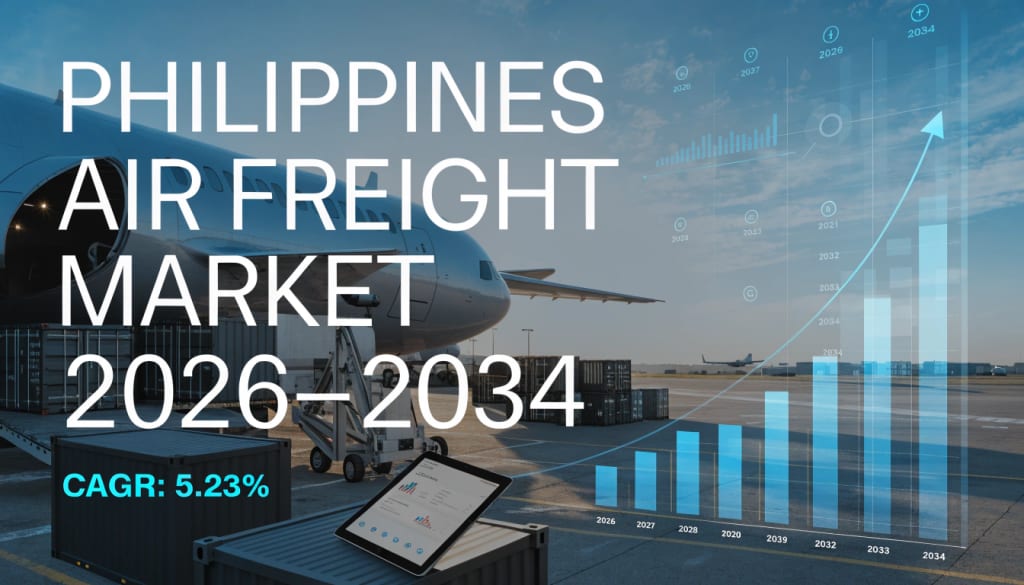
Philippines Air Freight Market Overview
The Philippines air freight market plays a critical role in the country’s logistics and trade ecosystem, enabling the rapid movement of goods across domestic islands and international markets. As an archipelagic nation with strong reliance on aviation for inter-island connectivity, air freight is essential for transporting high-value, time-sensitive and perishable goods, including electronics, pharmaceuticals and agricultural exports.
According to IMARC Group, the Philippines air freight market size reached USD 1.5 Billion in 2025 and is projected to grow to USD 2.5 Billion by 2034, exhibiting a compound annual growth rate (CAGR) of 5.23% during 2026–2034. The market’s growth is supported by expanding e-commerce activity, increasing international trade flows and ongoing investments in logistics infrastructure and air cargo handling facilities.
With rising consumer expectations for faster delivery and stronger integration of multimodal supply chains, air cargo services are becoming increasingly important for maintaining efficient logistics networks across the Philippines.
Key Market Drivers
Growing E-Commerce Sector and Demand for Fast Delivery
The rapid expansion of the Philippines’ digital economy has significantly increased demand for efficient logistics solutions. Online marketplaces and mobile commerce platforms are encouraging consumers to expect quicker deliveries, particularly for electronics, apparel and consumer goods. Air freight provides the fastest and most reliable transportation method for meeting these delivery timelines across the country’s islands.
Rising Demand for Transport of High-Value and Perishable Goods
Air cargo is widely used for transporting products that require speed and reliability, including pharmaceuticals, fresh produce and electronics. The increasing trade of temperature-sensitive and high-value products has strengthened the need for reliable air freight services and improved cold-chain logistics capabilities.
Expanding International Trade and Export Activity
The Philippines continues to strengthen its trade relationships with regional and global partners. As export industries expand, especially in electronics manufacturing, seafood and agricultural products, air freight plays an essential role in ensuring timely global distribution.
Infrastructure Development and Logistics Modernization
Investments in airport infrastructure, cargo terminals and logistics hubs are improving the efficiency of air freight operations across the country. Government initiatives aimed at strengthening logistics networks and improving cargo handling capabilities are supporting market expansion and supply chain resilience.
Request a Sample Report with the Latest 2026 Data & Forecasts
What the Opportunities Are
The Philippines air freight market presents significant opportunities as businesses increasingly prioritize speed, reliability and global connectivity in their logistics operations.
Expansion of E-Commerce Logistics Networks
E-commerce is expected to remain one of the strongest growth drivers for air freight services. As online shopping continues to expand in urban centers such as Metro Manila, Cebu and Davao, logistics providers are investing in integrated fulfillment centers, digital tracking systems and partnerships with airlines to improve delivery efficiency.
Development of Regional Air Cargo Hubs
Strategic investments in airport infrastructure create opportunities for the Philippines to strengthen its position as a regional cargo gateway in Southeast Asia. Expanding air cargo facilities at major international airports can improve handling capacity and attract international logistics providers.
Growth of Cold Chain Logistics
Temperature-controlled air freight services are becoming increasingly important for industries such as pharmaceuticals, biotechnology and food exports. Enhanced cold-chain infrastructure will allow logistics companies to transport perishable goods safely while expanding export opportunities.
Integration of Multimodal Logistics Networks
Air freight operators are increasingly integrating with sea freight, trucking and rail logistics networks to create seamless end-to-end transportation solutions. Multimodal logistics strategies can significantly improve supply chain efficiency and reduce overall transit times.
Digitalization and Smart Logistics Technologies
Technologies such as real-time cargo tracking, automated cargo management systems and data analytics are transforming logistics operations. These innovations help companies optimize route planning, reduce delays and enhance transparency throughout the supply chain.
Rising Demand for Express and Time-Critical Shipments
Businesses increasingly require fast delivery for high-value goods and urgent shipments. This demand is driving the expansion of express air cargo services, enabling companies to maintain efficient production cycles and meet global market demands.
Together, these opportunities highlight the growing importance of air freight as a key enabler of the Philippines’ evolving logistics and trade infrastructure.
Recent News and Developments
March 2025: The Philippines air freight market reached USD 1.5 Billion in 2025, reflecting the growing importance of aviation logistics in supporting domestic and international trade.
July 2025: Logistics providers increased investments in airport-based warehouses and fulfillment centers to support the rapid expansion of e-commerce delivery networks.
October 2025: Improvements in regional air connectivity and cargo handling infrastructure enhanced the efficiency of inter-island and international freight operations.
January 2026: Market forecasts confirmed continued expansion, with the Philippines air freight market expected to reach USD 2.5 Billion by 2034, supported by e-commerce growth and logistics modernization.
Why You Should Know About the Philippines Air Freight Market?
The Philippines air freight market is becoming increasingly important for enabling fast, reliable logistics across a geographically complex archipelago and supporting international trade growth. As global supply chains evolve and businesses demand faster delivery capabilities, air cargo services are expected to play an even greater role in the country’s logistics ecosystem.
With projected growth from USD 1.5 Billion in 2025 to USD 2.5 Billion by 2034, the industry demonstrates strong potential for expansion driven by digital commerce, trade connectivity and infrastructure development.
As logistics companies invest in technology, cold-chain capabilities and cargo hub infrastructure, the Philippines air freight sector is positioned to remain a vital component of the nation’s trade and transportation networks in the years ahead.
About the Creator
Keep reading
More stories from Manisha Dixit and writers in Trader and other communities.
Philippines Packaging Market 2026: E-Commerce Growth, Sustainable Materials & Consumer Goods Expansion
Philippines Packaging Market Overview The Philippines packaging market is expanding steadily as the country’s consumer goods, food processing and e-commerce industries continue to grow. Packaging plays a critical role in product protection, transportation, branding and shelf appeal across industries such as food and beverages, pharmaceuticals, cosmetics and household products. As consumer lifestyles become more convenience-driven and retail distribution channels diversify, demand for reliable and innovative packaging solutions is increasing across the Philippine economy.
By Manisha Dixit6 days ago in Trader
AI Governance Market: Trends, Drivers, and Strategic Outlook for Responsible AI Adoption
AI Governance Market: An In‑Depth Analysis Artificial intelligence is no longer a futuristic concept—it has become integral to business operations, public services, and everyday digital experiences. As AI systems assume roles in decision‑making, customer interactions, and automated processes, stakeholders are increasingly concerned about unintended consequences, ethical risks, data privacy, and regulatory compliance. The AI governance market has emerged in response to these needs, offering businesses and public institutions a way to manage the complex ecosystem of AI development and deployment.
By James Smithabout an hour ago in Trader
Dogecoin Momentum: Why This Meme Coin Keeps Winning Fans Worldwide
Dogecoin has gone from a playful joke to one of the most talked-about digital coins today. Despite starting as a meme, Dogecoin has captured the attention of millions of users, investors, and online communities around the world. Dogecoin’s unique story proves that humor, community, and internet culture can make a coin successful. In this article, we will explore why Dogecoin continues to gain momentum, what makes it different, and how it impacts the world of digital currency.
By John.doe7982 days ago in Trader


Comments
There are no comments for this story
Be the first to respond and start the conversation.