
What Are "Jungle Bubbles"?
Inside the World’s Most Exclusive Overnight Elephant Experience
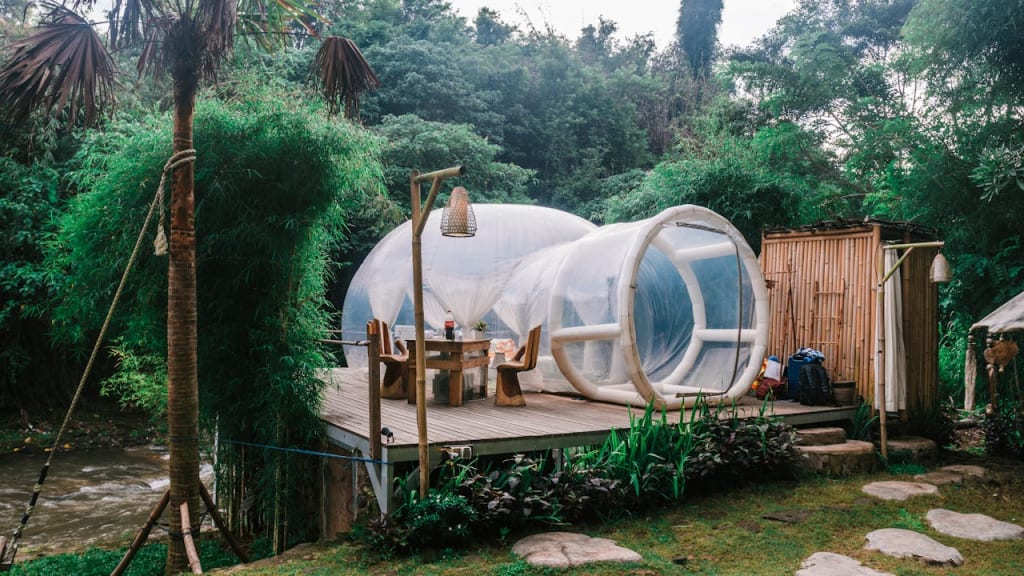
Transparent dome accommodation units are used in northern Thailand to allow overnight stays within a forest environment. These structures provide enclosed shelter while keeping full visual access to the surrounding landscape through clear exterior walls. The accommodation operates within a managed land area rather than an open or unrestricted wilderness. This article explains what these dome units are, how they are built, how they operate, and how they relate to the surrounding environment.
Location and Environmental Setting
The dome accommodation is in Chiang Rai province in northern Thailand, near the borders with Laos and Myanmar. The land around it includes hills, grassland and river areas. Animals move through the area at different times of the year. Their movement depends on rain, plant cover and nearby water. The accommodation is positioned within a controlled landscape rather than a protected national park or undeveloped forest.
The regional climate follows a tropical monsoon cycle. Rainfall and temperature vary throughout the year. Daytime conditions are generally warmer and drier than nighttime conditions. Humidity increases after sunset, and animal movement becomes more noticeable during night hours.
Structural Design and Materials
Each unit uses a rounded frame covered with a clear synthetic material. The covering keeps out rain, wind and insects while staying transparent. The unit sits on a raised base above the ground. Air can pass underneath, and the ground below is left mostly undisturbed.
Inside the dome, the interior layout is simple and open. A bed is placed at the centre of the space. Lighting remains low to reduce glare and limit external disturbance. Climate control is adjusted for local weather conditions. A separate enclosed section connects to the dome and is used for changing and storage. This section is opaque and provides basic privacy.
Purpose of the Accommodation
The accommodation known as Thailand Jungle Bubbles is designed for overnight stays that focus on environmental observation rather than direct wildlife interaction. The transparent walls allow viewing of surrounding forest activity such as movement, sound and changes in light. The design supports passive observation without outdoor night access, animal handling or guided activities.
Use of the units is limited to scheduled overnight occupancy. During daylight hours, staff access the area for cleaning, inspection and maintenance. The structure prioritises visual exposure to the environment rather than interior size or additional features.
Wildlife and Nighttime Conditions
The dome units are positioned near known animal movement paths but are not placed within enclosed zones. Smaller mammals and birds are active during night hours and may pass through nearby areas. Larger animals, including elephants, move through wider sections of the landscape at managed distances from the accommodation.
Occupants remain inside the structures during the night. Movement outside the units is restricted to reduce disturbance and maintain safety. The accommodation does not allow close contact or physical interaction with wildlife.
Operations and Site Management
Access to the site follows a fixed schedule. Arrivals and departures are coordinated to limit noise and human activity within the surrounding area. Staff provide brief instructions related to safety procedures, emergency communication, and accommodation use.
Food service, sanitation, and waste handling follow local environmental standards. Supplies are delivered without requiring extended movement around the site. Lighting around the domes is kept low to reduce light pollution and minimise disruption to animals active during night hours.
The site is operated by Anantara Golden Triangle Elephant Camp & Resort, which manages accommodation use, land planning, safety systems and environmental procedures.
Environmental Management and Land Use
Vegetation around the dome accommodation consists mainly of native plant species adapted to seasonal rainfall. Installation avoided the removal of mature trees and focused on areas with limited vegetation cover. Paths were created with minimal groundwork to protect soil structure and natural drainage patterns.
Weather conditions affect the area throughout the year. The rainy season increases humidity and insect activity. The dry season brings cooler nights and clearer conditions. The structures are designed to function across seasonal changes without permanent alteration to the land.
Access Limits and Safety Measures
The dome units are used only for overnight accommodation under controlled conditions. They are not daytime facilities and are not independent lodging units. Access to nearby forest areas is restricted, and off-path movement is not permitted.
Emergency systems connect the accommodation area to on-site staff through communication devices. These systems allow monitoring and response while keeping visible infrastructure to a minimum. The accommodation remains defined by observation and environmental presence rather than instruction, interaction or guided activity.
About the Creator
Keep reading
More stories from ameliarosanna and writers in Viva and other communities.
How to Choose Between Sunrise and Sunset Villas in the Maldives
The Maldives is the perfect place to spend your holidays, offering everything from calm early-morning swims to relaxed evenings watching the sun dip below the horizon. Whether you are travelling for a honeymoon, a solo escape, or a long-awaited break from routine, choosing the right villa can shape your entire experience. One of the biggest decisions travellers face is whether to stay in a sunrise or sunset villa. Each option offers its own atmosphere, advantages, and unique moments. Let’s uncover a few reasons to help you decide between sunrise and sunset villas when in the Maldives.
By ameliarosanna2 days ago in Viva
Causes, Symptoms and Treatment Options for Facial Hair in Women
First, take a deep breath. If you’ve noticed chin hairs or extra facial hair, you are not alone. Many women experience this at some point in life. A few stray hairs are completely normal. But if the hair growth feels excessive, sudden, or unusual, it’s important to understand what your body might be signaling.
By Veronica Bennett7 days ago in Viva
Why I’m Telling My Friends to Skip the Solitaire for a Diamond Band
Let’s have an honest conversation about engagement rings. For decades, we’ve been fed the same narrative: a proposal requires a giant, protruding diamond that costs three months' salary and stands so high off the finger it could practically have its own postcode. But as we move further into 2026, many of us are asking: Is that really what we want?
By Mohd Kaish6 days ago in Viva




Comments (1)
Oh wow sounds amazing