
Top Benefits of Agentic AI Pentesting for Modern DevOps and Cloud Security
Strengthening DevOps Workflows with Continuous, Intelligence-Driven Security Validation

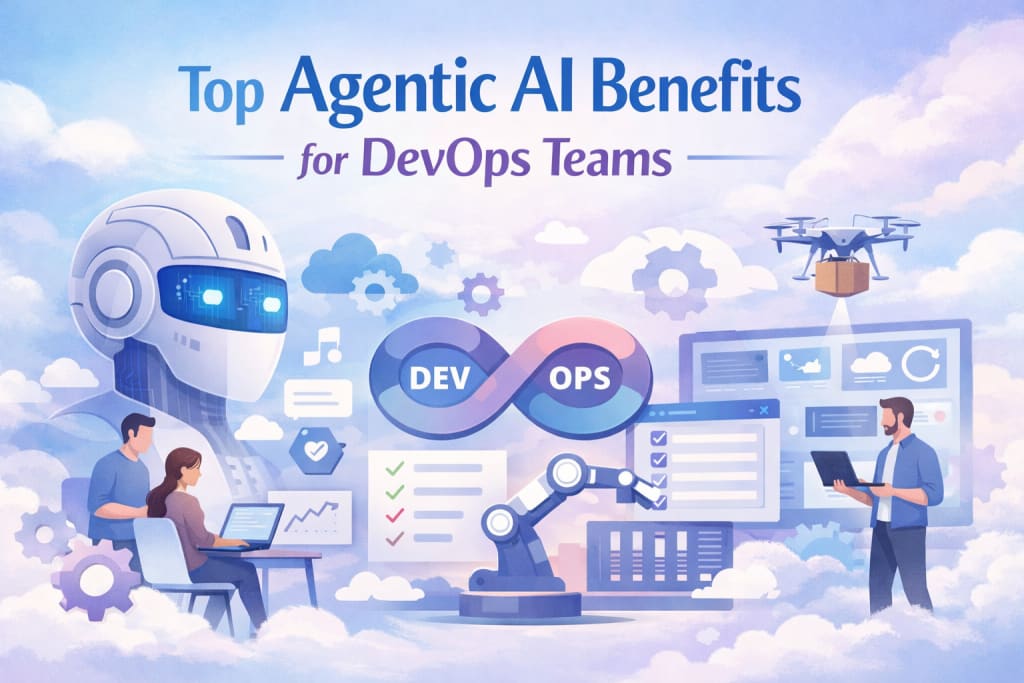
Introduction
Cloud security has shifted from perimeter defense to identity governance. Modern environments now span distributed workloads, dynamic permissions, and layered trust relationships that evolve continuously. Yet industry research shows that nearly 70% of cloud security incidents are tied to misconfigurations and excessive access permissions.
The challenge is rarely the absence of security controls. Most organizations deploy policies, guardrails, and monitoring frameworks across their cloud environments. The deeper issue is uncertainty: whether those controls actually prevent adversarial movement across identities and trust boundaries.
As cloud architectures grow more interconnected, assumptions about privilege containment can quietly erode. Validating control effectiveness under realistic attack conditions is becoming a structural requirement, not an optional exercise.
Control-Centric Security Validation
1. Verifying Security Control Effectiveness Under Adversarial Conditions
Cloud environments are protected by layered controls including identity and access management policies, workload isolation rules, network segmentation frameworks, and runtime protections. While these controls may appear correctly configured, their true resilience can only be understood when tested under simulated adversarial pressure.
A structured Agentic AI Pentesting Platform evaluates whether these controls withstand realistic exploitation attempts. Instead of relying on configuration reviews, it performs controlled attack simulations to determine whether privilege escalation, lateral movement, or boundary bypass is practically achievable.
This approach validates enforcement strength rather than assuming it.
2. Measuring Defensive Integrity Across Distributed Assets
Large enterprises operate across multiple cloud accounts and geographic regions. Policy enforcement consistency can vary across these segments due to configuration drift or administrative fragmentation.
Adversarial validation assesses whether defensive controls operate uniformly. For example, identity restrictions that are effective in one environment may not be replicated identically elsewhere. By testing across distributed assets, organizations uncover inconsistencies that could otherwise become targeted entry points.
Identity Attack Path Governance
1. Modeling Enterprise Identity Graphs
Modern cloud architectures rely heavily on identity-based access models. Service accounts interact with workloads, roles assume other roles, and federated identities extend trust relationships beyond internal boundaries.
Adversarial modeling builds comprehensive identity graphs to visualize how privileges propagate across roles and services. This mapping reveals hidden relationships, such as indirect access granted through chained role assumptions or inherited permissions that exceed operational requirements.
Understanding identity relationships at this level helps security teams detect systemic exposure rather than isolated misconfigurations.
2. Detecting Privilege Escalation Feasibility
Privilege escalation risk often exists within layered role structures. However, theoretical privilege chains do not always translate into exploitability.
Adversarial simulation tests whether escalation paths can be operationalized. For example, if a service account has read access to configuration files containing credentials, validation determines whether those credentials can be leveraged to obtain broader privileges. This practical confirmation strengthens risk prioritization.
3. Governing Identity Risk at Scale
Identity sprawl is common in cloud-native enterprises. Temporary project roles, automation accounts, and legacy access grants accumulate over time.
Continuous adversarial evaluation ensures that identity risk is governed dynamically. By validating privilege structures regularly, organizations prevent incremental privilege expansion from evolving into material compromise scenarios.
Cloud Architecture Risk Modeling
1. Evaluating Trust Boundary Strength
Trust boundaries define how services, environments, and user groups interact. These boundaries may exist between development and production accounts, between microservices, or across hybrid deployments.
Adversarial modeling tests whether these boundaries can be traversed under realistic exploitation conditions. This includes evaluating whether authentication tokens can be replayed across services or whether network rules inadvertently allow internal pivoting.
Such validation ensures trust boundaries operate as true security controls rather than assumed safeguards.
2. Stress-Testing Segmentation and Isolation
Segmentation strategies are designed to contain compromise. However, segmentation must resist coordinated exploitation attempts.
By simulating lateral progression across workloads, adversarial validation confirms whether isolation mechanisms prevent unauthorized communication between containers, virtual networks, or service tiers. This testing strengthens architectural resilience.
3. Identifying Systemic Weakness Patterns
Isolated findings often mask deeper architectural flaws. When similar misconfigurations appear across multiple environments, they signal systemic governance issues.
Adversarial risk modeling highlights recurring weakness patterns, allowing security teams to address root causes rather than patch individual symptoms.
Exploit Feasibility and Risk Confirmation
1. Distinguishing Theoretical Exposure from Practical Risk
Security tools frequently produce high volumes of alerts based on static analysis. Not all of these findings represent real exploitability.
Adversarial confirmation filters findings by testing whether vulnerabilities can be weaponized within the live environment. This reduces remediation fatigue and improves focus on material threats.
2. Strengthening Remediation Prioritization
Validated exploit paths provide clarity for remediation planning. Instead of relying solely on severity scores, organizations prioritize vulnerabilities that demonstrate measurable impact potential.
This alignment improves efficiency without relying on generalized risk assumptions.
3. Elevating Executive Risk Reporting
Executive stakeholders require defensible insight into enterprise exposure. Evidence-backed findings, validated through adversarial testing, provide concrete illustrations of potential compromise paths. This improves communication between technical teams and leadership.
Continuous Exposure Governance
1. Detecting Risk Drift Across Cloud Evolution
Cloud infrastructure evolves rapidly as workloads scale and configurations change. Even minor adjustments to access policies can introduce new exposure paths.
Ongoing adversarial validation identifies these changes and assesses their impact on overall risk posture.
2. Monitoring Control Degradation Over Time
Control effectiveness may degrade gradually due to configuration entropy, identity sprawl, or architectural expansion. Continuous evaluation ensures that control strength does not erode unnoticed.
3. Embedding Risk Assurance Into Governance Frameworks
Validated testing results integrate into broader governance processes. Evidence-based insights support audit readiness, risk committee reporting, and strategic planning initiatives.
Advancing Cloud Security Maturity
1. Transitioning from Detection to Assurance
Mature security programs evolve beyond detection into assurance. Rather than identifying weaknesses in isolation, they validate how well defenses withstand coordinated exploitation attempts.
2. Integrating Adversarial Insight Into Strategic Planning
Simulated attack outcomes inform architectural decisions. Security investments can then be directed toward reinforcing systemic weak points rather than responding reactively to isolated findings.
3. Building Long-Term Resilience Against Adaptive Threats
As threat actors adopt increasingly automated techniques, defensive validation must test structural integrity across identity, segmentation, and enforcement layers. This continuous adversarial challenge strengthens long-term resilience.
Conclusion
Cloud-native enterprises operate within deeply interconnected identity and service ecosystems. Risk no longer resides solely in exposed vulnerabilities but in the relationships between controls, privileges, and trust boundaries.
By shifting from vulnerability discovery to adversarial risk assurance, organizations strengthen control integrity, improve governance confidence, and enhance long-term cloud resilience.
About the Creator
Sam Bishop
Hi there! My name is Sam Bishop and I'm a passionate technologist who loves to express my thoughts through writing. As an individual and tech enthusiast, I'm always eager to share my perspectives on various topics.
Keep reading
More stories from Sam Bishop and writers in 01 and other communities.
Business Logic Vulnerabilities in eCommerce: Detection and Prevention Guide
Introduction: Why Business Logic Flaws Are the Silent Revenue Killers in eCommerce Imagine waking up after a record-breaking Black Friday only to discover that five hundred thousand dollars in revenue simply vanished. There is no ransomware note, no database dump on a forum, no obvious breach indicator. Instead, attackers quietly exploited a flaw in your discount validation logic and walked away with millions in underpriced or free merchandise that your own system approved.
By Sam Bishop14 days ago in 01
Why Big Tech Is Rebuilding Walled Gardens Again?
In the early years of the internet, “open” was not just a design principle; it was an ideology. Browsers competed freely. Websites linked to one another without friction. Developers could build and distribute software without negotiating with centralized gatekeepers. The web felt expansive, unpredictable, and difficult to control.
By Mary L. Rodriquezabout 20 hours ago in 01




Comments
There are no comments for this story
Be the first to respond and start the conversation.