😎Baلoch✨.zada😎
Bio
Stories (6)
Filter by community
Trump’s Board of Peace Faces Global Skepticism as Major Powers Hold Back. AI-Generated.
When Donald Trump unveiled his new “Board of Peace,” he presented it as a bold corrective to what he has long described as a broken international system. Framed as a results-driven alternative to bureaucratic gridlock, the board promises fast-trackedreconstruction, streamlined diplomacy, anddecisiveleadership — particularly in conflict zones like Gaza. On paper, it sounds like a headline-ready solution to global paralysis. In practice, however, the world’s biggest powers appear tobewatching from a distance. So what exactly is this Board of Peace? Who’s on board — and why are so many influential countries keeping their seats empty? A New Player in Global Diplomacy The Board of Peace is designed as an international coordinating body focused on post-conflict stabilization and reconstruction. Its initial emphasis has been Gaza, where rebuilding infrastructure, restoring governance,andmanaginghumanitarianaidremainmassiveundertakings. Trump has positioned the board as leaner and more action-oriented than traditional institutions. Instead of prolonged negotiations and overlapping committees, the pitch centers on speed and centralized leadership. The United States has pledged substantial funding, signaling that Washington intends to be the driving force. Supporters argue that large multilateral organizations often move too slowly to respond to crises. In their view, a smaller coalition ofwilling nations could deploy funds and expertise more efficiently. Critics, however, see something else: a parallel structure that risks duplicating — or undermining — long-established global institutions. Who Signed On? The Board of Peace has attracted participation from a mix of mid-sized and regional powers. Several Gulf states have shown interest, particularly those with strategic and financial stakes in Middle Eastern stability. Some countries in Central Asia, North Africa, and Latin America have also signaled support. For these governments, joining may offer practical benefits. Participation could mean influence over reconstruction contracts, a stronger diplomatic relationship with Washington, or a seat at a new decision-making table. In some cases, alignment with the initiativereflectspragmaticgeopolitics. Smaller or emergingeconomies often welcome platforms that diversify their partnerships beyond traditional Western-led frameworks. But while the roster includes dozens of countries, it notably lacks some of the world’s heaviest hitters. The Bigger Countries’ Caution Major European powers have largely refrained from fullmembership. Nations like France, Germany, and the United Kingdom have opted for caution, citing concerns about governance structures and institutional overlap. China and India — both key global players with growing influence in multilateral affairs — have not embraced the initiative either. Their hesitation signals that the board may struggle to achieve the universal legitimacy that established global bodies enjoy. Why the reluctance? There are several factors at play. 1. Institutional Competition Many governments are wary of initiatives that appear to sidestep or dilute existing systems, particularly the United Nations framework. Even if the Board of Peace operates alongside established institutions, its existence raises questions about coordination and authority. Will decisions be harmonized with U.N. agencies? Who ultimately sets the agenda? How are disputes resolved? Without clear answers, larger countries may prefer to stay within structures they helped shape and understand. 2. Governance and Control Leadership matters in international diplomacy — not just who leads, but how. The Board of Peace is closely associated with Trump personally. While supporters see decisive leadership as a strength, skeptics question whether centralized control could overshadow collaborative governance. Major powers often seek balanced structures where influence is distributed. If they perceive decision-making authority to be concentrated, they may hesitate to commit funding and political capital. 3. Financial Commitments Membership reportedly comes with funding expectations. For larger economies, contributions could be substantial. In an era of domestic budget pressures and shifting political priorities, governments are cautious about signing blank checks. They want clarity on oversight, accountability, and measurable outcomes before pledging major resources. 4. Geopolitical Signaling Joining a new diplomatic body is never purely administrative — it’s symbolic. Participation may be interpreted as endorsement of a particular political vision. Some governments may wish to avoid appearing aligned with an initiative that could be seen as partisan or polarizing. Global diplomacy often involves careful balancing acts. Sitting out can be as strategic as signing on. The Gaza Focus — and Beyond The board’s immediate emphasis on Gaza reconstruction gives it a defined mission. Rebuilding housing, restoring utilities, and supporting governance structures are tangible goals. Yet there are broader ambitions as well. Proponents have suggested that the Board of Peace could expand into other regions, serving as a template for post-conflict recovery worldwide. That expansion potential is both a selling point and a sticking point. For supporters, scalability means impact. For skeptics, it raises the question: is this a complementary initiative, or a new pillar of global governance? The answer may determine whether more countries eventually participate. A Test of Influence At its core, the Board of Peace is a test — not just of funding or logistics, but of influence. Can a U.S.-led initiative attract enough international buy-in to become durable? Can it deliver measurable results quickly enough to justify its creation? And perhaps most importantly, can it operate without deepening fractures in an already fragmented global order? History shows that new institutions often face resistance at first. Some fade away quietly. Others evolve into fixtures of international cooperation. The difference usually lies in outcomes. The Road Ahead For now, the Board of Peace exists in a gray zone — neither universally embraced nor outright rejected. Its supporters see momentum and opportunity. Its critics see ambiguity and risk. If the board succeeds in delivering visible improvements in Gaza — faster rebuilding, transparent governance, effective aid distribution — skepticism may soften. Concrete results have a way of shifting diplomatic calculations. If, however, coordination falters or political disputes overshadow progress, larger countries may feel vindicated in their caution. In global politics, legitimacy is earned through performance as much as participation. A Changing Diplomatic Landscape The emergence of the Board of Peace reflects a broader reality: international governance is evolving. Traditional institutions face growing criticism for inefficiency and political deadlock. At the same time, new coalitions and regional groupings are experimenting with alternative models. Whether Trump’s initiative becomes a lasting fixture or a brief experiment will depend on execution, transparency, and inclusivity. For now, the board stands as a symbol of a shifting diplomatic landscape — one where leadership, speed, and visibility compete with tradition, consensus, and institutional depth. The bigger countries may be steering clear for the moment. But in global affairs, distance rarely means disinterest.
By 😎Baلoch✨.zada😎6 days ago in Viva
Twelve Killed in Israeli Strikes on Gaza, Including Senior Islamic Jihad Commander. AI-Generated.
Renewed violence threatens fragile ceasefire as regional tensions rise At least 12 people were reported killed following a series of Israeli Defense Forces (IDF) strikes across the Gaza Strip, according to Palestinian health officials and multiple regional reports. Among the dead was said to be a senior commander affiliated with Palestinian Islamic Jihad (PIJ), a militant group active in Gaza. The escalation marks one of the deadliest flare-ups in recent weeks and raises concerns about the stability of an already fragile ceasefire. The Israeli military stated that the strikes targeted militants involved in activities that posed an imminent threat to Israeli forces. Palestinian sources, meanwhile, reported that casualties included both combatants and civilians. As is often the case in fast-moving conflict situations, independent verification of all claims remains difficult. Targeted Strikes and Military Objectives According to Israeli officials, the operations were carried out in response to what the IDF described as violations of understandings aimed at reducing hostilities. The military said it had identified armed operatives operating near Israeli positions and took action to neutralize the threat. Among those reportedly killed was a senior Islamic Jihad commander. Israeli sources characterized him as a key figure responsible for coordinating operations and overseeing militant activities. Palestinian Islamic Jihad has not immediately released a detailed statement confirming the extent of its losses, though affiliated channels acknowledged casualties among its members. The IDF maintains that its strikes are focused on militant infrastructure and leadership, arguing that such operations are necessary to prevent attacks on Israeli civilians and soldiers. In past confrontations, Israel has emphasized intelligence-driven targeting aimed at weakening armed groups without escalating into full-scale war. Palestinian Response and Civilian Impact Palestinian officials in Gaza condemned the strikes, describing them as violations of ongoing ceasefire efforts. Health authorities reported that some of the victims were civilians, though full details about identities and affiliations have not been publicly confirmed. The humanitarian situation in Gaza remains precarious. Years of conflict, economic restrictions, and infrastructure damage have left the territory vulnerable to disruptions caused by renewed fighting. Each escalation brings additional strain to medical facilities, power systems, and essential services. Local residents described scenes of chaos following the strikes, with emergency responders rushing to affected areas. As with previous rounds of violence, civilians often bear the brunt of sudden military exchanges, particularly in densely populated neighborhoods where militant groups operate alongside residential communities. A Fragile Ceasefire Under Pressure The latest violence comes amid ongoing efforts by regional mediators to maintain calm between Israel and armed factions in Gaza. Though no formal long-term peace agreement is in place, periodic ceasefires have helped limit large-scale confrontations in recent months. However, such arrangements are frequently tested by incidents on the ground. Accusations of ceasefire violations are common, with both sides often presenting sharply different narratives about who initiated hostilities. Even limited exchanges can quickly spiral into broader conflict if not contained. Analysts note that targeted killings of senior militant figures have historically triggered retaliatory responses. Palestinian Islamic Jihad, in particular, has previously launched rocket attacks following the deaths of key leaders. Whether this latest incident leads to renewed rocket fire or broader escalation remains to be seen. The Role of Palestinian Islamic Jihad Palestinian Islamic Jihad is a smaller but highly active militant organization operating in Gaza. Distinct from Hamas, which governs the territory, PIJ maintains its own military wing and command structure. The group has been responsible for rocket launches and other attacks against Israeli targets over the years. Israel considers Islamic Jihad a terrorist organization and has repeatedly targeted its leadership and infrastructure. While Hamas often plays a dominant political and military role in Gaza, PIJ operates independently and sometimes pursues its own agenda, complicating ceasefire arrangements. The reported killing of a senior PIJ commander could significantly affect the group’s operational capacity in the short term. Leadership losses can disrupt coordination and planning. At the same time, such strikes may harden positions and fuel calls for retaliation among militants and supporters. Regional and International Reactions International observers are closely monitoring developments. Past escalations between Israel and Gaza-based groups have drawn concern from neighboring countries and global powers, particularly when civilian casualties are reported. Regional mediators, including Egypt and Qatar, have historically played key roles in de-escalation efforts. Diplomatic channels often intensify following significant incidents in an attempt to prevent wider conflict. Public statements urging restraint are likely to follow if tensions continue to rise. The broader geopolitical environment also shapes the situation. Developments in the West Bank, shifts in Israeli domestic politics, and regional security dynamics can all influence decision-making on both sides. The Broader Pattern of Escalation This latest episode fits into a long-standing pattern of cyclical violence. Targeted strikes, rocket fire, and retaliatory actions have characterized the Israel–Gaza conflict for years. Periods of relative calm are frequently interrupted by sudden flare-ups sparked by specific incidents. Military analysts suggest that both sides often seek limited engagements rather than prolonged war. However, the risk of miscalculation remains high. A strike intended to send a deterrent message can inadvertently trigger a broader confrontation. For civilians living in southern Israel and throughout Gaza, these cycles bring recurring uncertainty. Air raid sirens, emergency alerts, and sudden evacuations have become part of daily life during times of escalation What Comes Next? Whether this incident marks a brief flare-up or the beginning of a larger escalation depends on several factors. The response of Palestinian Islamic Jihad will be critical. If the group launches retaliatory attacks, Israel is likely to respond forcefully, potentially widening the scope of operations. At the same time, diplomatic efforts may intensify to contain the situation. In past crises, swift mediation has prevented further deterioration. For now, the reported deaths of 12 individuals — including a senior militant commander — underscore the volatility of the Gaza front. As both sides assess their next moves, the region stands at another uncertain crossroads. The coming days will reveal whether restraint or retaliation defines the next chapter in a conflict that shows little sign of lasting resolution.
By 😎Baلoch✨.zada😎10 days ago in Humans
Israel’s West Bank Land Registration Plan Sparks Legal, Political, and International Controversy. AI-Generated.
The decision to resume formal land registration in Area C marks a significant shift in policy — and could reshapeownership,governance, and the future of Israeli-Palestinian negotiations.
By 😎Baلoch✨.zada😎10 days ago in Journal
Deadly Blast Before the New Year: Eight Killed in China Fireworks Shop Explosion. AI-Generated.
A devastating explosion tore through a fireworks shop in eastern China on Sunday afternoon, killing at least eight people and injuring two others just days before the start of the Lunar New Year — a holiday synonymous with celebration, family and tradition.
By 😎Baلoch✨.zada😎10 days ago in Humans
Rising Tensions: U.S. Military Prepares for Possible Weeks-Long Operations Against Iran. AI-Generated.
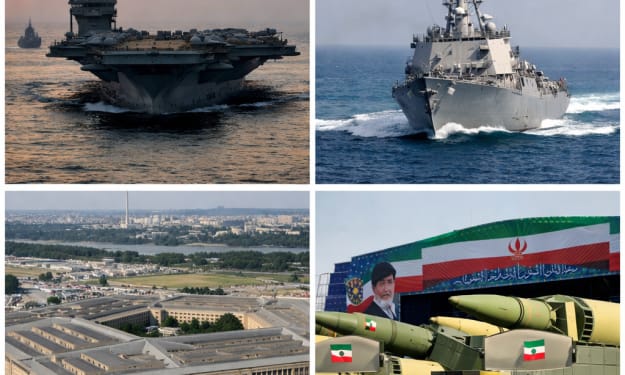
The United States military is preparing for the possibility of a weeks-long operation against Iran, according to recent reports. This development has raised concerns around the world. While no final decision has been announced, officials say that the Pentagon is reviewing plans in case the President orders military action. The situation shows rising tension between the two countries and has led many leaders to call for calm and diplomacy.
By 😎Baلoch✨.zada😎11 days ago in The Swamp