Holianyk Ihor
Bio
Stories (463)
Filter by community
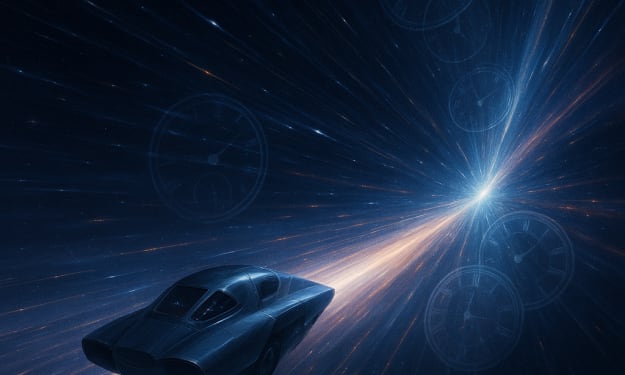
Racing the Light: How Speed Bends Time and the Limits of Reality
Light travels at an unimaginable pace—299,792,458 meters per second. That’s about 7.5 times around the Earth in just one second. But what makes this number truly extraordinary isn’t how fast it is—it’s the fact that it represents the ultimate speed limit of the universe. Nothing, according to Einstein’s theory of relativity, can go faster. The speed of light isn’t just a measure of velocity; it’s the foundation of how space and time themselves are built.
By Holianyk Ihor5 months ago in Education
Building Giant Spacecraft in Earth’s Orbit: The First Step Toward Interstellar Voyages
When we imagine the spacecraft of the future, our minds often conjure images straight out of science fiction: colossal vessels bristling with solar panels, sprawling habitats large enough to house thousands of people, and mile-long engines designed to push humanity beyond the boundaries of our solar system. Yet, if you were to ask today’s aerospace engineers whether we could simply build such a spacecraft on Earth and launch it into space, the answer would be a resounding no.
By Holianyk Ihor5 months ago in Education
Artificial Gravity Systems for Space Crews: Turning Science Fiction Into Reality
When we imagine astronauts journeying to Mars or even further into deep space, we often picture sleek spacecraft, breathtaking views of the stars, and groundbreaking discoveries. What we don’t always picture, however, are the very real and serious health problems that come with spending months or even years in microgravity. Human bodies evolved under Earth’s gravity, and when that force disappears, things quickly start to go wrong. Muscles shrink, bones weaken, fluid redistributes in odd ways, and the heart doesn’t have to pump as hard.
By Holianyk Ihor5 months ago in Education
Riding the Light: The Vision of Breakthrough Starshot
For centuries, the stars have been the ultimate symbol of unreachable horizons. We looked up, dreamed, and wondered if we would ever set foot beyond the Sun’s neighborhood. While telescopes gave us glimpses of faraway worlds, the idea of sending a spacecraft to another star system always felt like science fiction. After all, even our fastest probes, like Voyager 1, would need tens of thousands of years to reach the nearest stars.
By Holianyk Ihor5 months ago in Education
Russia’s Angara-A5V with a Cryogenic Upper Stage: A Leap Toward the Future of Spaceflight
For decades, Russia has been one of the great spacefaring nations, pioneering breakthroughs from the first satellite to the first human in orbit. But in today’s competitive space industry, dominated by private giants like SpaceX and state programs in China, the U.S., and Europe, staying ahead requires more than a proud history. It requires bold steps in rocket technology. One of Russia’s most ambitious projects in this direction is the Angara-A5V rocket, a heavy-lift launch vehicle equipped with a cryogenic (liquid oxygen and liquid hydrogen) upper stage.
By Holianyk Ihor5 months ago in Education
Lunar Crater Bases: Nature’s Ready-Made Shield Against Cosmic Radiation
For decades, the idea of building a permanent human settlement on the Moon has hovered somewhere between science fiction and ambitious engineering. But as international space agencies and private companies move closer to turning lunar bases into reality, one of the toughest challenges has come into focus: radiation.
By Holianyk Ihor5 months ago in Education
VASIMR Plasma Engines: The Next Leap Toward Interplanetary Travel
For more than half a century, humanity has been dreaming of Mars. Countless films, novels, and scientific proposals picture astronauts stepping onto the Red Planet’s dusty plains. Yet despite all the excitement, one stubborn obstacle remains: getting there in a reasonable amount of time.
By Holianyk Ihor5 months ago in Futurism
Magnetic Accelerators for Interplanetary Travel: The Future of Space Logistics
Imagine a morning at an orbital spaceport: cargo containers silently glide along magnetic tracks before a sudden burst of acceleration sends them hurtling toward Mars. No plumes of chemical exhaust, no long countdowns—just controlled, powerful energy converted directly into kinetic motion. While it may sound like science fiction, magnetic accelerators are increasingly being explored as a way to reduce costs and increase reliability for interplanetary travel.
By Holianyk Ihor5 months ago in Education
New Technologies for Radiation Protection on Deep Space Missions
When we talk about humanity’s future in space, images of astronauts walking on Mars or mining asteroids often come to mind. Yet behind these bold visions lies a sobering reality: space is a hostile environment, and one of the greatest dangers lurking beyond Earth’s protective atmosphere is radiation. Without our planet’s thick blanket of atmosphere and its magnetic shield, astronauts become vulnerable to streams of charged particles from the Sun and high-energy cosmic rays from distant galaxies. Prolonged exposure increases the risk of cancer, neurological damage, and even acute radiation sickness.
By Holianyk Ihor5 months ago in Education
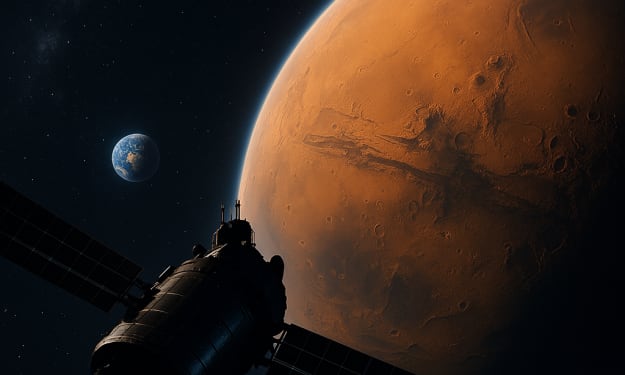
The First Human Flight to Mars: A Reality of the 2030s or Just a Myth?
For centuries, Mars has been a canvas for human imagination. From H. G. Wells’ War of the Worlds to Hollywood blockbusters, the Red Planet has been portrayed as everything from a hostile wasteland to humanity’s next home. Today, however, the conversation about Mars has moved beyond fiction. Leading space agencies and private companies are drawing up blueprints for the first human mission. Some experts predict we could see astronauts set foot on Martian soil as early as the 2030s, while others dismiss the timeline as wildly optimistic. The truth, as always, is caught somewhere in between hope, hype, and hard reality.
By Holianyk Ihor5 months ago in Education
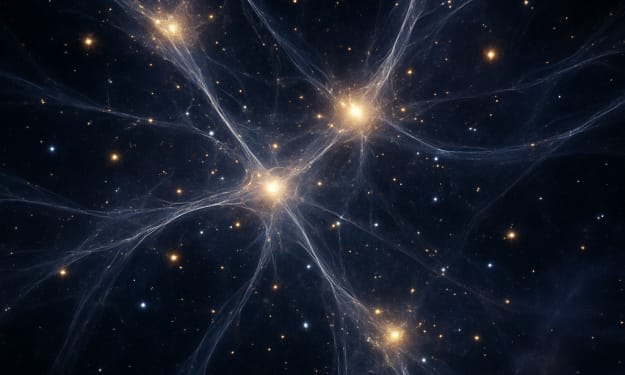
The Quipu Superstructure: A Cosmic Tapestry Stretching Across the Universe
When we talk about the “largest things in the universe,” it’s easy to imagine planets, stars, or maybe even black holes. But those are only the building blocks of something far greater. In recent years, astronomers have uncovered vast, interconnected patterns of galaxies that stretch across unimaginable distances. Among these discoveries is the Quipu Superstructure, a gargantuan arrangement of galaxies and galaxy clusters spanning nearly 1.3 billion light-years. To put that in perspective: if you could travel at the speed of light, it would take longer than the entire recorded history of the universe to cross its length.
By Holianyk Ihor5 months ago in Education
Earendel: The Most Distant Star Ever Detected
In the spring of 2022, astronomers spotted something extraordinary through the Hubble Space Telescope: a tiny glimmer of light from the edge of the observable universe. At first, many believed it could be a distant galaxy, or perhaps just a cluster of stars blurred together. But now, thanks to the unprecedented clarity of the James Webb Space Telescope (JWST), scientists have confirmed that this faint spark is, in fact, a single star.
By Holianyk Ihor5 months ago in Futurism