Holianyk Ihor
Bio
Stories (461)
Filter by community
The Possibility of Antimatter Planets: A Bold Hypothesis in Modern Astrophysics
In a universe dominated by matter—from the tiniest particles to colossal galaxies—the concept of antimatter often feels like something out of science fiction. Mysterious, elusive, and destructive when mixed with matter, antimatter has captured both scientific and popular imagination for decades. Yet, it’s no fantasy: physicists have not only theorized antimatter but successfully created and studied it in labs.
By Holianyk Ihor9 months ago in Futurism
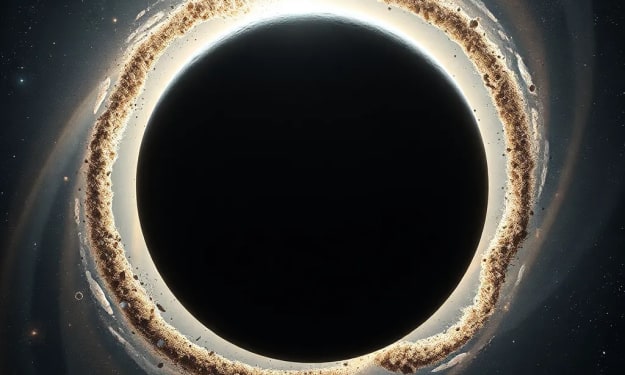
Life on a Planet of Eternal Night — How Is It Possible?
When we imagine life on other planets, we often picture vibrant landscapes bathed in sunlight — maybe two suns blazing in alien skies — or frozen wastelands shrouded in endless darkness. But what if there’s a world where night never ends, where the sun never rises? Could life exist there? The idea of a planet locked in eternal night might sound like science fiction, but it’s actually a real possibility within the realm of astronomy. Such worlds do exist, and scientists are seriously exploring whether life could thrive in their unending darkness.
By Holianyk Ihor9 months ago in Futurism
Can We Build a Planet by Hand? Exploring the Future of Astroengineering
When we gaze at the stars, it feels almost unimaginable that one day humans might not only explore distant worlds but actually create entire planets from scratch. It sounds like pure science fiction—something out of a futuristic novel—but many ideas that once seemed impossible have gradually crept into the realm of scientific reality. Creating a planet by hand represents the ultimate frontier of astroengineering, the science of transforming and constructing celestial bodies. But is it really possible? Let’s dive into what this would mean and whether humanity might one day achieve it.
By Holianyk Ihor9 months ago in Futurism
Teleportation Is Real (Sort Of): The First Experiments in Real Life
Teleportation — once the stuff of sci-fi dreams — is now inching closer to reality, not in fiction, but in labs around the world. And while we’re not beaming humans across the planet just yet, the science is more real than most people think.
By Holianyk Ihor9 months ago in Education
The Fermi Paradox: Where Is Everybody UFO?
Look up at the night sky. It’s filled with stars — billions of them, scattered like cosmic glitter across the void. Our own galaxy, the Milky Way, is home to over 100 billion stars, and most of them likely have planets orbiting them. Many of those planets may even sit in the “habitable zone,” where conditions could support life. So here’s the big question: if life is so potentially common, where is everybody?
By Holianyk Ihor9 months ago in Education
Warp Drive: Part 2 – The Warp Field Coil
For centuries, humanity has dreamed of reaching distant stars. But space, vast and unforgiving, hasn’t made that dream easy. Even our closest stellar neighbor, Alpha Centauri, is 4.367 light-years away. With today’s fastest spacecraft, that journey would take tens of thousands of years. Clearly, conventional propulsion just won’t cut it for interstellar travel.
By Holianyk Ihor9 months ago in Education
Why Does Time Move Slower in Space Than on Earth?
Imagine blasting off into deep space, traveling for a few years, and then returning home—only to discover that decades have passed on Earth while you’ve barely aged. Sounds like science fiction, right? But this mind-bending effect is very real. It’s called time dilation, and it’s a consequence of Albert Einstein’s revolutionary theories of relativity.
By Holianyk Ihor9 months ago in Education
Warp Drive: Part 1 – Sci-Fi Dream or Scientific Reality?
The idea of a warp drive isn’t just a fantasy born from science fiction. It’s a bold, theoretical technology that could completely redefine how we travel through space. If it ever becomes reality, it might allow us to reach distant stars—not by breaking the laws of physics, but by bending space and time themselves.
By Holianyk Ihor9 months ago in Education
How to Build a Telescope at Home?
Building your own telescope can be a fun and rewarding way to explore the night sky — and learn a lot about optics and astronomy along the way. Whether you're a space enthusiast, a curious student, or just someone who loves hands-on projects, crafting a working telescope from scratch is a great way to dive deeper into the universe.
By Holianyk Ihor9 months ago in Education
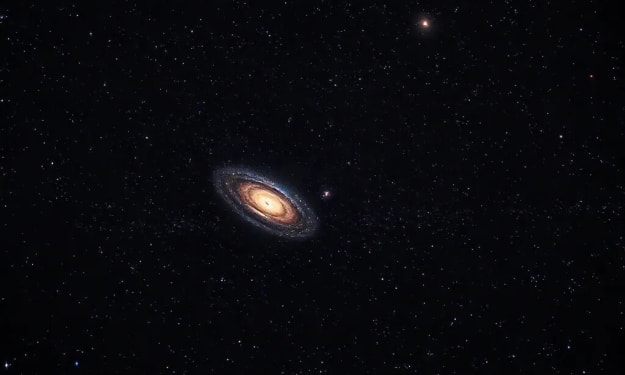
How Do Galaxies Move Through the Universe?
The universe isn’t some silent, motionless canvas where stars and galaxies sit frozen in space. Quite the opposite — it's a place of nonstop motion, often on unimaginable scales. Galaxies — those enormous collections of stars, gas, dust, and dark matter — are constantly on the move. They spin, collide, drift, and race through the cosmos at incredible speeds. But what exactly makes them move — and where are they going?
By Holianyk Ihor9 months ago in Education
How Many Galaxies Are in the Universe — And Why the Number Keeps Changing
When we gaze up at the night sky, it feels like we're seeing the entire universe stretched out before us. Stars shimmer, planets twinkle, and the Milky Way arcs overhead. But in reality, what we see is just a microscopic sliver of the cosmos. Beyond the familiar stars and nebulae lie billions — maybe trillions — of galaxies: vast cosmic islands made of stars, gas, dust, and dark matter.
By Holianyk Ihor9 months ago in Education