Irshad Abbasi
Bio
Ali ibn Abi Talib (RA) said 📚
“Knowledge is better than wealth, because knowledge protects you, while you have to protect wealth.
Stories (230)
Filter by community
The Genius Who Revolutionized Science. Content Warning.
Archimedes of Syracuse, born around 287 BCE, stands as one of the most influential figures in the history of science and mathematics. A mathematician, engineer, physicist, inventor, and astronomer, Archimedes laid the foundations for many modern scientific principles, all while living over 2,000 years ago in the ancient Greek city of Syracuse, located on the island of Sicily. His work in geometry, hydrostatics, and mechanics remains vital to this day, and the story of his life is as fascinating as his legendary inventions.
By Irshad Abbasi 9 months ago in History
The Flame of Faith and Freedom
Joan of Arc, known as “La Pucelle d’Orléans” (the Maid of Orléans), stands as one of the most iconic and inspiring figures in history. A teenage girl who rose from humble origins to become a national heroine of France, Joan’s story is one of courage, conviction, and faith. Her life, though tragically short, burned brightly like a flame—a light of hope in a time of war, oppression, and despair.
By Irshad Abbasi 9 months ago in History
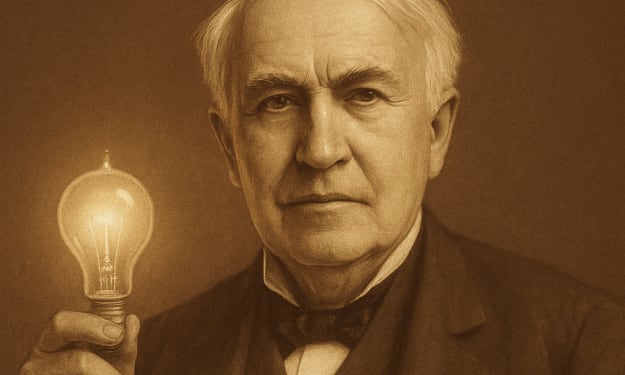
The Inventor Who Lit the World
Thomas Alva Edison, one of the most influential inventors in human history, was born on February 11, 1847, in Milan, Ohio, USA. He is best remembered for revolutionizing the modern world with his invention of the electric light bulb. However, his contributions spanned many fields including sound recording, motion pictures, electric power, and communication. Edison’s life was a blend of relentless experimentation, tireless work ethic, and an unwavering belief in innovation.
By Irshad Abbasi 9 months ago in History
The Revolutionary Who Redefined Cuba
Fidel Castro was born on August 13, 1926, in Birán, a small town in eastern Cuba. His father, Ángel Castro, was a wealthy Spanish immigrant who owned a sugar plantation. His mother, Lina Ruz González, was Ángel’s cook and later became his second wife. Castro was raised with his siblings in relatively comfortable conditions and was sent to Catholic boarding schools, where he showed early signs of leadership and rebelliousness.
By Irshad Abbasi 9 months ago in History
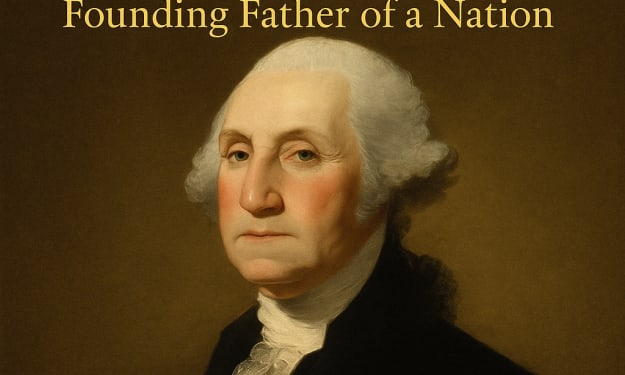
The Reluctant President and Founding Father of a Nation
George Washington is often remembered as the steadfast face of America’s birth—a man whose resolve, integrity, and leadership carried a fledgling nation through its most turbulent years. Yet, what many fail to realize is that Washington did not eagerly seek power. He was a reluctant president, compelled more by duty than desire. His journey from colonial soldier to commander-in-chief, and ultimately to the presidency, reveals a leader deeply committed to principle, sacrifice, and service.
By Irshad Abbasi 9 months ago in History
The Silent Force Behind the Crusades
Nur ad-Din Mahmud Zangi, born in 1118 CE in Aleppo, Syria, was one of the most significant Muslim leaders during the era of the Crusades. Known for his deep piety, sense of justice, and military acumen, Nur ad-Din played a foundational role in resisting the Crusader presence in the Levant and laid the groundwork for the eventual victories of Saladin. As a ruler of both Aleppo and later Damascus, his reign marked a turning point in Muslim unity and resistance, and his legacy continues to inspire.
By Irshad Abbasi 9 months ago in History
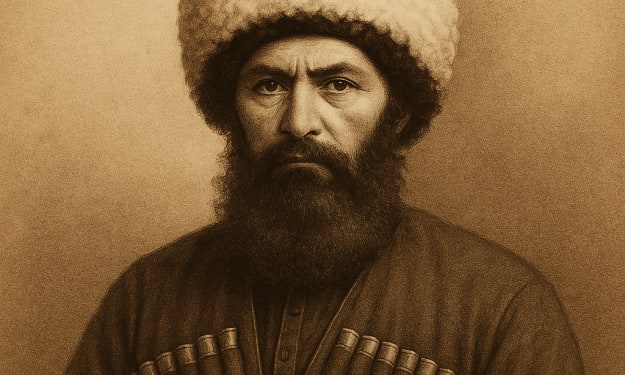
The Lion of Dagestan and the Spirit of Caucasian Resistance
Imam Shamil, the legendary Avar warrior and spiritual leader of the Caucasus, remains one of the most iconic figures in the history of resistance against imperial domination. Born in 1797 in the mountain village of Gimry, in present-day Dagestan, Shamil rose from humble origins to lead a decades-long struggle against the expanding Russian Empire during the 19th century. Revered as a military genius and a deeply devout Muslim, he unified disparate Caucasian tribes under a single banner of resistance, leaving behind a legacy that continues to inspire nationalists, scholars, and freedom fighters alike.
By Irshad Abbasi 9 months ago in History
The Lion of the Desert
Omar Mukhtar, known widely as the “Lion of the Desert,” was a symbol of resistance and resilience against colonial oppression. Born in 1862 in the small village of Zawiyat Janzur, located in the eastern region of Libya known as Cyrenaica, Omar Mukhtar rose from humble beginnings to become the most formidable leader of the Libyan resistance against Italian colonization. His life, marked by unwavering faith, strategic brilliance, and profound moral character, left a legacy that transcends national boundaries and continues to inspire freedom fighters around the world.
By Irshad Abbasi 9 months ago in History
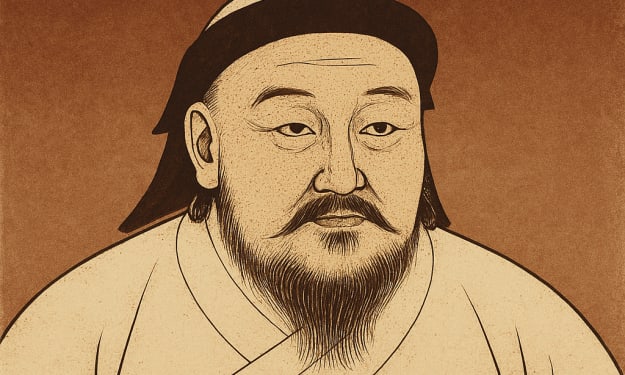
The Emperor Who Bridged Worlds
Kublai Khan, born in 1215, was the grandson of Genghis Khan and one of the most remarkable rulers in world history. As the founder of China’s Yuan Dynasty and the fifth Khagan (Great Khan) of the Mongol Empire, Kublai’s reign marked a pivotal transformation of Mongol rule—from a vast nomadic confederation to a centralized imperial power that bridged the cultures of the East and West. He was not only a formidable military leader but also a visionary statesman who reshaped the political and cultural landscapes of Asia.
By Irshad Abbasi 9 months ago in History
The Father of Pakistan’s Nuclear Program
Dr. Abdul Qadeer Khan, often hailed as the “Father of Pakistan’s Nuclear Program,” was a metallurgist, engineer, and visionary whose life became synonymous with Pakistan’s nuclear capability. His contribution to the country’s strategic defense reshaped South Asia’s geopolitical landscape and elevated Pakistan to the status of a nuclear-armed state. A man of brilliant intellect, deep patriotism, and relentless determination, Dr. A.Q. Khan’s life journey reflects the perfect confluence of science and national service.
By Irshad Abbasi 9 months ago in History
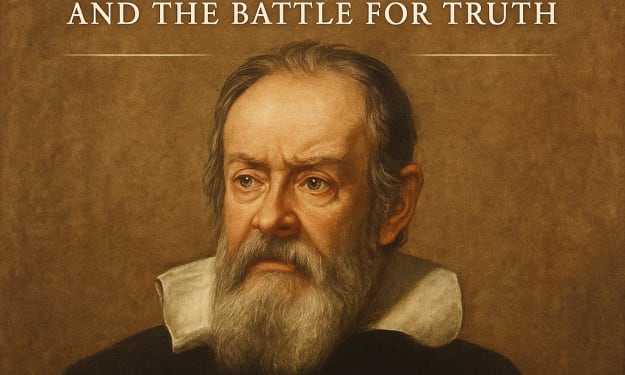
Father of Modern Science and the Battle for Truth
Galileo Galilei was born on February 15, 1564, in Pisa, Italy, during a time when Europe was undergoing seismic changes in thought, art, and science. Known as the “Father of Modern Science,” Galileo played a central role in shaping the scientific method and challenging centuries of established authority. His life was marked by discovery, intellectual rebellion, and personal struggle—culminating in one of history’s most famous clashes between science and religion.
By Irshad Abbasi 9 months ago in History
Khalid ibn al-Waleed: The Unbreakable Commander
Khalid ibn al-Waleed, known as Sayf Allah al-Maslul (The Drawn Sword of Allah), remains one of the most iconic figures in Islamic military history. His life is a story of remarkable transformation, from a fierce opponent of Islam to one of its most loyal and brilliant military commanders. Renowned for his battlefield tactics, unwavering bravery, and undefeated record, Khalid’s journey is one of faith, strategy, and extraordinary leadership.
By Irshad Abbasi 9 months ago in History